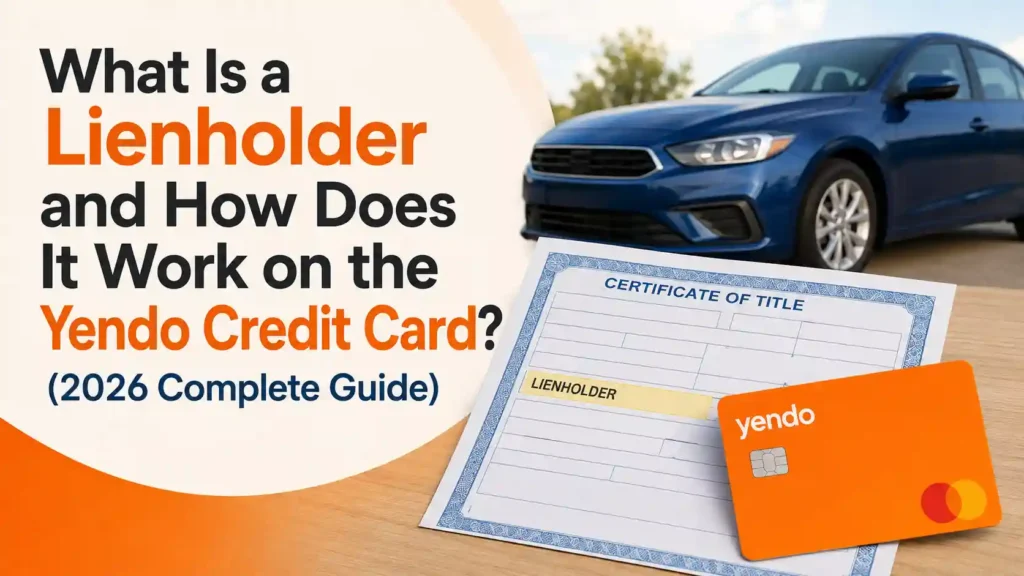
When people hear that the Yendo Credit Card uses their vehicle as collateral, one unfamiliar word often causes confusion:
Lienholder.
What exactly is a lienholder? Does becoming a Yendo cardholder mean you no longer own your car? Can a lienholder take your vehicle whenever they want? And why is a lienholder listed on your vehicle title in the first place?
These are common questions, especially for people who have never financed a vehicle or used one as collateral for a line of credit.
The good news is that the concept is much simpler than it sounds.
A lienholder does not become the owner of your vehicle. Instead, a lienholder has a legal security interest in the vehicle until the applicable obligations under the agreement have been satisfied.
👉 Check Your Eligibility in Minutes
In this guide, you’ll learn exactly what a lienholder is, why Yendo may become a lienholder, what rights you keep as the vehicle owner, how liens work, and what happens when the lien is eventually released.
Table of Contents
What Is a Lienholder?
Before understanding how the Yendo Credit Card works, it’s important to understand the role of a lienholder.
A Lienholder Has a Legal Security Interest
A lienholder is an individual or organization that has a legal claim against a vehicle because it serves as collateral for a financial obligation.
The lien protects the lender’s financial interest while the agreement remains in effect.
This is a standard practice throughout the lending industry.
A Lienholder Is Not the Owner
One of the biggest misconceptions is that the lienholder owns the vehicle.
That isn’t true.
Even when a lien exists:
- You generally remain the legal owner.
- Your name stays on the title.
- You continue registering the vehicle.
- You maintain insurance.
- You remain responsible for maintenance and repairs.
The lienholder’s role is different from ownership.
Why Does Yendo Become a Lienholder?
The Yendo Credit Card differs from a traditional secured credit card because it uses eligible vehicle equity instead of a cash security deposit.
Your Vehicle Serves as Collateral
Rather than asking you to deposit cash into a secured account, Yendo uses your qualifying vehicle as collateral.
To protect that security interest, a lien may be recorded according to your account agreement and your state’s title procedures.
The Lien Helps Reduce Lending Risk
Every lender accepts some level of risk when extending credit.
Recording a lien helps reduce that risk because it documents the lender’s legal interest in the collateral.
This approach allows many qualified applicants to access a revolving credit line without tying up thousands of dollars in a cash deposit.
For a complete overview, read our How Does the Yendo Credit Card Work?
What Rights Does the Vehicle Owner Keep?
Many applicants worry that becoming a Yendo customer means giving up control of their vehicle.
Fortunately, that’s generally not the case.
You Continue to Own the Vehicle
An active lien doesn’t transfer ownership.
You typically continue to:
- Drive your vehicle every day.
- Register the vehicle.
- Maintain insurance coverage.
- Perform maintenance.
- Pay for repairs.
- Use the vehicle for personal transportation.
Your daily experience as the vehicle owner generally remains unchanged.
You Continue Making Decisions About the Vehicle
As the owner, you’re still responsible for many important decisions involving your vehicle.
These include:
- Routine maintenance.
- Insurance coverage.
- Registration renewals.
- Keeping the vehicle in good condition.
Although a lienholder has a recorded security interest, ownership responsibilities remain with you.
What Rights Does a Lienholder Have?
Understanding the lienholder’s role helps eliminate many common misunderstandings.
The Lienholder Has a Recorded Security Interest
The primary role of a lienholder is to protect its financial interest in the collateral.
That security interest is generally documented through your state’s vehicle title system.
This doesn’t give the lienholder unrestricted control over your vehicle.
Instead, it establishes legal rights that are governed by the applicable agreement and state law.
The Lien Remains While the Agreement Is Active
The recorded lien generally remains in place until the applicable obligations have been satisfied and the lien release process has been completed.
Once the lender releases its security interest, the title records are updated according to your state’s procedures.
Where Does the Lienholder Appear?
Many first-time applicants wonder where the lienholder’s information is recorded.
The Vehicle Title May Reflect the Lien
Depending on your state’s title system, the lienholder may appear on your vehicle’s title record.
The exact format varies depending on whether your state uses:
- Paper titles.
- Electronic titles.
- Title-holding systems.
- Non-title-holding systems.
Our Does Yendo Show Up on My Vehicle Title Record? explains this process in greater detail.
Does Having a Lienholder Affect Everyday Driving?
Fortunately, it usually doesn’t.
You Can Continue Using Your Vehicle
Most Yendo cardholders continue driving normally.
You can generally continue to:
- Commute to work.
- Travel with your family.
- Run errands.
- Take vacations.
- Use your vehicle for everyday transportation.
The presence of a lien doesn’t prevent normal vehicle use.
You’re Still Responsible for the Vehicle
Although Yendo may have a recorded security interest, you’re still responsible for:
- Fuel.
- Repairs.
- Insurance.
- Registration.
- Routine maintenance.
Those responsibilities don’t transfer to the lienholder.
Can You Sell a Vehicle That Has a Lienholder?
Yes—in many situations.
However, because the lienholder has a recorded security interest, that interest generally needs to be addressed before ownership can be transferred free of the lien.
The exact process depends on:
- Your state’s title laws.
- Your account status.
- The structure of the transaction.
Our Can I Sell My Car While I Have a Yendo Lien? walks through the process step by step.
When Does the Lienholder Get Removed?
A lienholder doesn’t remain on your vehicle title forever.
The Lien Can Be Released
Once the applicable obligations have been satisfied under your account agreement, the lender can begin the lien release process.
After the release has been completed according to your state’s procedures, the title records are updated to reflect that the lender no longer has a recorded security interest.
Ready to Learn More?
Understanding the role of a lienholder makes the Yendo Credit Card much easier to understand. Once you know that a lienholder protects a lender’s security interest—but doesn’t take ownership of your vehicle—you can evaluate the card with greater confidence.
👉 Check Your Personalized Yendo Offer and Start Your Yendo Credit Card Application Today.
If you’re still learning how vehicle titles work, our What Happens to My Car Title When You Get the Yendo Credit Card? is an excellent companion guide.
Does Having a Lienholder Affect Your Credit Score?
One of the biggest misconceptions about vehicle-backed credit products is that simply having a lienholder listed on your title hurts your credit score.
Fortunately, that’s generally not how credit scoring works.
The Lien Itself Doesn’t Lower Your Credit Score
A lienholder appearing on your vehicle title isn’t, by itself, a factor used in calculating your credit score.
Instead, your credit profile is typically influenced by factors such as:
- Payment history.
- Credit utilization.
- Length of credit history.
- New credit inquiries.
- Overall debt management.
The presence of a lien on your title doesn’t automatically improve or reduce your credit score.
How You Manage the Account Matters More
What matters most is how you use the credit account.
Responsible habits include:
- Making payments on time.
- Keeping your balance manageable.
- Avoiding missed payments.
- Monitoring your account regularly.
These behaviors generally have a much greater impact on your credit than the existence of a lienholder.
Can You Change or Remove the Lienholder?
Some applicants wonder whether they can remove Yendo from the title whenever they choose.
In most cases, the answer is no.
The Lienholder Remains Until the Agreement Has Been Satisfied
The lien generally remains recorded while the applicable obligations under your account agreement are still outstanding.
The lender’s security interest isn’t removed simply because you request it.
Instead, the lien release process typically begins after the applicable obligations have been satisfied.
State Procedures Determine the Next Steps
Once the lender releases its security interest, your state’s motor vehicle agency updates the title records according to its own procedures.
Depending on where you live, this may involve:
- Electronic title updates.
- Paper title processing.
- Issuing an updated title certificate.
Our How to Get Your Title Back After Paying Off Yendo? explains this process in detail.
What Happens if You Move to Another State?
Relocating doesn’t automatically remove or change the lienholder.
The Lien Usually Remains Active
If your Yendo account is still active when you move, the lender’s security interest generally remains in place until it has been properly released.
Your new state may require you to:
- Register your vehicle.
- Transfer title records.
- Comply with local vehicle laws.
The lien typically remains reflected in the title records until the appropriate release process has been completed.
State Procedures May Differ
Every state has its own rules regarding:
- Vehicle titles.
- Registration.
- Electronic title systems.
- Lien recording.
- Lien releases.
Understanding your new state’s requirements can help make the transition smoother.
Common Misconceptions About Lienholders
The word “lienholder” often sounds more intimidating than it actually is.
Let’s separate fact from fiction.
Myth: The Lienholder Owns My Vehicle
Fact: No.
A lienholder has a legal security interest—not ownership.
You generally remain the legal owner of your vehicle.
Myth: I Can’t Drive My Car
Fact: False.
Having a lienholder listed on your title doesn’t prevent you from using your vehicle for everyday transportation.
Most cardholders continue driving exactly as they did before opening their account.
Myth: I Can’t Sell My Vehicle
Fact: Not true.
Vehicles with recorded liens are sold every day.
The important difference is that the lien generally needs to be addressed during the transaction before ownership can be transferred free of the lender’s security interest.
Myth: The Lienholder Stays on My Title Forever
Fact: No.
Once the applicable obligations have been satisfied and the lender releases its security interest, the title records can be updated according to your state’s procedures.
Tips for Vehicle Owners
Understanding the role of a lienholder can help you avoid unnecessary confusion throughout the life of your account.
Keep Your Vehicle Information Current
Make sure important information remains accurate, including:
- Registration.
- Insurance.
- Contact information.
- Vehicle ownership records.
Keeping everything up to date can help prevent administrative issues.
Monitor Your Account Regularly
Checking your account periodically allows you to:
- Verify payments.
- Review transactions.
- Monitor available credit.
- Detect unexpected activity early.
Responsible account management benefits both you and the lender.
Keep Important Documents Organized
Store important documents together, including:
- Registration.
- Insurance information.
- Title-related correspondence.
- Payment confirmations.
- Lien release documentation, if applicable.
Good recordkeeping can simplify future transactions involving your vehicle.
Ready to Learn More About Vehicle Liens?
Once you understand what a lienholder actually does, the Yendo Credit Card becomes much easier to understand. A lienholder isn’t the owner of your vehicle—it simply has a recorded legal interest that protects the credit line while the agreement remains in effect.
👉 Check Your Personalized Yendo Offer and Start Your Yendo Credit Card Application Today.
For a complete understanding of how liens appear on vehicle records, read our Does Yendo Show Up on My Vehicle Title Record?
Frequently Asked Questions About Lienholders and the Yendo Credit Card
If you’re still unsure about what a lienholder is or how it affects your vehicle, these answers address the questions Yendo applicants ask most often.
What Is a Lienholder?
A lienholder is a person or organization that has a legal security interest in a vehicle because it serves as collateral for a financial obligation.
For eligible Yendo accounts, Yendo may become the lienholder while the applicable agreement remains in effect.
Does a Lienholder Own My Vehicle?
No.
A lienholder and a vehicle owner are not the same.
Even if Yendo is listed as the lienholder, you generally remain the legal owner of your vehicle.
Why Does Yendo Become a Lienholder?
Unlike a traditional secured credit card that requires a cash security deposit, the Yendo Credit Card uses eligible vehicle equity as collateral.
Recording a lien helps protect the lender’s security interest while allowing qualified applicants to access a revolving line of credit.
Does the Lienholder Appear on My Vehicle Title?
It may.
Depending on your state’s title system, the vehicle title or title record may show that Yendo has a recorded security interest.
This doesn’t change vehicle ownership.
Can I Still Drive My Car?
Yes.
An active lien generally doesn’t affect your everyday use of the vehicle.
You can typically continue to:
- Drive to work.
- Run errands.
- Take vacations.
- Transport your family.
- Use your vehicle for normal daily activities.
Can I Sell My Vehicle if Yendo Is the Lienholder?
In many situations, yes.
However, because the lienholder has a legal security interest, the lien generally needs to be addressed before ownership can be transferred free of that security interest.
Can I Trade In My Vehicle?
Often, yes.
Many dealerships routinely handle trade-ins involving vehicles with existing liens.
The exact process depends on your transaction and your state’s title procedures.
Does Having a Lienholder Affect My Insurance?
Your responsibility to maintain appropriate insurance generally remains the same.
Depending on your policy and state requirements, your insurer may need accurate information regarding any recorded lienholder.
Can I Remove the Lienholder Whenever I Want?
No.
The lienholder generally remains on the vehicle records until the applicable obligations under your account agreement have been satisfied and the lender has completed the lien release process.
What Happens After I Pay Off My Account?
After your eligible obligations have been satisfied, the lender can begin releasing its security interest.
Your state’s motor vehicle agency then updates the title records according to its procedures.
Once that process has been completed, the lienholder generally no longer appears on the title record.
Does Every State Handle Liens the Same Way?
No.
Each state has its own laws governing:
- Vehicle titles.
- Electronic title systems.
- Paper titles.
- Lien recording.
- Lien releases.
That’s why documentation and timelines can vary across the country.
Does Having a Lienholder Hurt My Credit Score?
Not by itself.
Your credit score is generally affected by how you manage your credit account, including payment history and credit utilization—not simply because a lienholder is recorded on your vehicle title.
Can I Move to Another State?
Yes.
If you relocate, you’ll generally need to comply with your new state’s title and registration requirements.
If an active lien still exists, it typically remains reflected in the title records until it has been properly released.
What Happens if My Vehicle Is Totaled?
If your vehicle is declared a total loss, contact both your insurance company and Yendo promptly.
The next steps depend on your insurance coverage, the settlement process, and the terms of your account agreement.
What Happens if My Vehicle Is Stolen?
If your vehicle is stolen:
- Report it to law enforcement.
- Notify your insurance company.
- Contact Yendo as soon as possible.
They can explain any account-related steps that may be necessary.
Final Verdict
Understanding what a lienholder is removes one of the biggest sources of confusion surrounding the Yendo Credit Card.
A lienholder doesn’t become the owner of your vehicle. Instead, the lienholder has a legal security interest that helps protect the lender while your account remains active. Throughout that time, you generally continue to own, drive, maintain, register, and insure your vehicle just as you did before.
Knowing the difference between ownership and a security interest makes it much easier to understand how the Yendo Credit Card works and what responsibilities come with using your vehicle as collateral.
Conclusion
If you’ve been asking, “What is a lienholder and how does it work on the Yendo Credit Card?”, the answer is straightforward.
A lienholder is simply the party with a recorded legal interest in your vehicle while it secures your revolving line of credit. That role doesn’t transfer ownership or prevent you from using your vehicle in your everyday life. Instead, it provides legal protection for the lender until the applicable obligations under your agreement have been satisfied.
By understanding how liens work before applying, you’ll be better prepared for every stage of the Yendo journey—from approval and account management to lien release and title updates.
Related Articles
Continue learning about the Yendo Credit Card with these in-depth guides: