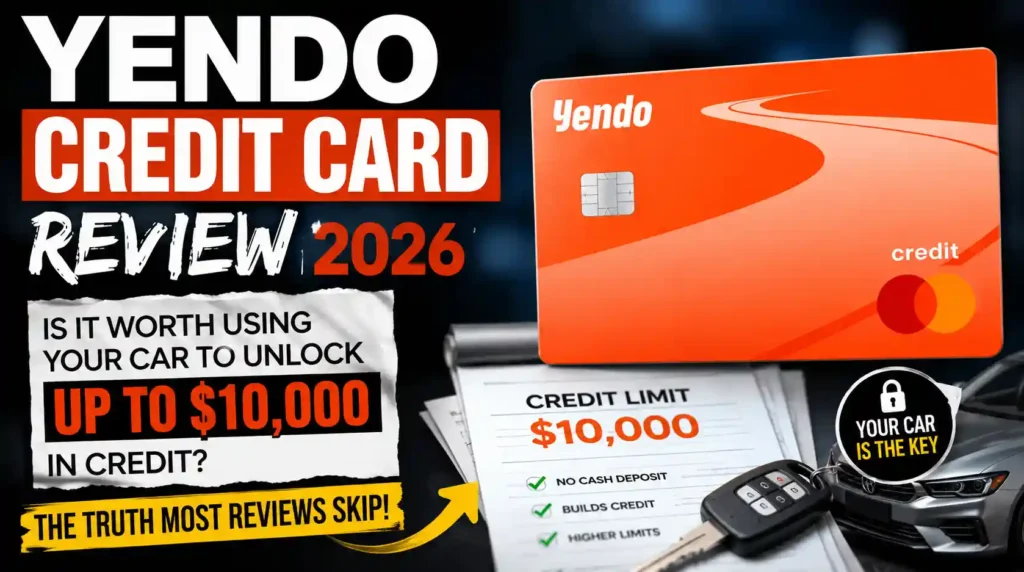
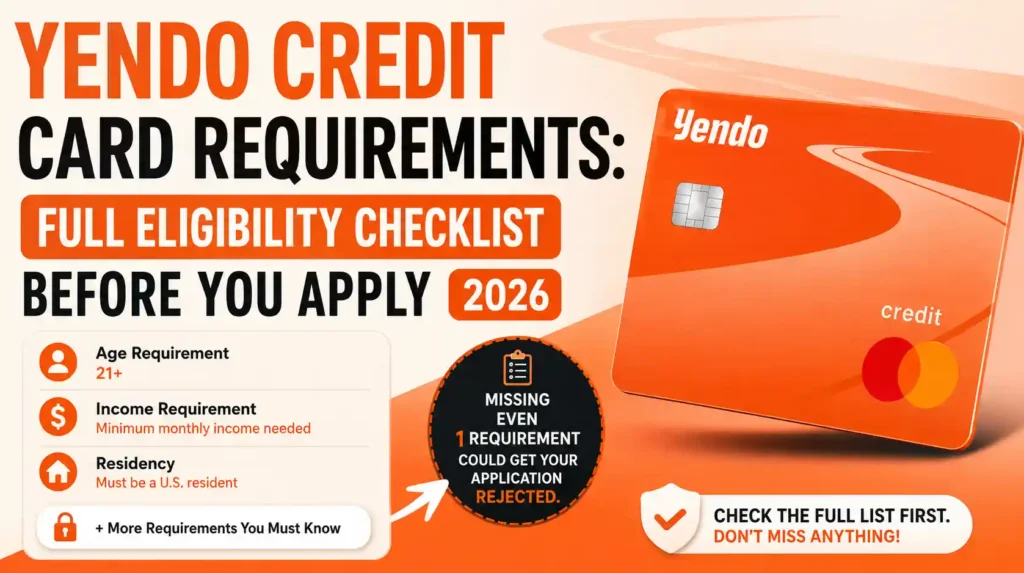
Getting approved for a credit card isn’t as easy as it used to be. Many people with fair or damaged credit discover that even a steady income isn’t always enough to qualify for an unsecured card. Others turn to secured credit cards only to find they must lock away hundreds or even thousands of dollars as a security deposit.
The Yendo Credit Card takes a different approach.
Instead of asking applicants to put cash aside, it allows eligible vehicle owners to use the equity in their car to support a revolving line of credit. That simple difference has made Yendo one of the most talked-about credit-building products in recent years.
But how does it actually work?
Do you lose your car after approval?
Can you still drive it every day?
How is the credit limit determined?
What happens if your vehicle still has an existing loan?
How do repayments work?
And perhaps most importantly, is the process really as straightforward as it sounds?
These are the questions that matter before submitting an application.
This guide walks through the entire process step by step—from checking whether you qualify to receiving your card, using your available credit, making repayments, and eventually removing the lien from your vehicle after the account has been paid off.
Along the way, you’ll also learn about common misunderstandings, hidden details many reviews skip, and the mistakes that can turn a useful financial tool into an expensive one.
By the end of this guide, you’ll know exactly how the Yendo Credit Card works and whether it deserves a place in your wallet.
Table of Contents
How Does the Yendo Credit Card Work? The Short Answer
The Yendo Credit Card is a revolving Mastercard that uses an eligible vehicle instead of a traditional cash security deposit.
After approval, it works much like any other credit card.
You receive a credit limit, make purchases, receive monthly statements, make repayments, and regain available credit as your balance is paid down.
The biggest difference is what supports the account.
Rather than placing money into a secured savings account, Yendo records a lien against an eligible vehicle. That vehicle becomes the collateral backing the credit line while you continue driving it normally.
The application process generally follows these stages:
- Check whether you’re eligible for an offer.
- Submit information about yourself and your vehicle.
- Complete identity verification.
- Verify the vehicle.
- Review the final offer.
- Complete the title or lien process.
- Receive access to your card.
- Start using your available credit.
Although the process sounds straightforward, every stage serves a specific purpose.
Understanding what happens behind the scenes helps explain why approval, credit limits, and processing times can vary from one applicant to another.
If you’re still deciding whether this card is worth considering, read our comprehensive Yendo Credit Card Review before continuing.
What Makes the Yendo Credit Card Different?
At first glance, the Yendo Credit Card looks similar to any other Mastercard.
It can be used for everyday purchases.
It reports account activity to the major credit bureaus.
It has a revolving credit limit.
It offers cash back on eligible purchases.
But underneath those familiar features is a completely different approval model.
Traditional unsecured credit cards rely heavily on your credit history.
Traditional secured credit cards usually require a refundable cash deposit.
Yendo does neither in the conventional sense.
Instead, it looks at the value and available equity of an eligible vehicle alongside other financial information when determining whether to approve an application and how much credit to offer.
That approach creates opportunities for borrowers who may not qualify for many unsecured cards while also allowing them to keep their cash available for other financial priorities.
The trade-off is that the account is backed by a valuable asset rather than a savings deposit.
That distinction changes how applicants should evaluate the product.
Before looking at the details, it’s helpful to understand exactly how the application unfolds from beginning to end.
Step 1: Check Whether You’re Eligible
Everything starts online.
Instead of immediately opening a credit card account, Yendo first allows prospective applicants to check whether they may qualify for an offer.
During this stage, you’ll typically provide basic information such as:
- Name
- Address
- Contact information
- Employment details
- Income
- Information about your vehicle
Checking for an offer lets you explore your options before deciding whether to continue with the application.
Unlike submitting multiple traditional credit card applications, this initial step allows many applicants to see whether an offer may be available without immediately lowering their credit score.
That makes comparison shopping much easier.
Rather than applying blindly, you can first determine whether the product is likely to fit your situation.
If the preliminary offer looks attractive, the process moves to the next stage.
Thinking About Applying?
If the Yendo Credit Card sounds like it could fit your needs so far, this is the stage where you can see whether you qualify and review your potential offer before deciding whether to move forward.
👉 Check Your Personalized Yendo Offer
Step 2: Provide Information About Your Vehicle
The next stage focuses on the vehicle.
Unlike traditional credit cards, your car plays an important role during underwriting.
Applicants are generally asked to provide information including:
- Year
- Make
- Model
- Current mileage
- Vehicle Identification Number (VIN)
- Ownership status
Depending on the application, additional photographs or documentation may also be requested.
These details allow the lender to estimate the vehicle’s market value and determine whether it meets the eligibility requirements for the program.
Many people assume this step exists simply to estimate the credit limit.
That’s only part of the picture.
Vehicle verification also confirms that the information provided during the application accurately reflects the vehicle that may ultimately support the account.
Accuracy matters.
Entering incorrect information—whether intentionally or accidentally—can delay approval or require additional verification before the application can continue.
Readers preparing an application should review Yendo Credit Card Requirements: Full Checklist beforehand to avoid unnecessary delays.
Step 3: Identity Verification
Every financial institution has a responsibility to confirm that applicants are who they claim to be.
Yendo follows a similar process.
Identity verification may include confirming:
- Government-issued identification
- Date of birth
- Residential address
- Social Security Number or other accepted taxpayer identification
- Mobile phone number
- Email address
Some applicants may also be asked to complete additional verification steps using their smartphone.
Although these checks may feel inconvenient, they help protect both applicants and lenders from identity theft and fraudulent account openings.
Completing this stage successfully moves the application closer to final approval.
Step 4: Reviewing Your Offer
If the application meets the necessary requirements, Yendo presents the actual offer.
This is one of the most important moments in the entire process.
Many applicants immediately focus on one number:
The credit limit.
While that number certainly matters, it should never be the only factor influencing your decision.
Instead, review the complete offer carefully.
Pay attention to:
- Approved credit limit
- Purchase APR
- Annual fee
- Cash back program
- Other applicable fees
- Monthly payment expectations
- Title requirements
- Terms and conditions
Taking a few extra minutes to understand the full offer can prevent costly surprises later.
Remember that the goal isn’t simply getting approved.
The goal is accepting a credit card that genuinely improves your financial situation.
If the offer makes sense, the application proceeds to one of the most unique stages of the entire process—the title and lien setup.
Step 5: How the Vehicle Supports the Credit Line
This is where many people become confused.
Using a vehicle to support a credit card does not mean giving the lender your car.
Nor does it mean you have to stop driving it.
Instead, a legal claim—commonly called a lien—is placed against the vehicle while the account remains open.
Think of it as a form of security for the lender.
You continue using the vehicle exactly as before.
You continue maintaining it.
You continue insuring it.
You continue driving it every day.
The presence of the lien simply means the vehicle serves as collateral while the account remains active.
If the account is managed responsibly, most cardholders will never notice any practical difference in day-to-day vehicle ownership.
The lien mainly becomes relevant if the account enters serious default or when the account is eventually paid off and closed.
Exactly how that process works—and how long it takes to remove the lien—is something every applicant should understand before applying.
We’ll cover that in detail later in this guide.
Before that, it’s important to understand what happens once the application has been fully approved and the account becomes active.
Step 6: Completing the Title Process
After accepting your offer, the next step is completing the title process. This is one of the most important parts of the application because it officially links your eligible vehicle to your credit account.
The exact process depends on several factors, including:
- The state where you live
- Whether you own the vehicle outright
- Whether your title is electronic or paper
- Whether an existing auto loan still appears on the title
For many applicants, the process is surprisingly straightforward. If you have a paper title, you’ll generally follow the instructions provided to submit it for processing. If your state uses electronic titles, much of the work may happen behind the scenes through the appropriate motor vehicle agency.
Applicants who are still making payments on their car may have additional steps to complete before the process can move forward. The exact requirements vary depending on the existing lender and the amount of equity available in the vehicle.
This stage often raises concerns, but it’s important to understand what is—and isn’t—changing.
You are not handing over ownership of your vehicle.
You remain the owner.
You continue driving it as usual.
The title process simply establishes the legal security needed for the credit account.
Once everything has been completed successfully, the account can move toward full activation.
Step 7: Accessing Your Credit Line
Many applicants expect to receive their entire credit limit immediately after approval.
In reality, activation may happen in stages.
Some approved customers first receive access to a virtual version of their card while the remaining paperwork is being completed.
This allows eligible purchases to begin before the physical card arrives in the mail.
Depending on your application, you may initially receive access to only part of your approved credit limit. Once the remaining title requirements have been completed and verified, the rest of the available credit is typically unlocked.
For example, imagine you’re approved for a $6,000 credit line.
Instead of receiving access to the full amount immediately, you may initially have access to a smaller portion while the title process is finalized.
Once everything has been successfully completed, the remainder of the credit line becomes available without requiring another application.
This staged approach helps protect both the lender and the applicant while administrative requirements are completed.
Step 8: Receiving Your Physical Card
While your virtual card may allow you to start using the account sooner, most people will also receive a physical Mastercard.
Once it arrives, you’ll activate it through your account before making purchases.
From this point forward, using the card feels very similar to any other credit card.
You can use it for everyday spending, including:
- Groceries
- Fuel
- Online shopping
- Dining
- Travel
- Household purchases
- Eligible subscriptions
Anywhere Mastercard is accepted, your Yendo card generally works the same way.
The difference isn’t how you spend.
The difference is how the account was approved.
How Does the Yendo Credit Card Work After Approval?
Many people mistakenly believe they’re receiving a loan.
They’re not.
The Yendo Credit Card is a revolving line of credit.
That means your available credit changes as you spend and repay money.
Let’s look at a simple example.
Suppose you’re approved for a $5,000 credit limit.
If you spend $800, your available credit decreases to $4,200.
Later, you make a payment of $500.
Your available credit increases again because revolving credit replenishes as balances are repaid.
Unlike a personal loan, you don’t need to submit another application every time you want to borrow again.
As long as your account remains in good standing and you stay within your available limit, the credit continues revolving.
This flexibility is one of the biggest reasons many borrowers prefer revolving credit over installment loans.
How Is Your Credit Limit Determined?
One of the biggest misconceptions surrounding Yendo is that your vehicle alone determines your credit limit.
It doesn’t.
Your vehicle certainly plays an important role, but it’s only one piece of the approval decision.
Several factors may influence the amount you’re offered.
These commonly include:
- Vehicle value
- Available vehicle equity
- Vehicle age
- Mileage
- Overall condition
- Income
- Existing financial obligations
- Credit profile
- Ability to repay
Because every applicant is different, two people driving similar vehicles may receive completely different credit limits.
Consider these examples.
Example 1: Older Vehicle
Someone owns a 2012 sedan with high mileage.
Although the vehicle still has value, its age and condition may result in a more conservative credit limit.
Example 2: Newer Vehicle
Another applicant owns a newer SUV with lower mileage and higher market value.
Everything else being equal, this applicant could receive a higher credit limit because the vehicle represents stronger collateral.
Example 3: Different Financial Profiles
Now imagine both applicants own identical vehicles.
One has stable income and manageable debt.
The other has significantly higher monthly obligations.
Even with the same vehicle, the final credit limits could still differ.
This is why nobody can accurately predict approval simply by looking up their vehicle’s value online.
If you’re interested in understanding this process in greater detail, read Yendo Credit Limit: How It’s Calculated.
Can You Continue Driving Your Car?
Yes.
This is one of the questions prospective applicants ask most often.
Putting your vehicle behind the account does not mean giving up everyday use of your car.
You can continue to:
- Drive to work
- Run errands
- Take road trips
- Commute daily
- Transport your family
- Maintain the vehicle as usual
For most cardholders, nothing changes about daily driving.
The difference exists only in the legal arrangement supporting the credit account.
As long as you continue meeting your obligations, the vehicle remains yours to use.
Can You Sell Your Vehicle?
Selling a vehicle that’s supporting a secured credit account isn’t as straightforward as selling an ordinary car.
Because a lien exists, additional steps usually need to be completed before ownership can be transferred to another buyer.
If you’re planning to:
- Sell your vehicle
- Trade it in
- Transfer ownership
- Refinance elsewhere
it’s best to contact customer support first.
Doing so can help you understand the requirements and avoid unexpected delays during the sale.
Can You Apply If Your Car Still Has a Loan?
Many people assume they must own their vehicle outright before applying.
That’s not always the case.
Some financed vehicles may still qualify, depending on factors such as the remaining loan balance, available equity, and the lender’s underwriting requirements.
Every situation is different.
Applicants with existing auto loans should carefully review how the process works before deciding whether applying makes financial sense.
For some borrowers, waiting until more equity has been built may produce a stronger application.
For others, the available equity may already be sufficient.
Understanding your own financial position is far more important than comparing your situation to someone else’s.
What Happens If Your Vehicle Value Changes?
Vehicle values naturally change over time.
Mileage increases.
Cars age.
Market prices rise and fall.
Fortunately, normal changes in market value don’t mean your credit limit suddenly changes every month.
Once your account has been established, everyday fluctuations in used-car prices don’t typically affect how you use your existing line of credit.
However, keeping your vehicle properly maintained remains important.
Protecting the asset that supports your account is simply good financial practice.
How Do Repayments Work?
Once your account is active and you’ve started using your available credit, you’ll receive a monthly billing statement just like you would with a traditional credit card.
Your statement shows:
- Your current balance
- New purchases
- Payments you’ve made
- Interest charged, if applicable
- Any fees added during the billing cycle
- Your minimum payment
- Your payment due date
- Your remaining available credit
Each month, you have two basic options.
Pay the Full Statement Balance
This is the most cost-effective way to use the card.
When you pay your entire statement balance by the due date, you can avoid paying interest on new purchases made during the billing cycle, provided your account qualifies for the grace period.
If you’re using the card to build credit, this should always be your goal.
Not only does it save money, but it also helps you develop healthy borrowing habits.
Pay the Minimum Amount Due
You can also choose to pay only the required minimum payment.
While this keeps your account current, the remaining balance continues to carry forward, and interest is generally charged on what you still owe.
Many borrowers make the mistake of thinking that paying the minimum is enough.
Technically, it keeps the account in good standing.
Financially, however, it can become expensive if balances continue growing month after month.
Imagine carrying a balance for several years while paying only the minimum payment. Even relatively small purchases can end up costing far more than their original price because of accumulated interest.
That’s why the Yendo Credit Card is best viewed as a payment tool rather than long-term financing.
Understanding Interest and APR
One of the biggest mistakes applicants make is paying close attention to the credit limit while ignoring the Annual Percentage Rate (APR).
Your credit limit determines how much you can borrow.
Your APR determines how much borrowing may cost if you don’t repay your balance in full.
Here’s a simple example.
Suppose you make a $2,000 purchase.
If you repay the entire amount before interest begins accruing, that purchase costs exactly what you spent.
However, if you carry that balance for several months, interest continues accumulating until the balance has been fully repaid.
The longer you carry debt, the more expensive borrowing becomes.
That’s why responsible cardholders focus less on maximizing their available credit and more on minimizing the amount of interest they pay.
If you’re comparing different credit products, don’t ask only:
“How much can I borrow?”
Also ask:
“How much will borrowing actually cost me?”
A lower credit limit with lower borrowing costs can often be the smarter financial choice.
For a complete breakdown of fees and borrowing costs, read Yendo APR, Fees & Interest Explained.
Does the Yendo Credit Card Help Build Credit?
For many applicants, this is the biggest reason for applying.
The answer is yes—it can.
Like many major credit cards, your account activity may be reported to the three nationwide credit bureaus.
That means your payment behavior becomes part of your credit history.
When managed responsibly, the account can help strengthen your credit profile over time.
Several habits contribute to positive credit building.
Pay Every Bill On Time
Payment history is one of the most important parts of your credit profile.
Even one missed payment can remain on your credit report for years.
Setting up automatic payments or calendar reminders helps reduce the chances of accidentally paying late.
Keep Your Balance Low
Another important factor is credit utilization.
This simply measures how much of your available credit you’re using.
Let’s compare two people.
Person A
Credit limit: $5,000
Balance: $300
Credit utilization: 6%
Person B
Credit limit: $5,000
Balance: $4,700
Credit utilization: 94%
Although both have the same credit limit, lenders generally view the first borrower as presenting lower risk because they aren’t heavily dependent on available credit.
Keeping balances low can contribute to a healthier credit profile over time.
Avoid Missing Payments
Late payments don’t just result in fees.
They can also damage the very credit score you’re trying to improve.
If rebuilding credit is your primary goal, consistency matters far more than making large purchases.
Small purchases that are repaid on time often accomplish much more than repeatedly carrying large balances.
Cash Back Rewards
In addition to providing access to revolving credit, the Yendo Credit Card also includes a cash back program on eligible purchases.
While rewards are always welcome, they should never become the main reason for using any credit card.
Here’s why.
Imagine earning 1.5% cash back on a purchase.
That sounds attractive.
But if you carry that balance for several months, the interest charged could easily exceed the value of the rewards you earned.
In other words, earning rewards while paying significant interest rarely saves money.
The smartest approach is simple:
Use the card for purchases you already planned to make.
Repay the balance in full whenever possible.
Then enjoy the rewards as an added benefit instead of using them to justify unnecessary spending.
Think of cash back as a bonus—not permission to spend more.
What Happens If You Miss a Payment?
Life happens.
Unexpected expenses arise.
Jobs change.
Emergencies occur.
Missing a payment once doesn’t automatically mean you’ll lose your vehicle.
However, ignoring the account for an extended period can create increasingly serious consequences.
Depending on the circumstances, those consequences may include:
- Late payment fees
- Additional interest charges
- Reduced available credit
- Negative credit reporting
- Collection activity
- Default on the account
Because the account is supported by your vehicle, continued non-payment creates risks that don’t exist with many unsecured credit cards.
That’s why communication matters.
If you know you’ll struggle to make a payment, contacting customer support early is almost always better than ignoring the situation.
Many financial problems become much harder to resolve simply because borrowers wait too long before asking for help.
Can You Lose Your Vehicle?
This is probably the question people worry about most.
The honest answer is:
Yes—but only under serious circumstances.
Your vehicle serves as collateral for the account.
If someone repeatedly fails to meet their obligations and the account eventually enters default, the lender may have legal rights that unsecured credit card companies do not.
That doesn’t mean missing one payment immediately puts your vehicle in danger.
Financial institutions generally follow a structured collection process before matters reach that point.
Nevertheless, applicants should never underestimate the responsibility that comes with using valuable property to support a revolving credit account.
Before applying, ask yourself one important question:
Could I comfortably make these payments even if my financial situation changed unexpectedly?
If the answer is no, waiting may be the wiser decision.
Common Misunderstandings About How the Yendo Credit Card Works
Because Yendo operates differently from most traditional credit cards, misconceptions are common.
Let’s clear up some of the biggest ones.
“Everyone Gets a $10,000 Credit Limit.”
No.
The advertised maximum is exactly that—a maximum.
Some applicants receive significantly lower credit limits based on their individual financial profile and vehicle information.
“I Have to Give Up My Car.”
Not at all.
You remain the owner and continue driving your vehicle normally while your account remains in good standing.
“It’s Just Like a Title Loan.”
Although both involve a vehicle, they work very differently.
A title loan usually provides a one-time lump sum that is repaid over a fixed period.
The Yendo Credit Card is revolving credit.
As you repay your balance, your available credit becomes available again.
“Poor Credit Means Automatic Rejection.”
Not necessarily.
The product was designed to help people who may have difficulty qualifying for traditional unsecured credit cards.
Approval depends on several factors rather than a single credit score.
“The Higher My Credit Limit, the Better.”
Not always.
A higher limit is only beneficial if it’s managed responsibly.
Borrowing more than you can comfortably repay can quickly outweigh any advantages of having additional available credit.
Who Should Consider the Yendo Credit Card?
The Yendo Credit Card isn’t designed for everyone—and that’s actually one of its strengths.
Rather than trying to appeal to every consumer, it fills a specific gap in the credit market. It can be a practical solution for people who own an eligible vehicle, need access to revolving credit, and may not qualify for the best unsecured credit cards.
You may find it worth considering if you:
- Own a vehicle with available equity.
- Need access to a larger credit limit than a traditional secured card might offer.
- Don’t want to tie up hundreds or thousands of dollars in a refundable security deposit.
- Want to rebuild or strengthen your credit history through responsible card use.
- Have a stable source of income and can comfortably make monthly payments.
- Understand how a secured credit account works and are comfortable using your vehicle as collateral.
For these borrowers, the card can provide more financial flexibility than many entry-level credit products.
However, approval alone doesn’t mean the card is the right choice.
The real question is whether you can manage the account responsibly over the long term.
If you believe it matches your financial situation, you can check your personalized Yendo offer and review your available credit limit and terms before making a final decision.
Who Should Probably Look Elsewhere?
Every financial product has situations where it simply isn’t the best fit.
You may want to consider other options if you:
- Regularly struggle to make monthly payments.
- Already carry significant credit card debt.
- Need a long-term financing solution rather than revolving credit.
- Depend entirely on your vehicle for work and couldn’t afford the risk associated with collateral.
- Qualify for a low-interest unsecured credit card.
- Can comfortably afford the cash deposit required for a traditional secured credit card.
Remember, using your vehicle to support a credit line is a significant financial decision.
If you’re uncertain whether you’ll be able to repay what you borrow, waiting until your financial position improves is often the smarter choice.
Access to credit should create opportunities—not additional financial pressure.
Yendo Credit Card vs. Traditional Secured Credit Cards
Many people compare Yendo with secured credit cards from banks like Discover, Capital One, or other major issuers.
Although both products are designed for borrowers with limited or rebuilding credit, they work quite differently.
| Feature | Yendo Credit Card | Traditional Secured Card |
|---|---|---|
| Security | Eligible vehicle | Cash deposit |
| Upfront deposit | Usually not required | Required |
| Credit limit | Based on multiple approval factors, including vehicle equity | Usually equals your deposit |
| Revolving credit | Yes | Yes |
| Reports to credit bureaus | Yes | Yes |
| Risk if you default | Vehicle could be affected | Security deposit may be forfeited |
| Best for | Vehicle owners needing more available credit | People comfortable providing a cash deposit |
Neither option is automatically better.
The better choice depends entirely on your financial circumstances.
Someone who doesn’t own a vehicle may find a traditional secured card more appropriate.
Someone who owns an eligible vehicle but doesn’t want to lock away a large cash deposit may prefer Yendo.
Choosing the right product means looking beyond the advertised credit limit and thinking about the overall financial commitment.
Tips for Using the Yendo Credit Card Responsibly
Getting approved is only the beginning.
The way you manage the account has a much bigger impact on your finances than the approval itself.
Here are several habits that can help you get the most value from the card.
Only Charge Purchases You Can Afford
One of the easiest ways to stay out of debt is to use the card for planned expenses rather than impulse purchases.
Groceries, fuel, utility bills, insurance payments, and other regular expenses are often easier to budget for than discretionary spending.
If you couldn’t pay cash for the purchase within a reasonable period, think carefully before putting it on the card.
Pay More Than the Minimum
Making only the minimum payment may keep your account current, but it can also increase the total amount you pay in interest over time.
Whenever possible, pay the statement balance in full.
If that’s not realistic, pay as much above the minimum as your budget allows.
Reducing your balance faster lowers borrowing costs and frees up more available credit.
Keep Your Credit Utilization Low
Just because you have access to a larger credit limit doesn’t mean you need to use all of it.
A lower utilization ratio generally reflects healthier credit management.
Many financial experts recommend keeping your utilization comfortably below your available limit whenever possible.
Review Your Monthly Statements
Don’t simply make a payment and move on.
Read your statements.
Look for:
- Unauthorized purchases
- Unexpected fees
- Incorrect transactions
- Changes to your available credit
- Payment confirmation
Monitoring your account regularly helps you catch small problems before they become larger ones.
Build an Emergency Buffer
If your monthly budget is already stretched to its limit, even a minor emergency can make repayment difficult.
Setting aside a small emergency fund can make it easier to continue making payments during unexpected situations.
Financial flexibility doesn’t come from having a credit card alone.
It comes from combining responsible borrowing with good money management.
Frequently Asked Questions
Is the Yendo Credit Card a loan?
No.
It’s a revolving credit card, not an installment loan.
You can continue using the available credit as you repay your balance.
Do I lose ownership of my vehicle?
No.
You remain the owner of your vehicle.
A lien is placed against it while the account remains active, but you continue driving and maintaining it as usual.
Can I use the card anywhere?
Yes.
Because it’s a Mastercard, it can generally be used anywhere Mastercard is accepted, subject to the account terms.
Does Yendo approve everyone?
No.
Every application is reviewed individually.
Approval depends on several financial and vehicle-related factors.
Will checking my eligibility hurt my credit score?
The initial eligibility check is designed to let applicants see whether an offer may be available before completing the full process.
Can my credit limit increase later?
In some situations, credit limits may be reviewed over time based on account history and other qualifying factors.
An increase is never guaranteed.
Can I pay off my balance early?
Yes.
There is generally no penalty for paying your balance early.
In fact, paying early can reduce interest costs and help you maintain a healthier financial position.
Can I close my account whenever I want?
Yes, provided your balance has been fully repaid and any remaining account requirements have been satisfied.
If your vehicle is supporting the account, the lien release process must also be completed before everything is finalized.
Is the Yendo Credit Card safe?
The card includes many of the security features people expect from a modern credit card.
Like any financial product, keeping your account secure also depends on protecting your login credentials, monitoring transactions, and reporting suspicious activity promptly.
Is the Yendo Credit Card Worth It?
The answer depends entirely on your financial situation.
If you own an eligible vehicle, need access to revolving credit, and can manage your account responsibly, the Yendo Credit Card may offer opportunities that traditional secured cards cannot.
On the other hand, if you’re already struggling with debt or are uncertain about your ability to make monthly payments, using your vehicle as collateral may introduce unnecessary financial risk.
Before applying, look beyond the advertised credit limit.
Consider the complete picture:
- How much credit do you actually need?
- Can you comfortably repay what you borrow?
- Are you comfortable using your vehicle to support the account?
- Have you compared the costs with other available credit options?
Answering these questions honestly will help you determine whether this card aligns with your financial goals.
Final Thoughts
The Yendo Credit Card offers a different path to accessing credit.
Instead of requiring a traditional cash security deposit, it allows eligible vehicle owners to use the equity in their cars to qualify for a revolving credit line. For borrowers who understand the responsibilities involved, that can make credit more accessible without tying up valuable savings.
Like any financial product, however, success depends less on the card itself and more on how it’s used.
Borrow only what you need.
Pay on time.
Keep your balances manageable.
Review your statements regularly.
Used wisely, the Yendo Credit Card can become a useful tool for building credit and managing everyday expenses. Used carelessly, it can become an expensive source of debt with consequences that extend beyond your credit score.
Before submitting an application, review your budget, compare your alternatives, and make sure the card fits your long-term financial goals—not just your immediate borrowing needs.
If you’ve decided it’s the right fit, check your personalized Yendo offer to see the credit limit and terms you may qualify for before making your final decision.