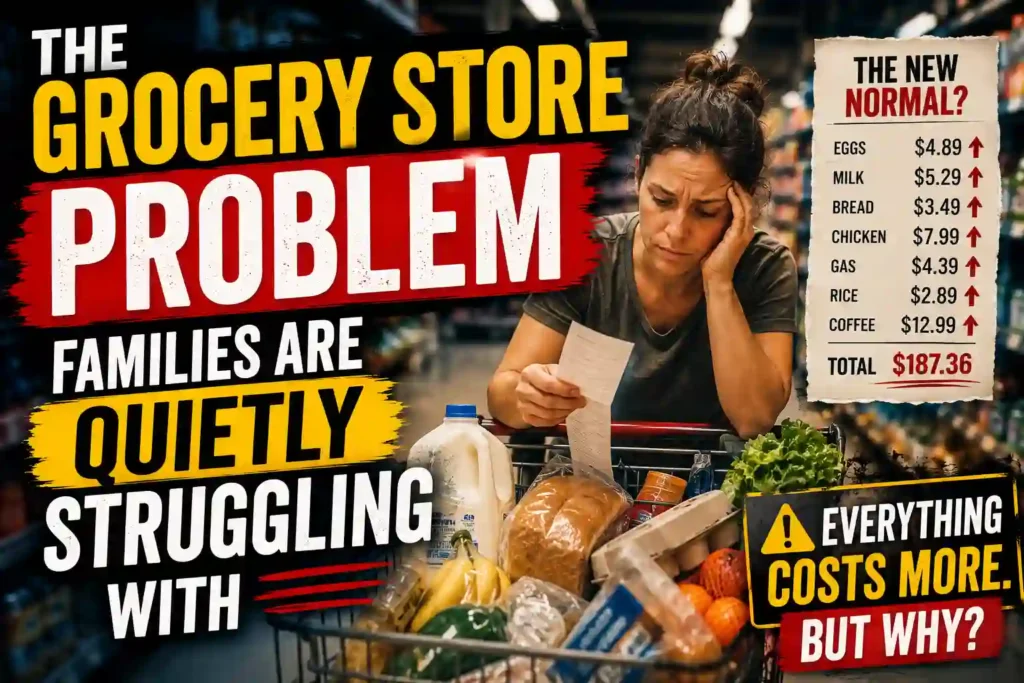
Walking into a supermarket used to feel routine. Today, for many households, grocery shopping has become one of the most stressful parts of the month. The grocery store problem families are quietly struggling with is no longer just about spending slightly more money. Many Americans now feel genuine anxiety every time they check food prices.
A quick shopping trip that once felt manageable now leaves many people shocked at the register.
And the worst part?
The pressure keeps growing.
Across America, rising grocery costs are quietly reshaping:
- family budgets
- eating habits
- savings goals
- financial stability
- emotional well-being
For millions of households, grocery inflation now feels personal.
Table of Contents
Grocery Prices No Longer Feel Normal
Many Americans noticed grocery prices increasing gradually over the years.
But recently, the increases started feeling impossible to ignore.
Simple items that families buy every week now cost significantly more:
- eggs
- milk
- bread
- meat
- fruit
- vegetables
- cereal
- snacks
Even basic household essentials continue becoming more expensive.
The problem is not just one product.
The entire shopping experience feels heavier financially.
That growing frustration explains why Why More Americans Are Living Paycheck To Paycheck Even With Full-Time Jobs resonates with so many people today.
Families Are Buying Less For More Money
One of the biggest emotional triggers at grocery stores is realizing people are paying more while bringing home less.
Many shoppers now experience:
- smaller quantities
- reduced package sizes
- fewer grocery bags
- higher totals at checkout
That combination creates psychological stress because families physically see the difference every week.
The feeling becomes even worse when salaries fail to keep pace with rising costs.
That growing disconnect directly connects to Why Americans Feel Broke Even With A Good Salary.
Why Grocery Inflation Feels Different
Some economic problems feel distant.
Food prices do not.
Groceries affect nearly everyone immediately.
People notice:
- higher meat prices
- expensive snacks
- rising beverage costs
- increased frozen food prices
- more expensive household products
Unlike other financial topics, grocery inflation appears directly in daily life multiple times every month.
That constant exposure makes the financial pressure feel more emotional.
Many Families Quietly Changed Their Shopping Habits
As grocery prices continue rising, many households are adapting quietly.
People increasingly:
- buy fewer name brands
- use coupons more aggressively
- switch stores frequently
- reduce impulse purchases
- buy in bulk when possible
- cut back on snacks and luxury items
Some families now avoid entire aisles they once shopped freely.
Others spend extra time comparing prices just to stay within budget.
These changes may seem small individually.
Collectively, they reveal how deeply grocery inflation is affecting everyday life.
The Emotional Side Of Grocery Shopping Is Changing
For many people, grocery shopping used to feel ordinary.
Today, it often feels stressful.
Many shoppers now:
- calculate totals mentally while shopping
- remove items at checkout
- worry about overdraft fees
- avoid looking at receipts
- feel guilt purchasing non-essential items
That emotional pressure is becoming increasingly common across income levels.
The issue is no longer limited to lower-income households alone.
Parents Feel The Pressure More Intensely
Families with children often experience grocery inflation more aggressively because food expenses scale quickly.
Parents now face difficult choices involving:
- healthier foods
- snack options
- school lunches
- bulk buying
- balancing nutrition with affordability
Many households try protecting children from financial stress while quietly carrying enormous pressure themselves.
That emotional burden explains why grocery inflation discussions often become highly emotional online.
Why Food Prices Keep Rising
Several factors continue affecting grocery prices across America:
- inflation
- transportation costs
- fuel prices
- supply chain disruptions
- labor costs
- weather conditions
- global economic instability
When multiple pressures combine simultaneously, grocery prices increase rapidly across entire categories.
Consumers ultimately absorb much of that cost.
Shrinkflation Quietly Frustrates Consumers
Many shoppers noticed another frustrating trend:
- products becoming smaller while prices stay similar or increase
This phenomenon, often called shrinkflation, creates additional frustration because consumers feel they are losing value silently.
Examples include:
- fewer chips in bags
- smaller cereal boxes
- reduced snack quantities
- smaller frozen meals
Many people now pay closer attention to product sizes because of this issue.
Why Middle-Class Families Feel Increasingly Trapped
Middle-class households often feel particularly squeezed by grocery inflation.
They may earn enough to avoid severe hardship but still feel financial pressure constantly increasing.
For many families:
- savings grow slower
- emergency funds shrink
- grocery budgets expand
- financial flexibility disappears
That growing pressure strongly connects to The Middle-Class Problem Getting Worse Every Year.
Grocery Inflation Is Affecting Mental Health
Money stress and food costs increasingly affect emotional well-being.
Many people now experience:
- budgeting anxiety
- financial exhaustion
- guilt over spending
- stress before shopping trips
- fear of unexpected price increases
Financial pressure becomes mentally draining when it affects basic necessities repeatedly.
Unlike luxury spending, groceries are unavoidable.
That makes the stress feel relentless.
Why Younger Americans Feel Financially Overwhelmed
Younger adults already face:
- expensive rent
- debt pressure
- transportation costs
- rising insurance expenses
Adding aggressive grocery inflation on top of those challenges increases financial anxiety significantly.
That growing frustration connects closely to Why Young Americans Feel Financially Trapped.
Americans Are Becoming More Price Sensitive
Consumers increasingly compare:
- prices
- store brands
- discounts
- coupon apps
- wholesale options
Many households now make grocery decisions differently than they did only a few years ago.
Price sensitivity is becoming a normal survival behavior.
Why Food Costs Feel Worse Than Other Expenses
Food expenses affect people emotionally because groceries represent daily life itself.
People can postpone:
- vacations
- electronics
- luxury purchases
But food remains essential.
That makes grocery inflation feel more urgent and psychologically exhausting than many other economic issues.
Social Media Is Amplifying Grocery Frustration
Videos showing:
- expensive receipts
- tiny grocery hauls
- shocking price comparisons
…continue spreading widely online because millions of people relate instantly.
Food inflation has become one of the most visible symbols of rising living costs in America.
Some Families Are Cutting Back On Nutrition
As prices rise, some households increasingly prioritize affordability over nutritional quality.
People may:
- buy cheaper processed foods
- reduce fresh produce purchases
- avoid expensive proteins
- skip healthier alternatives
This creates long-term concerns extending beyond finances alone.
Why Grocery Inflation Became A National Conversation
Food prices affect:
- nearly every household
- every income level
- every region
That widespread impact transformed grocery inflation into one of America’s most relatable economic issues.
People may disagree politically.
But many agree grocery bills feel dramatically different today.
The Hidden Financial Ripple Effect
Higher grocery costs affect more than shopping alone.
They also reduce:
- savings potential
- emergency preparedness
- debt repayment speed
- financial flexibility
When food expenses rise sharply, households often compensate elsewhere.
That creates additional financial stress across multiple areas of life.
Americans Are Quietly Rethinking Spending Habits
As grocery prices continue rising, many people increasingly prioritize:
- essentials
- budgeting
- stability
- reducing waste
- smarter spending
Consumers are becoming more financially cautious overall.
That shift may continue reshaping consumer behavior for years.
FAQs About Grocery Prices And Rising Food Costs
Before exploring the most searched questions, it is important to understand that rising grocery costs are affecting households across multiple income levels in America. Food inflation has become one of the most emotionally relatable financial pressures families experience today.
Why Are Grocery Prices Rising So Fast?
Inflation, transportation costs, labor expenses, supply chain disruptions, and economic instability continue increasing food prices nationwide.
Why Does Grocery Shopping Feel More Expensive Now?
Many products cost significantly more while package sizes often become smaller at the same time.
What Is Grocery Inflation?
Grocery inflation refers to rising food and household product prices over time.
Why Are Families Struggling With Grocery Costs?
Many household incomes are not increasing fast enough to match rising living expenses and food prices.
What Is Shrinkflation?
Shrinkflation happens when companies reduce product sizes while keeping prices similar or increasing them.
Why Do Grocery Prices Feel Emotionally Stressful?
Food is an essential necessity, so rising prices affect daily life constantly.
Why Are Middle-Class Families Feeling Financial Pressure?
Higher food, housing, debt, and transportation costs are reducing financial flexibility for many households.
Why Are Meat Prices So Expensive?
Fuel costs, supply chain issues, labor expenses, and inflation continue affecting meat prices.
Why Are Eggs Sometimes Extremely Expensive?
Supply disruptions, inflation, and production challenges can increase egg prices rapidly.
Why Are Grocery Receipts Shocking Many Americans?
Consumers often pay significantly more while receiving fewer products than before.
Why Are Younger Americans Struggling Financially?
Younger workers often face rising rent, debt, inflation, and expensive everyday living costs simultaneously.
Why Are Families Buying Fewer Name Brands?
Store brands and discounted alternatives often cost less during periods of financial pressure.
Why Do People Compare Grocery Prices More Often Now?
Consumers are becoming increasingly price sensitive due to inflation and financial stress.
Why Does Food Inflation Affect Mental Health?
Constant financial pressure creates anxiety, emotional exhaustion, and budgeting stress.
Why Are Americans Talking More About Grocery Costs Online?
Millions of households relate personally to rising food prices and shrinking budgets.
Why Are Families Using Coupons More Aggressively?
Many households seek ways to reduce grocery spending as prices continue increasing.
Why Do Groceries Cost Different Amounts In Different Areas?
Regional transportation, labor, taxes, and supply conditions affect pricing differences.
Why Are Some Products Becoming Smaller?
Companies sometimes reduce product quantities to offset rising production costs.
Why Do Grocery Prices Affect Savings?
Higher monthly food expenses leave less money available for saving and emergencies.
Why Are Budgeting Apps Becoming More Popular?
Many people want better control over rising living expenses and spending habits.
Why Are Americans Changing Eating Habits?
Some households reduce restaurant spending and adjust grocery purchases to manage costs.
Why Are Processed Foods Sometimes Cheaper?
Mass production and ingredient costs often make processed foods less expensive than healthier alternatives.
Why Is Food Inflation Such A Big Economic Topic?
Food affects nearly every household regularly, making grocery prices highly visible and emotional.
Could Grocery Prices Continue Rising?
Future grocery costs depend on inflation, supply chains, fuel prices, labor costs, and economic conditions.
Why Does Grocery Inflation Feel Personal?
Unlike many financial issues, grocery shopping directly impacts everyday survival and family stability.
Conclusion
The grocery store problem families are quietly struggling with is becoming one of America’s most emotionally relatable financial challenges.
For millions of households, rising food prices no longer feel temporary.
They feel like a permanent pressure affecting everyday life.
As grocery costs continue increasing alongside housing, debt, and inflation, many Americans are being forced to rethink spending habits, budgeting priorities, and financial expectations entirely.