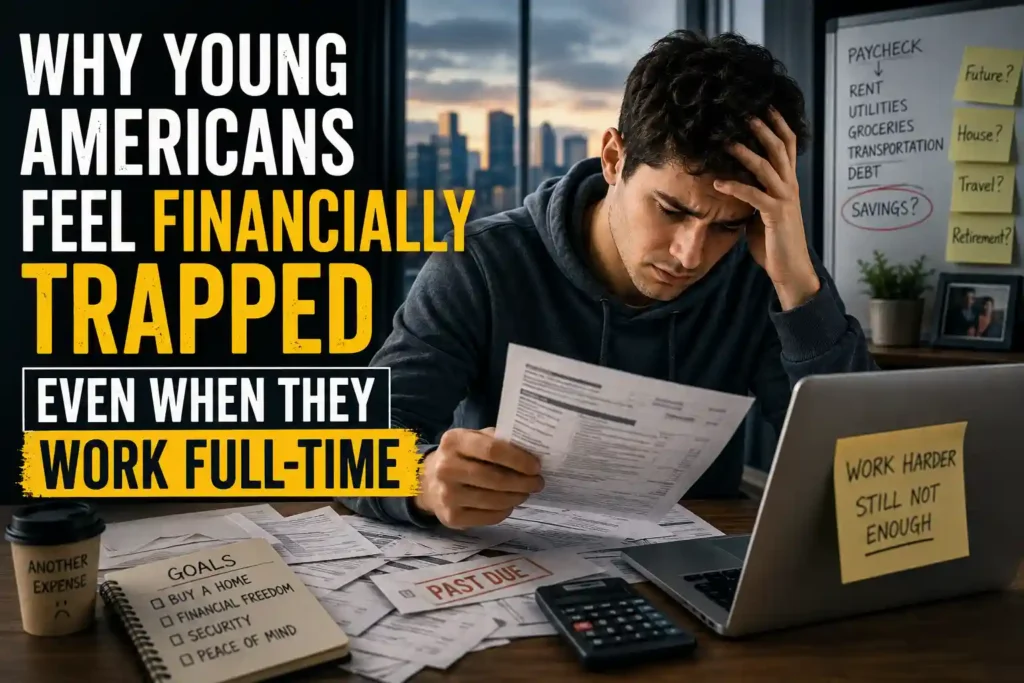
Why young Americans feel financially trapped has become a growing conversation across the United States. Many people are working full-time, paying bills responsibly, and trying to save money, yet life still feels financially exhausting.
Rent keeps rising.
Groceries cost more.
Debt follows them everywhere.
And even decent salaries no longer feel as comfortable as they once did.
For many young workers, the frustration is not laziness or poor decisions. It is the feeling that no matter how hard they work, getting ahead financially keeps becoming harder.
Table of Contents
Why Full-Time Work No Longer Feels Like Enough
One of the biggest emotional shocks many young workers experience is realizing that a steady paycheck does not automatically create financial comfort anymore.
Years ago, full-time employment often represented stability.
Today, many workers feel like their salaries disappear almost immediately after getting paid.
Money goes toward:
- rent
- utilities
- transportation
- groceries
- insurance
- student loans
- subscriptions
- debt payments
And after everything gets deducted, many people are left wondering:
“Where did all my money go?”
That question is becoming more common every year.
Why Housing Costs Feel Impossible For Many Young Adults
Housing has become one of the biggest reasons younger Americans feel financially trapped.
In many cities, rent prices have increased far faster than wages.
Some workers now spend huge portions of their income simply trying to keep a roof over their heads.
For others, buying a home feels almost unreachable.
High home prices combined with elevated interest rates have created enormous barriers for first-time buyers.
That changes how people think about the future.
Many young adults are delaying:
- marriage
- children
- moving out
- homeownership
- long-term financial planning
Not because they do not want those things.
But because they feel financially cornered.
Why Debt Keeps Following Young Americans Everywhere
Debt is another major source of financial pressure.
Many younger Americans are balancing:
- student loans
- credit card debt
- car loans
- medical bills
- personal loans
At the same time, interest rates remain painfully high in many areas.
That creates a dangerous cycle.
People borrow money to survive rising costs.
Then debt payments reduce their future financial flexibility.
Then unexpected expenses force more borrowing.
Over time, many workers start feeling like they are running in circles financially.
The Psychological Exhaustion Many Young Workers Feel
Now that you understand the financial side, there is another issue people rarely discuss openly enough.
Constant financial stress changes mental health.
When people spend years worrying about money, it creates:
- anxiety
- burnout
- emotional exhaustion
- fear of the future
- frustration
- hopelessness
Many young Americans quietly feel guilty for struggling financially despite working hard.
Some even blame themselves.
But increasingly, workers are starting to realize the problem may be larger than personal budgeting mistakes alone.
Why Inflation Made Everything Worse
Inflation intensified pressure on younger Americans dramatically.
Even workers who received raises often discovered something frustrating:
their expenses increased faster than their income.
That means many people technically earn more money than before while still feeling financially weaker.
Groceries became more expensive.
Insurance costs climbed.
Rent surged.
Utilities rose.
Transportation costs increased.
And slowly, financial breathing room disappeared.
That is one reason How Inflation Quietly Changed American Life became such a major conversation recently.
Why Social Media Makes Financial Pressure Feel Even Worse
There is another hidden factor many experts overlook completely.
Social media constantly exposes people to lifestyles they cannot realistically afford.
Young adults scroll past:
- luxury vacations
- expensive apartments
- designer clothing
- luxury cars
- “successful entrepreneur” lifestyles
Over time, this creates emotional pressure.
People start comparing their real financial situation to carefully edited online lives.
That comparison often increases feelings of failure, even when someone is working hard and surviving responsibly.
Why So Many Young Americans Delay Major Life Decisions
Financial pressure changes long-term planning dramatically.
Many younger Americans are delaying:
- having children
- getting married
- buying homes
- starting businesses
- changing careers
- relocating
Not because they lack ambition.
But because financial instability creates fear around taking risks.
For many workers, survival becomes the priority instead of growth.
Why Even “Good Salaries” No Longer Feel Comfortable
One of the most shocking shifts happening right now is that many people earning decent incomes still feel financially trapped.
A salary that once sounded impressive now disappears quickly in expensive cities and high-cost living environments.
That is why Why Americans Feel Broke Even With A Good Salary resonates with so many people today.
Because financial pressure is no longer limited to low-income households alone.
Middle-income workers increasingly feel squeezed too.
Why Credit Card Debt Is Quietly Exploding
Many Americans are relying more heavily on credit cards simply to maintain their lifestyle.
This becomes dangerous when:
- interest rates stay high
- emergencies happen
- income remains stagnant
- inflation continues rising
Some consumers are now carrying balances month after month while watching interest charges quietly grow larger.
Over time, debt itself starts consuming future income.
That creates even more financial pressure.
The Grocery Problem Young Workers Cannot Ignore
Food prices have become emotionally exhausting for many households.
Younger Americans increasingly notice:
- smaller product sizes
- higher grocery bills
- more expensive restaurants
- rising delivery fees
- shrinking purchasing power
That is exactly why The Grocery Store Problem Families Are Quietly Struggling With connects emotionally with so many readers across America.
Because almost everybody feels it weekly.
Why Some Young Americans Feel Hopeless About Retirement
Retirement feels distant for many younger workers.
Some people are struggling just to survive monthly expenses right now.
That makes long-term investing feel difficult or even impossible.
Many workers fear:
- never owning a home
- never saving enough
- working forever
- depending on debt long-term
Even financially responsible people increasingly worry whether traditional financial milestones are still realistic.
Why The Economy Feels So Different For Younger Generations
Older generations often compare today’s workers to previous decades without fully understanding how much costs have changed.
Younger Americans today face:
- higher housing costs
- more expensive education
- larger debt burdens
- elevated healthcare expenses
- rising insurance costs
- more competitive job markets
At the same time, wages in many industries have not kept pace proportionally with living costs.
That disconnect fuels frustration.
Why Many Young Workers Feel Stuck Professionally
Some employees want better jobs but feel trapped financially from taking career risks.
Changing careers may require:
- moving
- training
- temporary income loss
- education costs
Many workers simply cannot afford that instability.
As a result, some stay in jobs they dislike because financial survival matters more than personal fulfillment.
Why Young Americans Are Becoming More Financially Cautious
Now that you understand the pressure younger workers face, their behavior starts making more sense.
Many people are:
- spending less
- delaying purchases
- avoiding debt carefully
- living with family longer
- cutting subscriptions
- postponing travel
- avoiding unnecessary risks
This is not always because they want to.
Sometimes it is because they feel financially forced into caution.
What Young Americans Are Really Looking For
Despite all the frustration, many younger workers are not asking for luxury.
Most simply want:
- stability
- affordable housing
- manageable debt
- financial breathing room
- predictable expenses
- realistic opportunities to grow
That desire for stability is becoming one of the defining economic emotions of this generation.
Why More Americans Are Living Paycheck To Paycheck
Even full-time workers increasingly struggle to build savings consistently. Why More Americans Are Living Paycheck To Paycheck Even With Full-Time Jobs explains how rising living costs and financial pressure are pushing many households into survival mode despite stable employment.
FAQs About Why Young Americans Feel Financially Trapped
Many younger Americans are asking serious questions about money, inflation, debt, housing, and the future. Here are some of the biggest questions people are searching for right now.
Why Do Young Americans Feel Financially Trapped?
Many younger workers face rising housing costs, debt payments, inflation, and expensive living conditions while wages often fail to keep pace with overall expenses.
Why Is Rent So Expensive Right Now?
Housing shortages, inflation, population growth, and rising property costs have pushed rental prices much higher across many parts of the United States.
Are Young Workers Earning Less Than Older Generations?
Not always in raw salary numbers, but many younger workers face significantly higher living costs relative to income than previous generations experienced.
Why Does Full-Time Work No Longer Feel Enough?
Living expenses such as housing, groceries, insurance, transportation, and debt payments consume much larger portions of income today.
How Did Inflation Affect Younger Americans?
Inflation increased costs for essential goods and services, making it harder for younger workers to save money or build financial stability.
Why Are So Many Young Adults Living With Parents Longer?
High housing costs and financial pressure are forcing many young adults to delay independent living arrangements.
Is Student Loan Debt Still A Major Problem?
Yes. Many borrowers continue struggling with large student debt balances that reduce financial flexibility and delay major life decisions.
Why Do Young Americans Feel Hopeless About Buying Homes?
High home prices and elevated mortgage rates have made homeownership feel unrealistic for many first-time buyers.
Does Social Media Increase Financial Anxiety?
For many people, yes. Constant exposure to luxury lifestyles online can create unhealthy financial comparison and emotional pressure.
Why Are Younger Workers Delaying Marriage And Children?
Financial instability and rising living costs make many people feel unprepared for major long-term commitments.
Why Are Groceries So Expensive Now?
Food production, transportation, labor, and energy costs have all contributed to rising grocery prices nationwide.
Is Credit Card Debt Rising In America?
Yes. Many Americans increasingly rely on credit cards to manage rising expenses and financial emergencies.
Why Do Even Good Salaries Feel Insufficient?
Housing, debt, healthcare, and inflation pressures have increased so dramatically that many decent incomes no longer provide strong financial comfort.
Are Younger Generations Struggling More Financially?
Many younger Americans face unique financial challenges involving housing affordability, debt, and elevated living costs.
Why Are Young Workers Feeling Burned Out?
Long-term financial stress combined with demanding work conditions often creates emotional exhaustion and anxiety.
How Does Financial Stress Affect Mental Health?
Constant money worries can increase anxiety, depression, burnout, sleep problems, and emotional fatigue.
Why Are Interest Rates Such A Big Problem?
Higher interest rates make borrowing more expensive for homes, cars, credit cards, and personal loans.
Why Do People Feel Like They Cannot Get Ahead Financially?
Rising expenses often outpace income growth, making it difficult to build savings or reduce debt effectively.
Are Young Americans Spending Less Now?
Many younger consumers are becoming more financially cautious due to economic uncertainty and rising living costs.
Why Is Emergency Savings So Difficult To Build?
High monthly expenses often leave workers with very little extra income available for savings.
Could The Economy Improve For Younger Americans?
Economic conditions can change over time, but housing, debt, inflation, and wage growth will remain important factors.
Why Do So Many Workers Feel Financially Exhausted?
Years of inflation, debt pressure, and economic uncertainty have emotionally drained many households.
Is Financial Trapping Only Affecting Low-Income Workers?
No. Increasingly, middle-income earners also report feeling financially stretched and unstable.
Why Are Younger Americans Avoiding Risk?
Financial insecurity often makes people more cautious about changing careers, starting businesses, or making major financial decisions.
What Are Young Americans Really Looking For Financially?
Most simply want affordable living, manageable debt, financial stability, and realistic opportunities to improve their future.
Conclusion
A growing number of young Americans are discovering that financial stress is no longer just about “bad money habits.”
The cost of modern life itself has changed dramatically.
Housing became more expensive.
Debt became heavier.
Inflation stretched paychecks thinner.
And long-term financial goals suddenly started feeling much harder to reach.
That is why so many younger workers feel financially trapped today.
Not because they are unwilling to work.
But because many feel like the economic system keeps moving further away every time they try to catch up.

