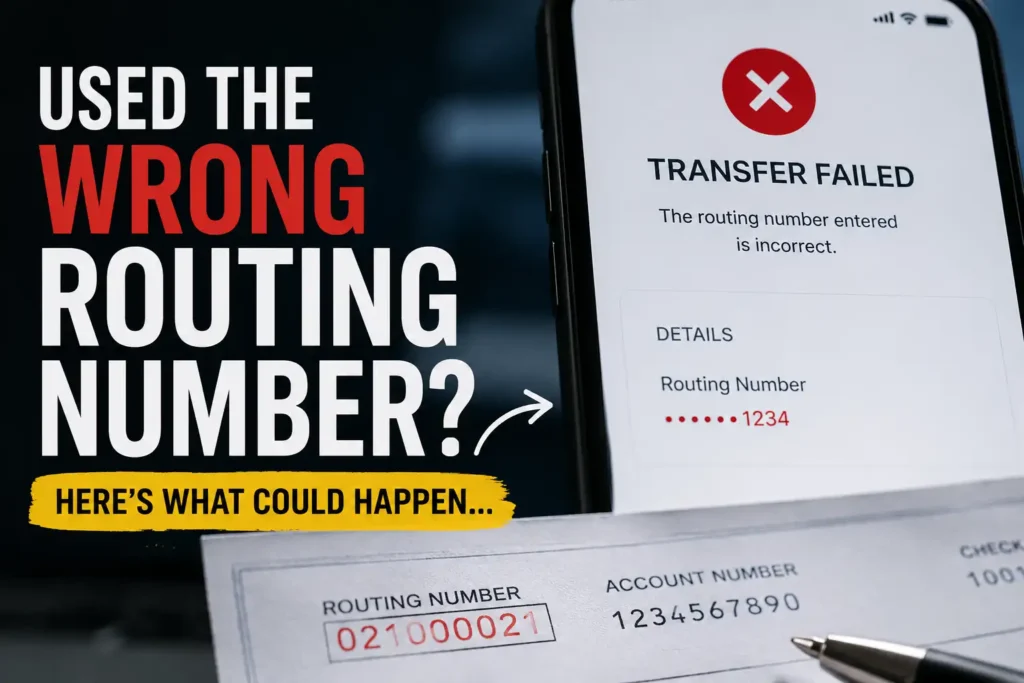
Entering the wrong routing number is easier than you might think. Whether you’re setting up direct deposit, sending an ACH transfer, paying a bill online, or receiving a tax refund, a single incorrect digit can prevent your payment from being processed correctly.
If you’ve realized you used the wrong routing number, you’re probably wondering whether your money is gone, if the payment can be recovered, or how long it will take to fix the problem.
The good news is that using the wrong routing number doesn’t always mean you’ve lost your money. In many cases, the payment is rejected or returned automatically. However, the outcome depends on the type of transaction, the routing number entered, and whether the accompanying account information is valid.
In this guide, you’ll learn what happens when you use the wrong routing number, how different payment types are affected, what steps to take immediately, and how to avoid similar problems in the
future.Remember to check out 121000248 Routing Number
Table of Contents
Quick Answer
If you use the wrong routing number:
- Your payment may be rejected before it’s processed.
- The transaction may be delayed while the bank reviews it.
- The payment may be returned to the sender.
- In rare situations, the payment may be sent to another financial institution if the routing number is valid.
What happens next depends on the type of transfer, whether the routing number exists, and whether the account information matches.
The sooner you identify the mistake and contact your bank, the better your chances of resolving the issue quickly.
What Is a Routing Number?
A routing number is a nine-digit code that identifies a financial institution in the United States.
Banks use routing numbers to process electronic payments accurately.
You’ll usually need one when:
- Setting up direct deposit
- Sending or receiving ACH transfers
- Paying bills electronically
- Receiving tax refunds
- Sending domestic wire transfers
- Ordering checks
The routing number identifies the bank, while the account number identifies your specific account.
Both pieces of information must be correct for most electronic transactions to be completed successfully.
What Happens If the Routing Number Is Wrong?
Several outcomes are possible.
The result depends on whether the routing number is valid, whether the account information matches, and how the receiving bank handles the transaction.
Scenario 1: The Routing Number Doesn’t Exist
If you enter a routing number that doesn’t belong to any financial institution, the payment usually cannot be processed.
In most cases:
- The bank rejects the transaction.
- The payment is returned.
- You’ll need to correct the routing number and submit the payment again.
Although this may delay the transaction, it’s often the easiest problem to resolve.
Scenario 2: The Routing Number Belongs to Another Bank
If the routing number is valid but belongs to a different financial institution, the payment may be routed there first.
What happens next depends on the account information.
If the account number doesn’t exist at that bank, the payment is generally rejected and returned.
If additional review is required, processing may take longer.
Scenario 3: The Routing Number Is Correct but the Account Number Is Wrong
Even with the correct routing number, an incorrect account number can prevent the payment from reaching the intended recipient.
Possible outcomes include:
- The payment is rejected.
- The payment is returned.
- The bank requests additional verification.
This is one of the most common reasons ACH payments fail.
Scenario 4: Both the Routing Number and Account Number Are Incorrect
When both pieces of information are wrong, the transaction usually fails during processing.
Most banks return the payment because they cannot match the information to a valid account.
What Happens to Different Types of Payments?
Not all electronic payments are processed the same way.
Here’s how the wrong routing number can affect common banking transactions.
Direct Deposit
If you provide your employer with the wrong routing number, your paycheck may:
- Be delayed.
- Be rejected.
- Be returned to your employer.
Once the payroll department is notified, you’ll usually need to submit corrected banking information before the payment can be reissued.
ACH Transfers
ACH payments often fail when routing information is incorrect.
Possible outcomes include:
- Returned payment
- Delayed processing
- Rejected transaction
Because ACH transfers are processed in batches, it may take several business days before you know the payment failed.
Domestic Wire Transfers
Wire transfers are generally processed much faster than ACH transfers.
If the routing number is incorrect, the transfer may:
- Be rejected before completion.
- Be delayed while the bank investigates.
- Require assistance from both banks to resolve.
Because wire transfers are often used for large or time-sensitive payments, contact your bank immediately if you notice an error.
Tax Refunds
If you entered the wrong routing number when filing your tax return, the outcome depends on whether the receiving bank accepts the deposit.
If the payment cannot be completed, it may be returned to the issuing agency, which may then issue a paper check or request updated banking information.
Government Benefits
Incorrect routing numbers can also delay:
- Social Security payments
- Veterans benefits
- Unemployment benefits
- Pension payments
Updating your banking information promptly helps prevent future payment delays.
Real-World Examples
Here are a few examples of how routing number mistakes can affect everyday banking.
Example 1: Payroll Delay
Emma starts a new job and accidentally enters one incorrect digit in her routing number.
Payroll submits her direct deposit on Thursday.
Her bank rejects the payment because the routing number is invalid.
Her employer receives the returned payment and issues a replacement after Emma updates her banking information.
Instead of getting paid on Friday, she receives her wages several business days later.
Example 2: ACH Transfer Rejected
James transfers money from his checking account to another bank.
He accidentally uses the wrong routing number.
The receiving bank cannot match the payment to a valid institution, so the transfer is returned automatically.
James corrects the routing number and resubmits the transfer.
Example 3: Wire Transfer Problem
Olivia receives instructions for a domestic wire transfer.
She accidentally enters the ACH routing number instead of the bank’s domestic wire routing number.
The transfer is delayed until the routing information is corrected.
How Long Does It Take to Fix a Wrong Routing Number?
The answer depends on the type of transaction.
Generally speaking:
- ACH transfers may require several business days before they’re returned.
- Direct deposits depend on your employer’s payroll schedule.
- Wire transfers often require immediate bank assistance.
- Government payments depend on the issuing agency’s procedures.
The sooner you notify the bank or payment sender, the faster the issue can usually be resolved.
What Should You Do If You Used the Wrong Routing Number?
If you’ve entered the wrong routing number, don’t wait.
Take these steps immediately.
Step 1: Contact Your Bank
Explain what happened and ask whether the payment is:
- Pending
- Completed
- Rejected
- Returned
Your bank can tell you what options are available.
Step 2: Contact the Payment Sender
If someone else initiated the payment, notify them immediately.
This may include:
- Your employer
- A government agency
- A business
- Another bank
If processing hasn’t started, they may be able to correct the information before the payment is sent.
Step 3: Verify All Banking Information
Double-check:
- Routing number
- Account number
- Account type
- Account holder’s name
Correcting only one error may not solve the problem if other information is also incorrect.
Step 4: Monitor Your Account
Continue checking your account for:
- Returned payments
- Pending transactions
- Replacement deposits
- Notifications from your bank
Can You Recover the Money?
In many situations, yes.
Most routing number mistakes do not result in permanent loss of funds.
Payments that cannot be processed are often returned automatically.
However, if a transaction has already been completed, recovering the funds may require assistance from the sending and receiving financial institutions.
That’s why acting quickly is so important.
How to Avoid Using the Wrong Routing Number
Preventing routing number mistakes is much easier than fixing them.
Verify the Routing Number Before Submitting It
Never rely on memory.
Always confirm the routing number using your bank’s account information.
Check Every Digit
Routing numbers contain only nine digits.
A single incorrect digit can delay the entire payment.
Use the Correct Routing Number for the Transaction
Some banks use different routing numbers for:
- ACH transfers
- Direct deposits
- Domestic wire transfers
Always verify which one applies.
Keep Your Banking Information Updated
If your bank changes routing numbers after a merger or account update, revise your direct deposit and automatic payment instructions promptly.
Frequently Asked Questions About Using the Wrong Routing Number
Routing number mistakes are more common than many people realize. Here are answers to the questions people ask most often.
What Happens If I Enter the Wrong Routing Number?
The payment may be delayed, rejected, returned, or require additional review before processing.
Will My Money Be Lost?
In many cases, no. Payments that cannot be processed are often returned to the sender.
Can a Direct Deposit Fail Because of the Wrong Routing Number?
Yes. Incorrect routing information may prevent payroll from being deposited successfully.
Can an ACH Transfer Be Reversed?
Depending on the circumstances and the stage of processing, a bank may be able to stop or reverse an ACH transfer. Contact your bank immediately if you discover an error.
Can a Wire Transfer Be Corrected?
Possibly. Contact your bank as soon as you notice the mistake, as wire transfers are often processed quickly.
How Long Does It Take to Get My Money Back?
The timeline depends on the type of payment, the banks involved, and whether the payment has already been processed.
Should I Contact My Bank or the Sender First?
If possible, contact both. Your bank can explain the payment status, while the sender may be able to update or cancel the transaction before processing is complete.
Can One Incorrect Digit Cause a Payment to Fail?
Yes. A routing number must be entered exactly as assigned.
Can I Change My Routing Number After Submitting Payroll Information?
Yes. Notify your employer’s payroll department immediately and submit updated banking information.
What’s the Best Way to Avoid Routing Number Errors?
Verify your routing number directly from your bank before submitting any payment or direct deposit form.
Related Articles
To learn more about routing numbers and electronic banking, read these guides:
- How to Find Your Routing Number
- What Is an ABA Routing Number?
- How Direct Deposit Works
- What Is the ACH Network?
- ACH Transfer vs. Wire Transfer
- Why Was My ACH Transfer Delayed or Rejected?
- How Long Do ACH Transfers Take?
- What Is an ACH Credit?
- What Is an ACH Debit?
Conclusion
Using the wrong routing number can be frustrating, but it doesn’t always mean your money is gone. In many cases, banks reject or return transactions that contain incorrect routing information, giving you the opportunity to correct the mistake and resend the payment.
The best way to avoid delays is to verify your routing number before submitting any banking instructions. Whether you’re setting up direct deposit, sending an ACH transfer, receiving a tax refund, or initiating a wire transfer, taking a few extra moments to confirm your routing number can help ensure your payment reaches the right destination the first time.
Remember to check out 121000248 Routing Number

