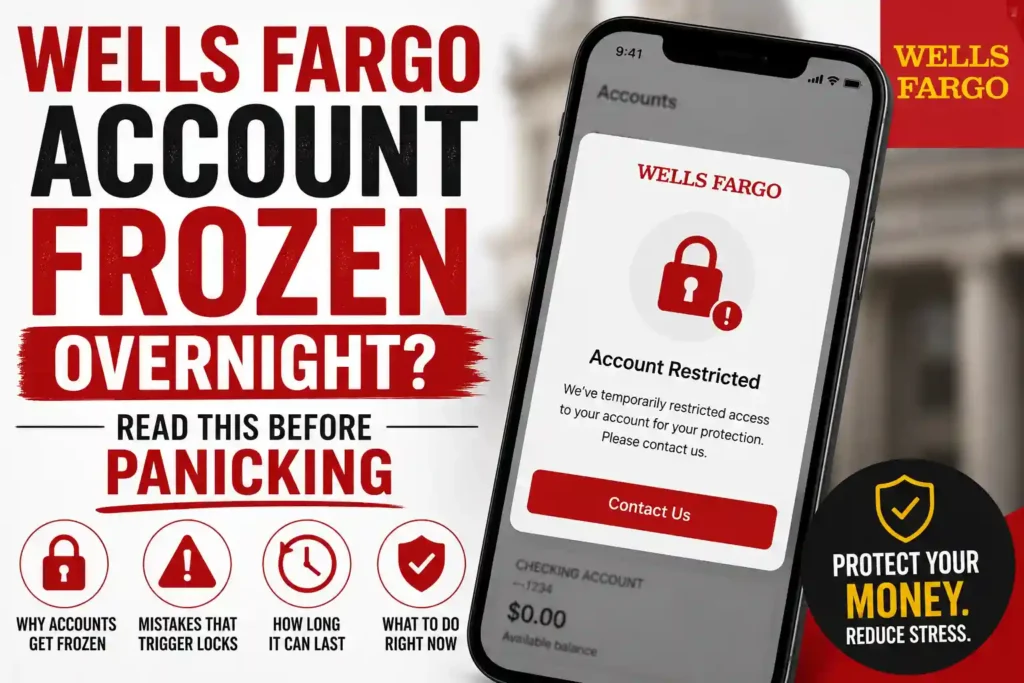
Few banking experiences create panic faster than opening your Wells Fargo app and suddenly seeing your account restricted, frozen, or unavailable. One minute your money looks accessible. The next minute your debit card declines, transfers fail, and your account feels locked without warning. Many customers immediately fear the worst:
- fraud
- identity theft
- hacked accounts
- lost money
But here is what most people do not realize: accounts can get frozen for many different reasons, and some of them are triggered by normal behavior customers never expected to look suspicious.
If your Wells Fargo account was frozen overnight, this guide explains what may have happened, what mistakes can make the situation worse, how long freezes can last, and what you should do immediately to protect your money and reduce stress.
Table of Contents
Why Wells Fargo Freezes Accounts In The First Place
Banks do not usually freeze accounts randomly.
Most freezes happen because automated systems detect something unusual.
Modern banking fraud systems monitor:
- spending patterns
- login activity
- transfers
- withdrawals
- deposits
- device changes
- transaction behavior
If the system notices activity that looks risky, suspicious, or inconsistent, restrictions may happen automatically.
And sometimes the freeze happens before the customer even realizes anything unusual occurred.
This can happen because of:
- suspicious purchases
- unusually large deposits
- repeated failed login attempts
- fraud alerts
- identity verification issues
- charge disputes
- unusual transfers
- suspicious ATM activity
The difficult part is that normal behavior can sometimes look suspicious to automated systems.
Now let’s talk about the most common trigger many customers never see coming.
Sudden Spending Changes Can Trigger Fraud Systems
Banks study spending behavior patterns constantly.
If your account normally shows:
- local purchases
- small transactions
- predictable bill payments
then sudden unusual activity may trigger security systems.
Examples include:
- expensive online purchases
- rapid withdrawals
- international transactions
- purchases in another state
- multiple transactions within minutes
Even if you made the purchases yourself, fraud systems may temporarily restrict the account while verifying activity.
This is especially common during:
- travel
- holidays
- emergencies
- major shopping periods
Some customers assume the bank “made a mistake.”
But automated systems are designed to react quickly because fraud spreads fast once criminals gain access.
That brings us to another hidden trigger many people ignore.
Logging In From New Devices Or Locations Can Raise Red Flags
Many customers underestimate how sensitive modern banking systems have become.
A login from:
- a new phone
- another city
- a VPN
- unfamiliar Wi-Fi
- another country
can sometimes trigger account reviews.
Now imagine combining:
- a new device
- unusual spending
- password reset attempts
- rapid transfers
That combination can look extremely suspicious to fraud systems.
And once security reviews begin, account restrictions may follow automatically.
This is one reason customers traveling internationally sometimes experience sudden banking problems.
Now that you understand how behavior patterns matter, let’s look at another major cause of account freezes.
Large Deposits Or Transfers Can Trigger Reviews
Many customers think only suspicious withdrawals cause problems.
Not true.
Large deposits can also trigger reviews.
Especially:
- checks
- wire transfers
- unusual cash deposits
- business-related payments
- third-party transfers
Banks may temporarily review:
- where the money came from
- whether the deposit is legitimate
- fraud risks
- verification requirements
During this process:
- funds may become unavailable
- transfers may pause
- account access may become restricted
This creates panic because customers often expect immediate access to their money.
And unfortunately, many people make the next mistake that worsens the situation.
Panicking And Repeatedly Attempting Logins Can Make Things Worse
This happens constantly.
A customer notices:
- account access problems
- declined transactions
- login issues
Then panic begins.
They:
- repeatedly reset passwords
- attempt multiple logins
- use different devices
- refresh constantly
- spam customer support
Ironically, this behavior can make fraud systems even more suspicious.
Multiple failed login attempts are classic fraud indicators.
So aggressive troubleshooting sometimes deepens the restriction instead of resolving it.
That is why staying calm matters more than most people realize.
Now let’s talk about one of the most overlooked causes of frozen accounts.
Suspicious Zelle Or Peer-To-Peer Transfers
Peer-to-peer payment systems create major fraud risks.
Banks monitor these transfers aggressively because scammers frequently use them.
Certain patterns may trigger reviews:
- large transfers to new recipients
- rapid repeated payments
- unusual payment descriptions
- receiving money from suspicious accounts
- high transfer activity in short periods
Some customers unknowingly interact with fraudulent accounts and get caught in automated security reviews.
And because scams involving peer-to-peer payments are exploding, banks are becoming stricter every year.
That brings us to another issue many customers misunderstand badly.
An Account Freeze Does Not Always Mean You Lost Your Money
This is where panic becomes dangerous.
Many customers immediately assume:
- their money disappeared
- their account was hacked permanently
- the bank stole their funds
Often, that is not the case.
Many freezes are temporary security restrictions designed to:
- verify identity
- review transactions
- investigate suspicious activity
- prevent fraud losses
The money may still exist inside the account while the review happens.
But because communication can sometimes feel vague or delayed, customers become extremely anxious.
And unfortunately, some people worsen the situation by ignoring official communication.
Ignoring Bank Notifications Can Delay Resolution
Some customers:
- ignore emails
- skip alerts
- avoid calls from unknown numbers
Normally, that is smart.
But during account reviews, missing legitimate verification requests can slow resolution significantly.
Banks may request:
- identity verification
- confirmation of recent transactions
- fraud confirmation
- document uploads
Delays responding can extend restrictions unnecessarily.
That is why checking official account communication carefully matters during freezes.
Now let’s discuss another major issue hurting customers financially.
Automatic Payments Can Fail During Account Restrictions
This creates secondary financial damage many customers do not expect.
If your Wells Fargo account becomes restricted:
- subscriptions may fail
- rent payments may bounce
- automatic bills may decline
- credit card payments may fail
This can trigger:
- overdraft fees
- late payment penalties
- service interruptions
- credit score damage
Many customers focus only on restoring access while forgetting connected financial obligations.
That mistake can create problems long after the freeze ends.
This is why financially organized customers always maintain backup payment methods whenever possible.
Now let’s talk about how long freezes may actually last.
How Long Can A Wells Fargo Account Stay Frozen?
There is no universal timeline.
Some restrictions resolve within:
- hours
- one business day
Others may last:
- several days
- longer investigations
- extended verification reviews
The timeline often depends on:
- fraud severity
- verification requirements
- transaction complexity
- identity confirmation
- compliance reviews
Simple verification issues may resolve quickly.
Complex fraud investigations can take longer.
This uncertainty is exactly why account freezes create so much stress.
Now let’s discuss what customers should do immediately after discovering restrictions.
What To Do Immediately If Your Wells Fargo Account Is Frozen
The first few actions matter a lot.
Stay Calm
Panic leads to bad decisions and suspicious behavior.
Review Official Notifications Carefully
Look for:
- fraud alerts
- verification requests
- suspicious transaction notices
Avoid Repeated Login Attempts
Too many failed attempts can worsen restrictions.
Contact Official Customer Support Directly
Use verified contact information from:
- the official app
- your bank card
- official banking materials
Review Recent Transactions
Identify:
- unusual purchases
- suspicious transfers
- unfamiliar charges
Monitor Connected Bills
Prepare backup payment methods if necessary.
Document Important Details
Keep records of:
- timestamps
- conversations
- suspicious activity
- failed transactions
That organization can help tremendously if problems escalate.
Now let’s discuss the hidden financial habits that reduce freeze risks long term.
Smart Habits That Help Reduce Account Freeze Risks
Some banking behaviors lower risk significantly.
Turn On Real-Time Alerts
This helps detect suspicious activity early.
Notify The Bank Before Traveling
Especially for international travel or unusual spending.
Avoid Public Wi-Fi For Banking
Unsecured networks increase fraud risks.
Monitor Your Statements Carefully
Small suspicious charges often appear before larger fraud attempts.
You should also review The Wells Fargo Account Statement Details Most People Ignore Completely to understand the hidden warning signs many customers miss before account problems escalate.
Understand Your Available Balance Properly
Balance confusion can sometimes create risky transaction patterns that trigger issues later.
That is why reading Wells Fargo Available Balance Explained Before You Overspend Again can help you avoid accidental financial behavior that raises red flags.
Avoid Suspicious ATM Machines
Compromised ATMs remain a major fraud source.
You should also check The Wells Fargo ATM Habit That Could Put Your Money At Risk to understand the ATM mistakes that expose customers to account problems.
Monitor Your Account History Regularly
Strange transactions often begin subtly.
Reviewing Wells Fargo Account History Errors That Can Hurt Your Finances can help you catch suspicious activity earlier before it turns into a serious banking restriction.
The Real Reason Frozen Accounts Feel So Terrifying
A frozen account creates fear because modern life depends heavily on instant banking access.
People rely on accounts for:
- food
- transportation
- bills
- subscriptions
- emergencies
The moment access disappears, financial vulnerability becomes real.
That emotional shock causes many customers to panic before understanding what actually happened.
But in many cases, freezes are temporary security reactions designed to prevent bigger financial losses.
The key is responding carefully instead of emotionally.
Conclusion
A Wells Fargo account frozen overnight can feel terrifying, especially when payments fail and account access suddenly disappears without warning. But many freezes happen because automated fraud systems detect unusual behavior, suspicious transfers, unfamiliar logins, or risky transaction patterns. Understanding how these systems work can help you stay calmer, respond smarter, and avoid making the situation worse. The faster you verify suspicious activity, monitor connected payments, and follow official verification steps carefully, the easier it becomes to protect your money and reduce the financial stress that frozen accounts often create.

