Published: May 2026 | Last Updated: May 2026
Author: EffectiveStuffs Finance Team | Category: Saving Money
This article is for informational purposes only and does not constitute financial, investment, or legal advice. Always adjust financial decisions to your personal income, debt level, expenses, and financial goals.
Most people are one serious emergency away from financial panic.
Not because they are irresponsible.
Because life became expensive faster than their savings could keep up.
A car repair suddenly costs $2,000. Rent increases again. A job disappears unexpectedly. A medical bill arrives at the worst possible moment. And suddenly, people who looked “fine” financially are using credit cards just to survive another month.
That is exactly why learning how to build an emergency fund matters so much.
A real emergency fund changes everything psychologically. Bills stop feeling terrifying. Unexpected expenses stop feeling catastrophic. Financial stress becomes manageable instead of constant.
The problem is that most emergency fund advice sounds unrealistic.
“Just save six months of expenses.”
As if people casually have thousands of extra dollars sitting around every month.
Real life does not work like that.
This guide breaks down exactly how to build an emergency fund step by step in a way normal people can actually follow — even if money already feels tight right now.
Table of Contents
Key Takeaways
- A 6 month emergency fund protects you from layoffs, medical bills, and financial emergencies
- Most people build emergency savings slowly through consistency, not giant deposits
- Emergency funds should cover survival expenses, not luxury spending
- Your first $1,000 emergency fund milestone matters more than most people realize
- Automating savings removes emotional spending decisions
- Emergency savings reduce financial anxiety far beyond just money itself
- The best emergency fund is the one you consistently contribute to
What Is An Emergency Fund?
Before learning how to build an emergency fund, you need to understand what it actually is.
An emergency fund is money specifically reserved for unexpected financial problems.
Not vacations.
Not shopping.
Not random online purchases.
Not “I deserve this” spending.
Emergency savings exist to protect you during situations like:
- Job loss
- Medical emergencies
- Car repairs
- Emergency travel
- Major home repairs
- Sudden income reduction
- Unexpected bills
Think of it as financial breathing room.
Without emergency savings, even small problems can immediately turn into debt.
Why Most People Never Build Emergency Savings
Now that you understand what an emergency fund actually is, let’s talk about why most people struggle to build one.
The biggest problem is psychological overwhelm.
People hear “save six months of expenses” and immediately assume it is impossible.
That mindset kills progress before saving even starts.
The Final Number Feels Too Big
If your monthly survival expenses are $3,000, then a 6 month emergency fund equals $18,000.
That sounds terrifying initially.
But focusing only on the final number is the mistake.
Nobody builds emergency savings overnight.
Financial security is usually built through small repeated actions over time.
Most People Wait For “Extra Money”
This is another major mistake.
People assume they will start saving once life becomes less expensive.
That moment rarely comes.
Expenses expand naturally unless savings become intentional.
Lifestyle Inflation Quietly Destroys Progress
Income increases.
Then spending increases immediately too.
Better apartment. Better phone. More subscriptions. More convenience spending.
Without intentional emergency savings habits, most people unconsciously spend almost every dollar they earn.
How Much Emergency Fund Do You Actually Need?
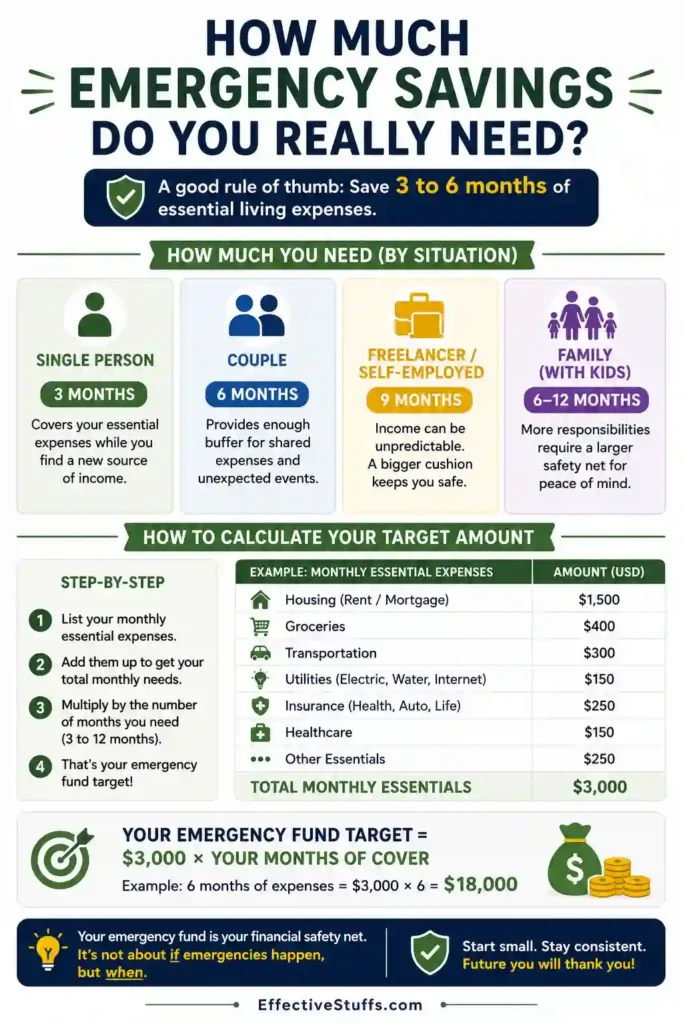
Before aggressively saving money, you need a realistic target.
And most people misunderstand this completely.
A 6 month emergency fund does not mean six months of your full current lifestyle.
It means six months of essential survival expenses.
What Should Be Included?
Your emergency fund should cover:
- Rent or mortgage
- Utilities
- Groceries
- Insurance
- Transportation
- Minimum debt payments
- Essential childcare
- Basic phone bill
It should not include:
- Vacations
- Shopping
- Luxury spending
- Entertainment upgrades
- Non-essential subscriptions
That distinction makes the number feel far more manageable.
A Real Emergency Fund Example
Now that you understand what counts as an essential expense, let’s look at a realistic example.
Imagine your monthly essentials look like this:
| Expense | Monthly Cost |
|---|---|
| Rent | $1,500 |
| Utilities | $250 |
| Groceries | $500 |
| Transportation | $350 |
| Insurance | $250 |
| Minimum Debt Payments | $400 |
| Phone Bill | $100 |
Total monthly essentials = $3,350
A full 6 month emergency fund would equal:
$3,350 × 6 = $20,100
That sounds large initially.
But here is what matters:
You are not trying to save $20,100 tomorrow.
You are building financial protection gradually.
The Best Way To Start Building Emergency Savings
Now that the goal feels more realistic, let’s talk about actual action.
Most people fail because they overcomplicate saving immediately.
The best emergency fund strategy is simpler than people expect.
Step 1 — Open A Separate Savings Account
Before saving anything consistently, separate emergency savings from daily spending money.
That matters psychologically.
If emergency money stays inside your checking account, it constantly feels available to spend.
Use a separate savings account instead.
Many people now prefer high-yield savings accounts because they allow emergency savings to earn interest while remaining accessible.
Step 2 — Build Your First $1,000 First
Before obsessing over six months of expenses, focus on the first major milestone.
Your first $1,000 emergency fund changes your financial life more than most people realize.
Why?
Because small emergencies stop becoming disasters.
A flat tire stops becoming panic.
A surprise bill stops immediately creating credit card debt.
That first layer of financial protection creates momentum.
Step 3 — Automate Savings Immediately
Automation changes everything.
Even small automatic transfers matter.
Examples:
- $25 weekly
- $50 every paycheck
- 5% of direct deposit
- Round-up savings apps
Consistency matters more than intensity.
Most people fail because they try saving “whatever is left.”
Usually nothing is left.
If your spending already feels chaotic right now, our guide on the simplest budget system that actually works for real people can help you create enough financial clarity to consistently save money without feeling overwhelmed.
How Long Does It Take To Build A 6 Month Emergency Fund?
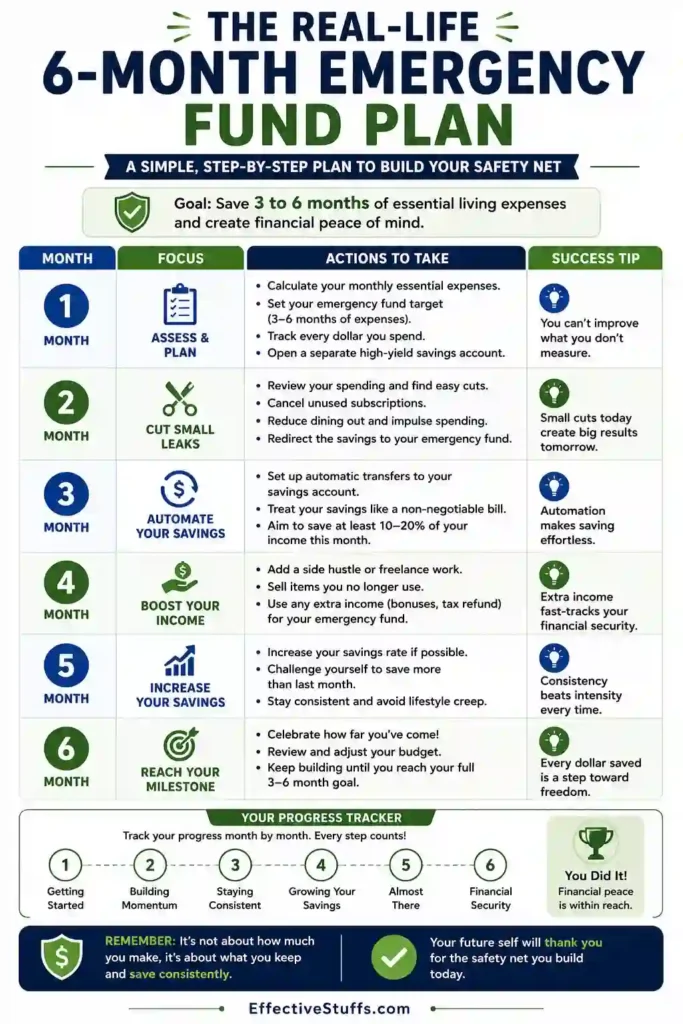
This is one of the biggest questions people ask.
The answer depends on three things:
- Income
- Expenses
- Savings rate
But most people dramatically underestimate how much progress small consistent saving creates.
Example Emergency Fund Timelines
| Monthly Savings | Savings After 1 Year | Savings After 2 Years |
|---|---|---|
| $100/month | $1,200 | $2,400 |
| $250/month | $3,000 | $6,000 |
| $500/month | $6,000 | $12,000 |
| $750/month | $9,000 | $18,000 |
This is why consistency matters so much.
Slow progress still creates real protection over time.
Where Should You Keep Your Emergency Fund?
Now that you are building emergency savings consistently, the next question becomes where to actually store the money safely.
High-Yield Savings Accounts
High-yield savings accounts are popular because they combine:
- Accessibility
- Safety
- Interest earnings
The money remains available during emergencies while still earning modest growth.
Avoid Investing Emergency Savings
This is extremely important.
Emergency funds are not investment accounts.
Do not place emergency savings into:
- Stocks
- Crypto
- Risky investments
- Illiquid assets
Emergency savings prioritize stability first.
Growth comes second.
Keep The Money Accessible
Your emergency fund should remain easy to access quickly.
If accessing the money requires selling investments or waiting several days, the system becomes risky.
The Fastest Ways To Build Emergency Savings Faster
Now that the foundation is clear, let’s talk about acceleration.
The goal is not suffering.
The goal is intentional progress.
Reduce One Spending Leak At A Time
Most people have one category quietly damaging their finances every month.
Usually it is:
- Food delivery
- Online shopping
- Subscription overload
- Convenience spending
Reduce one category first.
That feels manageable psychologically.
If you are not fully sure where your money keeps disappearing every month, our guide on the best free budgeting apps that actually change how you handle money can help expose spending patterns most people completely overlook.
Use Windfalls Strategically
Unexpected money accelerates emergency savings dramatically.
Examples include:
- Tax refunds
- Bonuses
- Freelance income
- Side hustle income
- Cash gifts
Most people absorb extra money into lifestyle spending automatically.
Redirecting even part of those windfalls speeds up financial security massively.
Try A Temporary Spending Reset
You do not need permanent extreme frugality.
But temporary spending resets can create rapid savings momentum.
Examples:
- 30-day no-spend challenge
- Pause unnecessary subscriptions
- Reduce restaurant spending temporarily
- Sell unused items
Small temporary sacrifices can create long-term financial breathing room.
Emergency Fund Goals By Life Situation
Now that you understand the core strategy, let’s make the savings goals more realistic based on different lifestyles.
Single Adults
Single-income households usually need stronger emergency savings because there is no backup income source.
Three to six months of expenses is ideal.
Couples
Couples with dual incomes may initially feel comfortable with smaller emergency funds depending on job stability.
Families
Families often need larger emergency savings because expenses and financial responsibilities are significantly higher.
Freelancers And Gig Workers
People with inconsistent income often benefit from larger emergency funds because income volatility increases financial risk.
The Biggest Emergency Fund Mistakes People Make
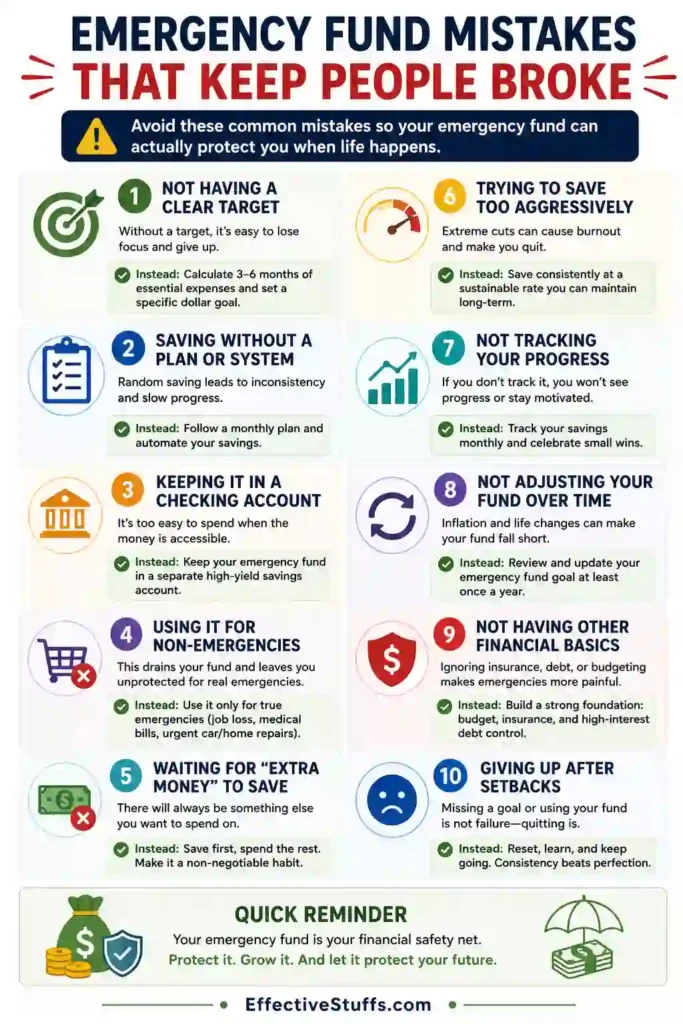
Before aggressively saving money, you need to avoid the mistakes that quietly destroy progress.
Mistake 1 — Waiting Until Life “Feels Stable”
Most people never magically reach a point where saving feels easy.
Emergency savings usually begin before financial comfort appears.
Mistake 2 — Using Emergency Savings For Non-Emergencies
Impulse spending destroys emergency funds quickly.
Emergencies are survival situations, not convenience purchases.
Mistake 3 — Keeping Emergency Savings Inside Checking Accounts
Easy access increases temptation dramatically.
Separate accounts reduce accidental spending.
Mistake 4 — Feeling Discouraged By Slow Progress
Most people build emergency savings slowly.
That is normal.
Progress matters more than speed.
Mistake 5 — Giving Up After Using The Fund
Using emergency savings during real emergencies is not failure.
That means the system worked correctly.
You simply rebuild afterward.
What Happens When You Finally Have Emergency Savings
This is the part most people do not talk about enough.
Emergency funds do more than protect money.
They change your emotional relationship with life.
Financial Stress Reduces Dramatically
Unexpected bills stop feeling catastrophic.
That emotional shift matters enormously.
You Gain More Financial Options
People with emergency savings can:
- Leave toxic jobs
- Handle emergencies calmly
- Avoid predatory debt
- Make better long-term decisions
Your Entire Financial System Becomes Stronger
Emergency savings create stability underneath every other financial goal.
Investing becomes easier.
Budgeting becomes easier.
Debt payoff becomes easier.
Because emergencies stop constantly destroying progress.
Questions People Actually Ask About Emergency Funds
Now that you understand how to build an emergency fund realistically, let’s answer the questions most people search for before starting.
What Is A Good Emergency Fund Amount?
Most financial experts recommend three to six months of essential expenses depending on income stability and personal risk.
Is $1,000 Enough For An Emergency Fund?
It is a strong starting point, but most people eventually need larger emergency savings for full protection.
Should You Pay Off Debt Or Build Emergency Savings First?
Many people build a small emergency fund first so unexpected expenses do not immediately create more debt.
Where Should Emergency Savings Be Stored?
High-yield savings accounts are popular because they combine safety, accessibility, and modest interest earnings.
Can You Build Emergency Savings On A Low Income?
Yes. Smaller consistent contributions still create meaningful financial progress over time.
Should Emergency Funds Be Invested?
Generally no. Emergency funds should prioritize stability and accessibility over aggressive growth.
What Counts As A Real Emergency?
Medical bills, layoffs, urgent repairs, and survival-level expenses usually qualify as genuine emergencies.
How Long Does It Take To Build Emergency Savings?
That depends on income and savings rate, but most people build emergency funds gradually over several years.
What Is The Biggest Emergency Fund Mistake?
Waiting too long to start because the final savings goal feels overwhelming.
How Does Emergency Savings Reduce Financial Anxiety?
Financial protection creates emotional stability because emergencies stop feeling catastrophic.
Should Couples Combine Emergency Funds?
Many couples combine emergency savings for household protection and shared financial responsibilities.
Can Side Hustles Help Build Emergency Savings Faster?
Absolutely. Extra income streams can accelerate emergency fund growth dramatically.
Is A 6 Month Emergency Fund Always Necessary?
Not always. Some people feel comfortable with three months depending on job stability and lifestyle.
What Happens Without Emergency Savings?
Unexpected expenses often become debt, financial stress, and long-term instability.
What Should You Do After Building Emergency Savings?
Once your emergency fund feels stable, many people focus next on investing, debt payoff, or wealth building.
Final Thoughts
Learning how to build an emergency fund is really about learning how to create breathing room financially.
That is the real goal.
Not perfection.
Not becoming rich overnight.
Just stability.
Every dollar saved reduces future financial panic.
Every contribution creates more protection.
Every milestone creates more peace of mind.
Start smaller than you think you need to.
Automate what you can.
Focus on consistency instead of perfection.
Because the moment emergencies stop feeling financially catastrophic, your entire relationship with money begins changing for the better.

