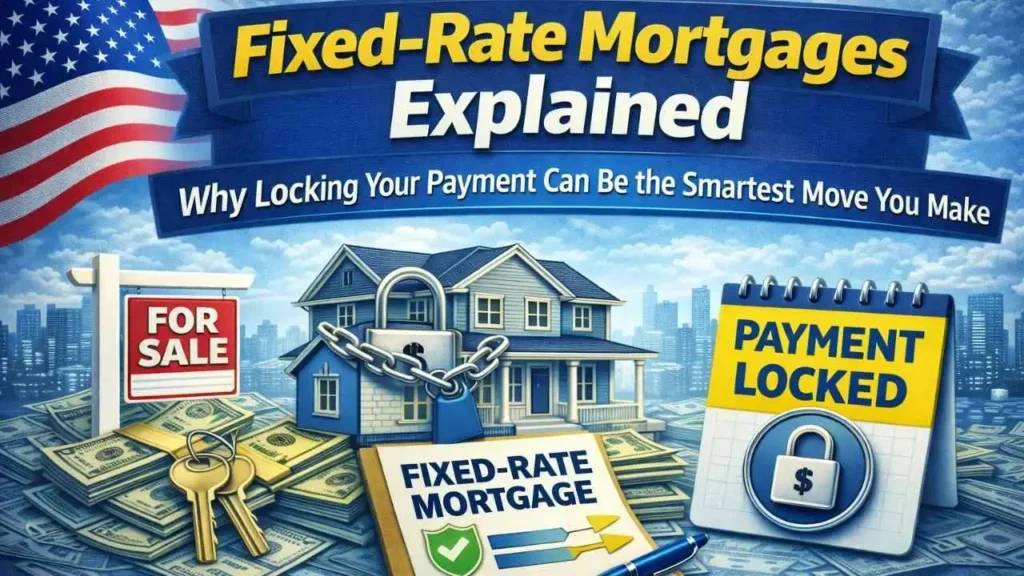
Buying a home is one of the biggest financial decisions you’ll ever make, and fixed-rate mortgages are often at the center of that choice. Should you lock in a rate now or gamble on future changes? How do payments really work over time? In this guide, you’ll learn how fixed-rate mortgages work, who they’re best for, how they compare to other options, and how to decide if this loan fits your long-term plans in the United States.
Home Equity Loans: How Smart Homeowners Unlock Cash Without Losing Control
Jumbo Loans Explained: How High-Value Homebuyers Win Without Overpaying
Table of Contents
What Fixed-Rate Mortgages Really Are And How They Work
Fixed-rate mortgages are home loans where the interest rate stays the same for the entire life of the loan. That means your principal and interest payment never changes, no matter what happens to the market.
In simple terms:
- You lock in one interest rate at closing
- Your monthly payment stays predictable
- You’re protected from future rate increases
This structure makes fixed-rate mortgages easy to understand and plan around, which is why they’re so popular. To see why buyers choose them, it helps to look at what problems they solve.
Why Fixed-Rate Mortgages Appeal To Many Homebuyers
The biggest appeal of fixed-rate mortgages is stability. When payments never change, budgeting becomes far less stressful.
Buyers often choose fixed-rate mortgages because:
- They want predictable monthly payments
- They plan to stay in the home long term
- They prefer certainty over risk
This peace of mind is especially valuable in uncertain economic times. Understanding that benefit naturally leads to the next question: who are these loans best suited for?
Who Fixed-Rate Mortgages Are Best For In The USA
Fixed-rate mortgages work well for a wide range of buyers, but they’re especially attractive for those who value long-term clarity.
They’re often a good fit for:
- First-time homebuyers who want simplicity
- Families planning to stay put for years
- Buyers on fixed or predictable incomes
If you don’t want to worry about changing payments in the future, fixed-rate mortgages remove that concern. Now let’s look at the most common loan terms available.
Common Fixed-Rate Mortgage Terms Explained
Fixed-rate mortgages usually come in a few standard term lengths. The term affects both your monthly payment and total interest paid over time.
The most common options include:
- 30-year fixed-rate mortgages for lower monthly payments
- 20-year fixed-rate mortgages for a balance of cost and speed
- 15-year fixed-rate mortgages for faster payoff and less interest
Choosing a term depends on cash flow, goals, and comfort level. That choice becomes even clearer when you understand how interest works.
How Interest Works On Fixed-Rate Mortgages
With fixed-rate mortgages, your interest rate never changes, but how your payment is applied does.
Early in the loan:
- More of your payment goes toward interest
Later in the loan:
- More goes toward the principal balance
This predictable structure makes it easier to plan long-term strategies like extra payments or refinancing. Speaking of comparisons, many buyers wonder how fixed-rate mortgages stack up against adjustable options.
Fixed-Rate Mortgages Vs Adjustable-Rate Mortgages
The main difference between fixed-rate mortgages and adjustable-rate mortgages is predictability versus flexibility.
Fixed-rate mortgages offer:
- Stable payments for the entire loan
- Protection from rising rates
- Easier long-term budgeting
Adjustable-rate mortgages may offer:
- Lower initial rates
- Payments that can change later
Your comfort with risk determines which makes more sense, which leads directly to affordability considerations.
Affordability And Budgeting With Fixed-Rate Mortgages
Because payments stay the same, fixed-rate mortgages make budgeting straightforward.
This helps buyers:
- Plan housing costs years in advance
- Avoid payment shock
- Balance other financial goals
Knowing exactly what you’ll pay each month can prevent overextending yourself. That clarity also plays a role in how lenders evaluate your application.
Credit Score And Qualification For Fixed-Rate Mortgages
Qualifying for fixed-rate mortgages depends on your credit, income, and overall financial picture.
Lenders typically look at:
- Credit history and score
- Income stability
- Debt-to-income ratio
Stronger credit usually means better rates, which can save you a lot over time. Once approved, the next major consideration is your down payment.
Down Payments And Fixed-Rate Mortgages
Down payment requirements for fixed-rate mortgages vary by loan type, but options exist for many buyers.
Depending on the program:
- Some loans allow low down payments
- Larger down payments can reduce monthly costs
- Putting more down may improve loan terms
The right down payment balances affordability with cash reserves, which leads into understanding upfront costs.
Closing Costs And Fees With Fixed-Rate Mortgages
Fixed-rate mortgages come with closing costs that buyers should plan for early.
These costs often include:
- Loan origination fees
- Appraisal and underwriting charges
- Prepaid taxes and insurance
Planning ahead avoids surprises and keeps the purchase on track. With the basics covered, let’s answer the questions people are actively searching for.
Frequently Asked Questions About Fixed-Rate Mortgages
These questions come straight from what homebuyers across the United States ask most when trying to understand whether a fixed-rate mortgage truly fits their long-term plans.
What Are Fixed-Rate Mortgages In Simple Terms?
Fixed-rate mortgages are home loans where the interest rate stays the same from the first payment to the last. This means your principal and interest payment never changes, even if market rates rise or fall. That consistency makes it easier to budget, plan long-term, and avoid surprises throughout the life of the loan.
How Do Fixed-Rate Mortgages Work Over Time?
With fixed-rate mortgages, your monthly payment stays the same, but how it’s applied shifts gradually. Early payments focus more on interest, while later payments reduce the loan balance faster. This steady structure allows borrowers to plan ahead and clearly see progress toward full ownership over time.
Why Do Homebuyers Choose Fixed-Rate Mortgages?
Many buyers choose fixed-rate mortgages because they value predictability. Knowing your payment won’t change makes budgeting simpler and reduces financial stress. This stability is especially appealing for families, long-term homeowners, and anyone who prefers certainty over potential short-term savings with adjustable loans.
Are Fixed-Rate Mortgages Better Than Adjustable-Rate Mortgages?
Fixed-rate mortgages are better for buyers who want stability and plan to stay in their home long term. Adjustable-rate mortgages may start with lower payments, but they can increase later. Fixed rates remove that uncertainty, making them easier to manage and safer for long-term financial planning.
Who Should Consider Fixed-Rate Mortgages?
Fixed-rate mortgages are ideal for buyers who want consistent payments, plan to stay in their home for several years, or live on predictable income. They’re especially popular with first-time buyers, families, and retirees who want to avoid payment changes caused by interest rate fluctuations.
What Are The Most Common Fixed-Rate Mortgage Terms?
The most common fixed-rate mortgage terms are 30-year, 20-year, and 15-year options. A 30-year term offers lower monthly payments, while shorter terms cost less in interest overall. The right term depends on your income, lifestyle, and long-term financial goals.
Do Fixed-Rate Mortgages Ever Change Payments?
The interest rate and principal portion never change, but your total payment can shift slightly if taxes or insurance change. These adjustments come from escrow, not the loan itself. Even then, fixed-rate mortgages remain far more predictable than adjustable-rate options.
Are Fixed-Rate Mortgages Good When Interest Rates Are High?
They can still make sense if you plan to stay long term and want payment stability. While rates may be higher initially, fixed-rate mortgages protect you from future increases. Many buyers also refinance later if rates drop, keeping flexibility without sacrificing predictability upfront.
Can First-Time Homebuyers Get Fixed-Rate Mortgages?
Yes, fixed-rate mortgages are extremely common for first-time buyers. They’re simple to understand, easy to budget for, and widely available. Many loan programs designed for first-time buyers are offered with fixed rates to provide long-term financial stability.
What Credit Score Is Needed For Fixed-Rate Mortgages?
Credit score requirements vary by lender and loan program. Higher scores typically qualify for better rates and lower costs. While fixed-rate mortgages are available to many buyers, improving your credit before applying can significantly reduce your long-term interest expense.
Are Fixed-Rate Mortgages Harder To Qualify For?
Not necessarily. Qualification depends on your income, credit history, and debt levels, not the fixed rate itself. In many cases, fixed-rate mortgages are easier to understand and approve because their structure is straightforward and predictable for both borrowers and lenders.
Do Fixed-Rate Mortgages Cost More Over Time?
They can cost more than adjustable loans if rates fall and you never refinance. However, many buyers accept this trade-off in exchange for long-term payment certainty and protection from rising interest rates, especially when budgeting stability is a top priority.
Can I Refinance A Fixed-Rate Mortgage?
Yes, refinancing is common. Homeowners refinance fixed-rate mortgages to lower their interest rate, shorten the loan term, or adjust monthly payments. Refinancing allows flexibility while keeping the core benefit of predictable payments once the new loan is in place.
Are Fixed-Rate Mortgages Predictable?
Yes, predictability is their defining feature. You always know what your principal and interest payment will be, which simplifies budgeting, long-term planning, and financial decision-making over the life of the loan.
Can I Make Extra Payments On Fixed-Rate Mortgages?
Most fixed-rate mortgages allow extra payments without penalties. Making additional payments can reduce interest costs and shorten the loan term. Many borrowers use this strategy to build equity faster while keeping the security of a fixed monthly payment.
Are Fixed-Rate Mortgages Available For Condos And Townhomes?
Yes, fixed-rate mortgages can be used for condos, townhomes, and single-family homes. Approval depends more on the property meeting lender guidelines than on the loan’s interest structure.
What Happens If Interest Rates Drop After I Lock In?
Your rate stays the same unless you refinance. This is the trade-off for payment stability. Many homeowners refinance when rates drop to capture savings while maintaining the predictability of a fixed-rate structure.
Do Fixed-Rate Mortgages Require Mortgage Insurance?
Mortgage insurance depends on the loan program and down payment, not the fixed rate. Some fixed-rate loans require it, while others don’t. The interest structure alone doesn’t determine whether mortgage insurance applies.
Are Fixed-Rate Mortgages Good For Long-Term Homeowners?
Yes, they’re one of the best options for long-term ownership. Fixed payments make it easier to plan for years ahead, protect against rising rates, and provide financial consistency throughout the loan term.
Can Fixed-Rate Mortgages Be Used For Refinancing?
Yes, many homeowners refinance into fixed-rate mortgages to gain stability after starting with adjustable loans or to lock in lower rates when market conditions improve.
Are Fixed-Rate Mortgages Safer Than Adjustable Loans?
They’re generally considered safer because payments don’t change due to market conditions. This reduces the risk of payment shock and makes them easier to manage during economic uncertainty.
How Do Fixed-Rate Mortgages Affect Monthly Budgeting?
They simplify budgeting by keeping housing costs consistent. This makes it easier to plan for savings, other expenses, and long-term goals without worrying about payment increases.
Are Fixed-Rate Mortgages Suitable For Retirees?
Yes, many retirees prefer fixed-rate mortgages because predictable payments align well with fixed or limited income. Knowing housing costs won’t rise adds peace of mind during retirement.
Can Self-Employed Buyers Get Fixed-Rate Mortgages?
Yes, self-employed buyers can qualify with proper documentation. Lenders focus on income stability and consistency rather than employment type. Fixed-rate mortgages are available if financial requirements are met.
Are Fixed-Rate Mortgages Tax Deductible?
Mortgage interest may be deductible depending on current tax rules and your personal situation. The deductibility applies to the mortgage itself, not specifically because it’s fixed-rate.
Do Fixed-Rate Mortgages Build Equity Faster?
Equity builds steadily with fixed-rate mortgages. Shorter terms and extra payments can accelerate equity growth, while longer terms build equity more gradually but offer lower monthly payments.
Are Fixed-Rate Mortgages Available With Low Down Payments?
Yes, many programs offer fixed-rate mortgages with low down payment options. The availability depends on the loan type and lender guidelines rather than the interest structure.
What Is The Biggest Advantage Of Fixed-Rate Mortgages?
The biggest advantage is payment stability. Knowing your payment will not change makes long-term planning easier and removes uncertainty tied to interest rate fluctuations.
What Is The Biggest Drawback Of Fixed-Rate Mortgages?
The main drawback is missing out on lower rates if market rates fall, unless you refinance. Some buyers accept this trade-off for the security of predictable payments.
Can Fixed-Rate Mortgages Be Paid Off Early?
Most fixed-rate mortgages allow early payoff without penalties. Paying extra can reduce interest costs and shorten the loan term significantly.
Are Fixed-Rate Mortgages Good During Inflation?
They can be beneficial because payments stay the same while other costs rise. Over time, inflation can make fixed payments feel more manageable relative to income growth.
How Long Does It Take To Get Approved For Fixed-Rate Mortgages?
Approval timelines are similar to other mortgages, often around 30 to 45 days. The process depends on documentation, lender workload, and appraisal timelines.
Are Fixed-Rate Mortgages Available Across The USA?
Yes, fixed-rate mortgages are widely available nationwide and offered by most lenders, making them one of the most accessible loan types in the country.
Do Fixed-Rate Mortgages Have Closing Costs?
Yes, like all mortgages, they include closing costs such as appraisal fees, underwriting charges, and prepaid expenses. These costs are separate from the interest structure.
Can I Switch From Adjustable To Fixed Later?
Yes, refinancing allows borrowers to switch from adjustable-rate mortgages to fixed-rate mortgages when stability becomes a priority.
Are Fixed-Rate Mortgages Flexible?
They’re flexible in repayment but fixed in rate. Borrowers can make extra payments or refinance while maintaining consistent monthly payments.
Do Fixed-Rate Mortgages Protect Against Rate Increases?
Yes, once locked in, your interest rate won’t change, protecting you from future rate hikes throughout the loan term.
Are Fixed-Rate Mortgages Good For Families?
They’re very popular with families because predictable payments make it easier to manage household budgets and long-term expenses.
Can Fixed-Rate Mortgages Be Used For Second Homes?
Yes, many lenders offer fixed-rate mortgages for second homes, though requirements may be stricter than for primary residences.
Do Fixed-Rate Mortgages Affect Credit Scores?
They affect credit like any mortgage. On-time payments build credit, while missed payments can damage it.
Are Fixed-Rate Mortgages Good For Budget-Conscious Buyers?
Yes, they’re ideal for buyers who want control and consistency in their housing costs without unexpected increases.
What Should I Consider Before Choosing Fixed-Rate Mortgages?
Consider how long you’ll stay in the home, your income stability, and your comfort with risk. Fixed-rate mortgages work best for long-term planning.
Are Fixed-Rate Mortgages Worth It?
For many buyers, the stability, predictability, and peace of mind make them worth choosing, even if initial rates are slightly higher.
How Do Fixed-Rate Mortgages Compare Long-Term?
Over decades, fixed-rate mortgages provide steady costs and clarity, making financial planning easier and reducing stress.
Can Fixed-Rate Mortgages Help With Financial Planning?
Yes, knowing your exact payment helps with budgeting, saving, and planning other major life goals.
Are Fixed-Rate Mortgages Still Popular In The USA?
Yes, they remain one of the most widely used mortgage options because of their simplicity and reliability.
How Do I Choose The Best Fixed-Rate Mortgage?
Compare interest rates, loan terms, monthly payments, and how well the loan fits your long-term financial comfort.
Final Thoughts On Fixed-Rate Mortgages
Fixed-rate mortgages remain a trusted choice for buyers who value certainty, stability, and long-term planning. By locking in your rate, you remove the stress of future changes and gain clear visibility into your housing costs. Whether you’re buying your first home or planning to stay put for years, fixed-rate mortgages offer simplicity and confidence. When your payment never changes, it’s easier to focus on building a life—not worrying about your loan.