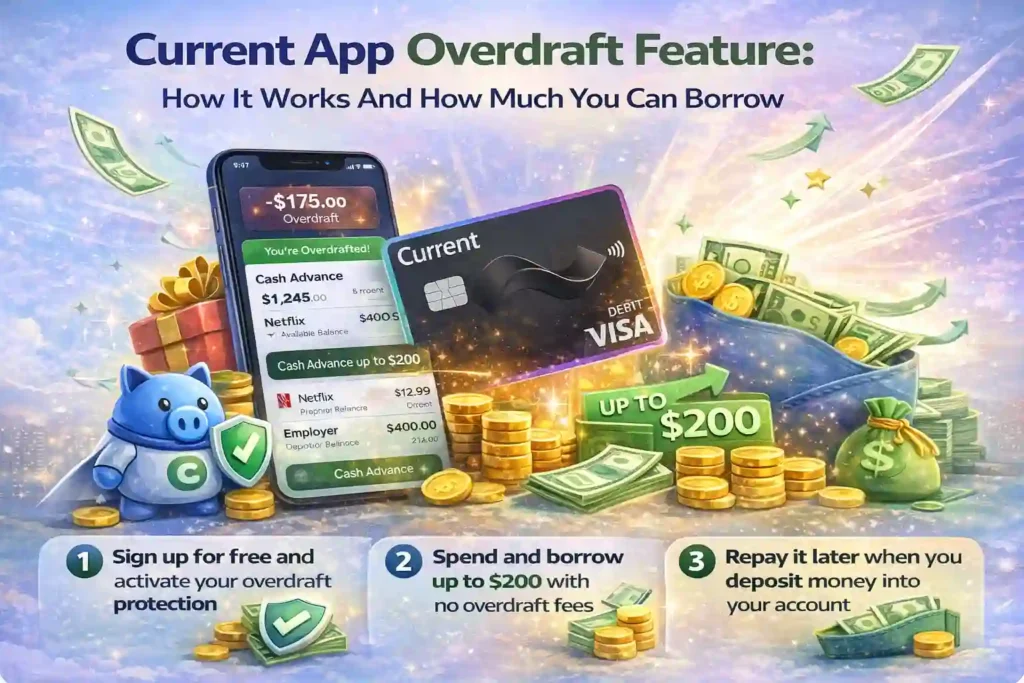
Running out of money before payday happens to almost everyone at some point. Bills do not wait, subscriptions continue running, and unexpected expenses can show up when you least expect them. That is exactly why many people start researching the Current App Overdraft Feature before deciding whether the app is worth using.
Instead of charging expensive overdraft penalties like traditional banks, Current introduced a feature designed to help eligible users cover small negative balances without paying the typical overdraft fees many banks apply.
For users who occasionally need a financial cushion between paychecks, this feature can be extremely helpful. However, it works differently from traditional overdraft programs, and understanding how it operates is important before relying on it.
If you are still learning about the platform itself, it is helpful to first understand What Is Current App so you can see how overdraft protection fits into the entire banking experience.
Table of Contents
What The Current App Overdraft Feature Is
The Current App Overdraft Feature allows eligible users to spend more money than the balance currently available in their account.
Instead of declining a transaction when the balance drops below zero, the app may temporarily cover the difference. This means certain purchases can still go through even when your balance is slightly negative.
Unlike traditional banks that charge overdraft penalties for these transactions, the feature is designed to help users avoid those fees while still maintaining access to their money.
However, the amount you can overdraw is not unlimited. The overdraft amount depends on your account activity, deposit history, and overall eligibility.
Many users start with a smaller overdraft allowance, and that amount may increase over time as the account demonstrates consistent deposit patterns and responsible usage.
How The Current App Overdraft Feature Works
The overdraft feature is designed to help users manage short-term financial gaps between paychecks.
When Your Balance Drops Below Zero
If a purchase pushes your account balance below zero, the overdraft feature may allow the transaction to go through instead of being declined.
For example, if you have $5 in your account and make a $10 purchase, the app may allow the transaction to complete by covering the additional amount.
The Platform Covers The Difference
Once the transaction is approved, the app temporarily covers the negative portion of your balance.
Your account may show a negative balance until the next deposit arrives.
Your Next Deposit Repays The Balance
When your next direct deposit arrives, the negative balance is automatically repaid from the incoming funds.
This process happens automatically and usually requires no action from the user.
Who Qualifies For The Current App Overdraft Feature
Not every user receives overdraft access immediately.
Eligibility depends on several factors related to how the account is used.
Direct Deposit Activity
Users who regularly receive direct deposits into their account are more likely to qualify for overdraft protection.
Consistent payroll deposits show the platform that the account has reliable incoming funds.
Consistent Account Usage
Accounts that show regular spending activity and responsible financial behavior may become eligible faster.
Account Standing
The platform evaluates account behavior, transaction patterns, and deposit history before determining eligibility.
Once the feature becomes available, the app notifies users inside the platform.
How Much Can You Overdraft With Current?
The overdraft amount varies depending on the user’s account activity.
Many users begin with a small overdraft limit. Over time, that limit may increase if the account continues receiving consistent deposits.
The most important factor influencing your overdraft limit is direct deposit activity.
Accounts that regularly receive payroll deposits often receive higher overdraft limits compared to accounts that rarely receive deposits.
This structure allows the platform to reduce risk while still giving users financial flexibility.
Why The Current App Overdraft Feature Is Different
Traditional banks often charge significant overdraft fees whenever your account balance becomes negative.
In many cases, those fees can be higher than the transaction that triggered the overdraft itself.
The Current App Overdraft Feature takes a different approach.
Instead of charging penalty fees, the platform allows eligible users to temporarily cover small negative balances.
This structure helps prevent users from falling into cycles of repeated overdraft charges that are common with traditional banks.
For many users, this difference alone makes digital banking platforms more appealing than traditional banks.
When Overdraft Protection Does Not Apply
Although overdraft protection can be helpful, it does not apply to every situation.
Large Transactions
If a purchase exceeds your available overdraft limit, the transaction may still be declined.
Accounts Without Eligibility
Users who do not meet deposit or activity requirements may not receive overdraft access.
Certain Payment Types
Some transfers or payment methods may not qualify for overdraft coverage.
Understanding these limitations prevents confusion if a transaction does not go through.
Benefits Of The Current App Overdraft Feature
The overdraft feature offers several advantages compared with traditional banking overdraft systems.
No Traditional Overdraft Fees
Eligible users can cover small negative balances without paying the typical overdraft penalties many banks charge.
Helps Cover Short-Term Expenses
Unexpected purchases or small bills can still go through even if your balance temporarily drops below zero.
Automatic Repayment
When your next deposit arrives, the negative balance is automatically repaid.
Reduced Financial Stress
Knowing that small purchases will not immediately fail can reduce financial pressure between paychecks.
Tips For Using Overdraft Responsibly
Although overdraft protection is useful, it should not be treated as extra spending money.
Treat Overdraft As Emergency Backup
Use the feature when necessary rather than relying on it regularly.
Track Your Spending
Monitoring transactions inside the app helps prevent larger negative balances.
Maintain Consistent Deposits
Regular direct deposits help maintain eligibility and improve overdraft limits.
Using overdraft responsibly ensures the feature remains helpful instead of becoming a financial burden.
Current App Overdraft Feature Vs Traditional Bank Overdraft
Traditional bank overdraft systems typically charge significant fees when your balance becomes negative.
If multiple transactions occur while your account is negative, those fees can accumulate quickly.
The Current App Overdraft Feature focuses on covering small negative balances without applying traditional overdraft penalties.
For users who occasionally need short-term flexibility between paychecks, this difference can make the platform far more attractive than traditional banks.
The Bottom Line On The Current App Overdraft Feature
Understanding the Current App Overdraft Feature helps users see how the platform protects them from declined transactions.
Eligible users can temporarily spend beyond their balance without paying the expensive overdraft fees that traditional banks often charge.
The available overdraft amount depends on deposit activity and overall account behavior.
When used responsibly, this feature acts as a financial safety net that helps cover small gaps between paychecks.
For users who want more flexibility and fewer banking penalties, the overdraft feature can become one of the most valuable parts of the platform.

