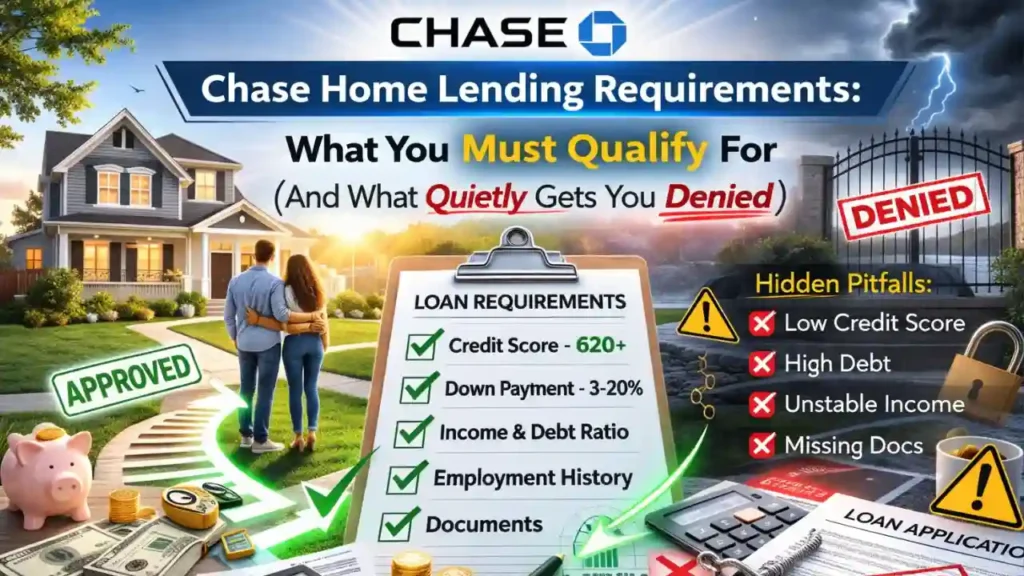
Most people fail with mortgages for boring reasons: missing paperwork, misunderstood rules, and small financial moves made at the wrong time. Chase doesn’t advertise these friction points. It sells the idea of simple approvals. The reality is a checklist culture where tiny details quietly decide your fate. This guide lays out the real requirements Chase Home Lending uses to approve or deny applications, what trips borrowers up behind the scenes, and how to prepare so your file doesn’t die in underwriting purgatory.
Table of Contents
What “Requirements” Really Mean At Chase Home Lending
Requirements are not just minimum numbers. They’re how your full financial story fits Chase’s risk model.
Minimum Standards Versus Real Approval Standards
Chase publishes general guidelines for credit, income, and assets. Real approvals depend on internal risk thresholds that are stricter than public minimums. Borrowers who meet the minimums but present borderline profiles often face more conditions or denial.
Why Two Borrowers With The Same Credit Get Different Outcomes
Outcomes vary based on income stability, debt structure, reserves, and documentation quality. Two borrowers with the same score can receive very different decisions because Chase weighs consistency and clarity heavily.
What Chase Can Change And What It Cannot
Chase controls internal overlays and documentation demands. It cannot change federal rules or market rates. Borrowers often confuse external guidelines with Chase’s internal standards and underestimate how strict the overlays feel in practice.
Credit Score Requirements That Actually Matter
Credit scores open doors, but they don’t close deals alone.
What Score Ranges Perform Best With Chase
Higher scores receive better pricing and fewer conditions. Borderline scores pass initial screens but face heavier scrutiny later. Improving your score before applying often shortens underwriting and improves terms.
How Recent Credit Activity Hurts You
Recent inquiries, new accounts, or balance increases raise red flags. Chase reviews recent activity closely. Even small changes after pre-approval can trigger re-review and delays.
Credit Mistakes That Quietly Kill Files
Late payments, disputed accounts, and unresolved errors cause conditions and slow approvals. Cleaning credit reports before applying removes friction.
Income And Employment Requirements
Chase cares about predictability more than potential.
What Income Types Chase Prefers
Stable W-2 income moves fastest. Variable income, bonuses, commissions, and self-employment face deeper reviews. The more complex your income, the more documentation and time you need.
How Job Changes Affect Approval
Job changes during the process trigger re-verification and can delay or derail approvals. Chase favors stability. Timing a job change poorly can cost you weeks.
Documentation That Speeds Or Slows Underwriting
Complete tax returns, consistent pay stubs, and clear explanations speed reviews. Missing or inconsistent documents cause loops of requests.
Asset And Down Payment Requirements
Assets are not just about having money. They’re about proving it cleanly.
What Chase Looks For In Bank Statements
Chase reviews full statements and questions large or unusual deposits. Clean, consistent statements move faster. Unexplained deposits slow approvals.
Gift Funds And How To Use Them Without Delays
Gift funds are allowed under certain programs, but documentation must be airtight. Poor gift documentation triggers conditions and slows closing.
Reserves And Why They Matter More Than You Think
Reserves reduce perceived risk. Borrowers with extra reserves experience smoother approvals and better pricing, especially for jumbo loans.
Property Requirements That Catch Buyers Off Guard
The house you choose can kill your loan.
Appraisal Standards And Repair Conditions
Appraisals can require repairs or renegotiation. Chase follows strict standards. Buyers who budget no repair time face closing delays.
Condo And Property Eligibility
Not all condos qualify. Association finances and legal issues can derail financing late in the process. Confirm eligibility early.
Location And Property Type Risks
Unique properties, rural locations, and mixed-use homes face additional scrutiny. These factors extend timelines.
Debt-To-Income Requirements And The Hidden Traps
Ratios are not just math. They’re behavior tests.
How Chase Calculates Your Debt Ratio
Chase evaluates total monthly obligations relative to income. Student loans, auto loans, and credit cards all count. Small balances add up.
Debt Moves That Hurt You Mid-Process
Opening new credit, financing furniture, or increasing card balances mid-process can break approvals. Freeze major financial moves until after closing.
How To Lower Ratios Without Delaying Your Purchase
Paying down small balances and restructuring debts before applying improves ratios. Timing matters. Do this early, not mid-underwriting.
How To Increase Your Approval Odds With Chase Home Lending
Preparation changes outcomes more than charm.
Build A “Clean File” Before You Apply
Organize documents, clean credit errors, and stabilize income before applying. Clean files move faster.
Lock Your Financial Behavior During The Process
No new debt. No job changes. No unexplained deposits. Stability protects approvals.
Ask For Pre-Underwriting Review
Request deeper pre-approval reviews when timelines matter. Early scrutiny reduces late surprises.
Who Chase Home Lending Requirements Are Best For (And Who They’re Not)
Fit determines whether requirements feel reasonable or punishing.
Borrowers Who Fit Chase Requirements Well
Stable W-2 earners with strong credit, clean assets, and flexible timelines fit Chase well. These borrowers experience fewer conditions and smoother closings.
Borrowers Who Should Choose More Flexible Lenders
Self-employed borrowers, buyers with tight deadlines, and those with complex assets benefit from lenders that specialize in flexibility and speed.
FAQs
What Credit Score Does Chase Home Lending Require?
Chase Home Lending prefers higher credit scores for smoother approvals and better pricing. Borderline scores can pass initial screening but face heavier underwriting scrutiny. Improving your score before applying reduces conditions, shortens timelines, and improves rates. Minimum thresholds vary by loan type and market conditions.
Can Chase Approve Borrowers With Fair Credit?
Approval is possible with fair credit depending on loan type and overall profile. However, Chase overlays are stricter than some lenders. Borrowers with fair credit face more documentation and conditions. Cleaning up errors and reducing balances before applying improves approval odds.
Does Chase Have Different Credit Requirements By Loan Type?
Yes, requirements vary for conventional, FHA, VA, jumbo, and refinance loans. Jumbo loans require stronger profiles and more reserves. FHA and VA allow lower scores but Chase overlays may still be stricter than federal minimums.
Can Chase Deny You After Pre-Approval?
Yes, pre-approval is not final approval. Underwriting can deny a loan if income changes, debts increase, credit shifts, or property issues arise. Keeping finances stable during the process protects approval.
How Much Income Do You Need For Chase Home Lending?
Income requirements depend on loan amount, debt obligations, and local costs. Stable, predictable income performs best. Variable income requires longer history and deeper documentation. Higher income alone does not guarantee approval if debts are high.
Does Chase Prefer W-2 Income Over Self-Employment?
Yes. W-2 income is simpler to verify and moves faster through underwriting. Self-employed borrowers face heavier documentation and longer review timelines. Preparing complete tax returns and financial statements improves outcomes.
Can You Qualify With Bonus Or Commission Income?
Bonus and commission income may qualify if consistent over time. Inconsistent or recent bonuses face scrutiny. Borrowers relying on variable income should prepare extended income history to reduce conditions.
Do Job Changes Hurt Chase Approval Odds?
Job changes during the mortgage process trigger re-verification and delays. Chase favors employment stability. Changing jobs mid-process can slow or derail approval. Timing job changes after closing protects your application.
What Bank Statement Activity Raises Red Flags?
Large unexplained deposits, irregular transfers, and inconsistent balances raise questions. Chase requires full statements and explanations. Clean, consistent bank activity speeds underwriting.
Can Gift Funds Be Used With Chase?
Gift funds may be allowed depending on loan type and documentation. Gift letters and proof of transfer are required. Poor documentation triggers conditions and delays.
Does Chase Require Cash Reserves?
Reserves improve approval odds and pricing, especially for jumbo loans. Borrowers with higher reserves experience fewer conditions. Low reserves increase scrutiny and can delay approvals.
How Does Chase Calculate Debt-To-Income Ratios?
Chase includes housing costs and recurring debts such as loans and credit cards. Student loan calculations may vary by program. Reducing debt before applying improves ratios and approval odds.
Can You Open New Credit While Applying With Chase?
Opening new credit mid-process increases risk and can trigger re-review or denial. Borrowers should freeze major financial moves until after closing to protect approval.
Does Chase Review Recent Credit Inquiries?
Recent inquiries raise questions about new debt. Chase reviews inquiries during underwriting. Borrowers should avoid unnecessary credit checks before and during the process.
Are Disputed Accounts A Problem With Chase?
Disputed accounts can delay approvals because they mask true credit risk. Resolving disputes before applying reduces conditions and speeds underwriting.
Does Chase Require Appraisals For All Loans?
Yes, appraisals are required for purchase and refinance loans. Appraisal conditions can delay closing. Buyers should budget time and funds for potential repair requirements.
Can Property Issues Cause Denial With Chase?
Yes. Condos with weak associations, properties needing repairs, and unusual property types can derail approvals. Confirm property eligibility early to avoid late surprises.
Are Condos Harder To Finance With Chase?
Some condos do not meet lender criteria. Association finances and legal issues can disqualify properties. Buyers should verify condo eligibility before making offers.
Does Chase Approve Rural Properties?
Rural properties face appraisal and inspection challenges due to limited local resources. Approval is possible but timelines may extend. Borrowers should plan buffer time.
Are Mixed-Use Properties Eligible With Chase?
Mixed-use properties face stricter scrutiny and may not qualify for standard programs. Approval depends on property characteristics and loan type. Buyers should confirm eligibility early.
Can Self-Employed Borrowers Qualify With Chase?
Yes, but documentation is heavier and timelines are longer. Clean records, stable income, and strong reserves improve outcomes. Specialized lenders may move faster for complex self-employed profiles.
Does Chase Require Two Years Of Income History?
Chase typically prefers established income history for variable or self-employed income. Shorter histories may qualify under certain programs but face more conditions.
Can Student Loans Hurt Chase Approval?
Student loans count toward debt ratios. Higher balances reduce approval odds. Managing balances before applying improves ratios and pricing.
Does Chase Require Proof Of Closing Funds?
Yes. Borrowers must prove funds for down payment and closing costs. Unverified funds delay approvals. Clean documentation prevents last-minute issues.
Can Chase Approve High Loan Amounts?
High loan amounts, especially jumbo loans, require stronger credit, income, and reserves. Borrowers should expect deeper scrutiny and longer reviews.
Does Chase Allow Co-Borrowers?
Co-borrowers are allowed and can improve approval odds. Documentation increases with each borrower, which can extend underwriting timelines.
Are Foreign Assets Accepted By Chase?
Foreign assets may be accepted with documentation. Currency conversion and verification increase review time. Borrowers should prepare detailed records.
Does Chase Accept Down Payment Assistance Programs?
Some programs are compatible, others are not. Buyers should confirm compatibility early to avoid late-stage delays.
Can You Switch Loan Types Mid-Process With Chase?
Switching loan types triggers re-review and can delay closing. Borrowers should finalize loan choice early to avoid timeline disruption.
Does Chase Verify Employment Before Closing?
Yes. Employment is re-verified near closing. Job changes can delay or derail approval.
Are Large Cash Deposits A Problem?
Large cash deposits raise red flags because they are hard to source. Borrowers should avoid cash deposits or be prepared to document sources clearly.
Does Chase Require Proof Of Rent History?
Rent history may be reviewed, especially for first-time buyers. Inconsistent rent payments can raise questions about payment reliability.
Can Chase Deny Loans Based On Property Condition?
Yes. Property condition issues identified in appraisals can trigger required repairs or denial. Buyers should anticipate potential repair negotiations.
Does Chase Allow Low Down Payment Conventional Loans?
Low down payment conventional options exist, but lower down payments increase mortgage insurance costs and underwriting scrutiny.
Are Chase Requirements Stricter Than Smaller Lenders?
Often yes. Chase applies conservative overlays. Smaller lenders or specialists may offer more flexibility for complex profiles.
Can Chase Extend Rate Locks If Closing Is Delayed?
Extensions may be available but often involve fees or repricing. Borrowers should understand lock terms early to avoid surprises.
Should Borrowers Shop Requirements Across Lenders?
Yes. Requirements vary by lender. Shopping lenders reveals who fits your profile best and reduces denial risk.
Can Preparation Really Improve Chase Approval Odds?
Yes. Cleaning credit, stabilizing income, organizing documents, and avoiding new debt materially improve approval odds and speed.
Final Verdict On Chase Home Lending Requirements
Chase Home Lending requirements reward stability, organization, and predictability. If your finances are clean and your timeline is flexible, the process feels structured and fair.
If your profile is complex or your timing is tight, Chase’s quiet overlays and layered reviews can turn small issues into big delays. Preparing early and choosing the right lender for your profile is the difference between a smooth approval and watching your deal stall in underwriting.