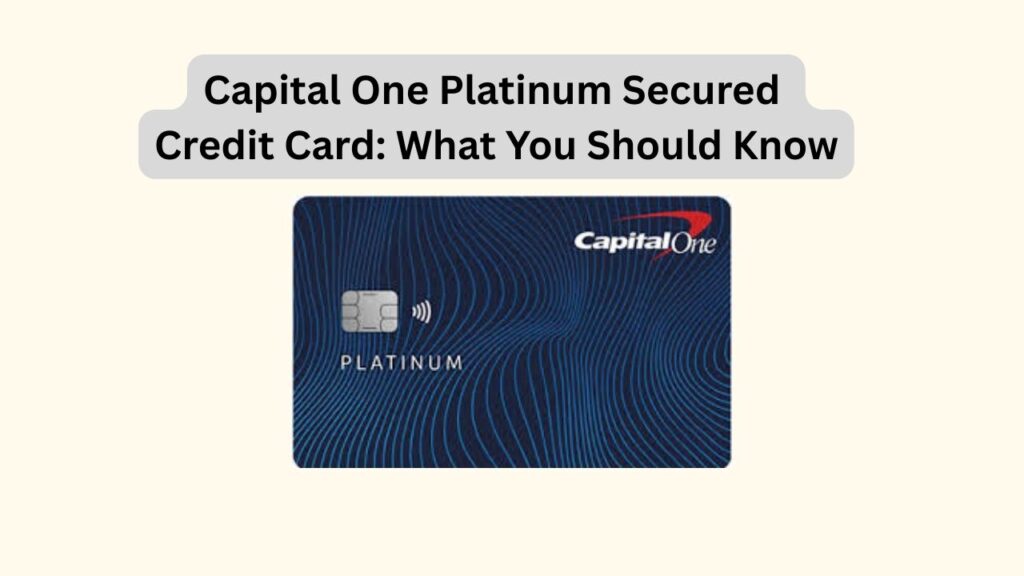
Is the capital one platinum secured credit card the right move if you’re serious about rebuilding credit without getting trapped by fees or confusing terms? In this article, we’ll break down how the card works, the security deposit and credit limit rules, approval odds, real-world pros and cons, how it reports to credit bureaus, potential credit score impact, common complaints, comparisons with similar secured cards, and what to expect long term. By the end, you’ll know exactly who this card is best for—and who should skip it.
Now that you know what the card claims to offer, let’s slow things down and unpack how it actually works in the real world, starting with the fundamentals.
Table of Contents
How The Capital One Platinum Secured Credit Card Works In Practice
The Capital One Platinum Secured Credit Card is built for people who either have damaged credit or no credit history at all. What makes it different is not just that it’s secured, but how Capital One structures the risk on their side and flexibility on yours.
When you apply, Capital One evaluates your application using factors such as income, existing obligations, and overall credit behavior rather than relying solely on a traditional credit score. This is why many applicants with bankruptcies, collections, or thin credit files still get approved.
Once approved, you fund your security deposit, activate the card, and begin using it just like a regular credit card. You receive:
- Monthly statements
- A fixed billing cycle
- A due date and minimum payment
- Full online and mobile access
From a usability standpoint, it does not feel like a “second-class” secured card, which is something many competitors fail to deliver.
Security Deposit Structure Explained Clearly
The security deposit is one of the most misunderstood parts of this card, so it’s worth breaking it down carefully.
Flexible Deposit Tiers That Reduce Upfront Cost
Instead of forcing everyone to put down the full $200, Capital One offers tiered deposit options. Depending on your profile, you may be approved for:
- A $49 deposit for a $200 credit limit
- A $99 deposit for a $200 credit limit
- A $200 deposit for a $200 credit limit
This flexibility is a major advantage for people who are rebuilding credit on a tight budget. It lowers the barrier to entry without sacrificing reporting benefits.
How And When The Deposit Is Collected
After approval, you’re given a specific window—usually around 35 days—to complete your deposit. You can:
- Pay the deposit in one lump sum
- Split it into smaller payments until the full amount is met
The card will not be issued until the deposit is fully received, but once it is, activation is quick.
The deposit is refundable if:
- You close the account in good standing
- Capital One upgrades you to an unsecured card
Now that the deposit is clear, let’s talk about limits and growth.
Capital One Platinum Secured Credit Card Credit Limit And Growth Potential
Most secured cards lock you into a low limit unless you add more cash. Capital One takes a different approach.
Initial Credit Limit Expectations
The standard starting limit is $200. While that may seem low, it’s intentional. Capital One prioritizes controlled exposure to help you establish positive behavior quickly.
Automatic Credit Line Increase Reviews
After approximately six months of responsible use, Capital One reviews your account automatically. If your behavior shows:
- On-time payments
- Low credit utilization
- No returned payments
You may receive a credit limit increase without adding more deposit money. This is a critical feature that many competitors simply do not offer.
How To Increase Your Odds Of A Limit Boost
To improve your chances:
- Keep balances under 30% of your limit
- Pay before the statement closes, not just before the due date
- Avoid carrying balances month to month
- Use the card regularly, but lightly
This turns the card from a static tool into a stepping stone.
How The Card Builds Credit Month By Month
Credit building is not instant, and this card is designed for gradual, predictable improvement.
Payment History Reporting
Every on-time payment strengthens your profile. Capital One reports monthly, which means each billing cycle becomes a positive data point. Missed payments hurt just as much as with any other card, so consistency matters more than spending volume.
Credit Utilization Control
Because the limit is low, utilization management is essential. Best practice includes:
- Spending no more than $50–$60 on a $200 limit
- Paying down balances before the statement date
- Avoiding maxing out the card, even temporarily
This approach protects your score while still generating activity.
Account Age And Stability Benefits
Keeping this account open long term improves:
- Average age of accounts
- Credit mix
- Overall stability
Even after upgrading to an unsecured card, many users keep this open for its age value.
Fees, Interest, And Cost Transparency
This is where the card quietly outperforms many secured competitors.
No Annual Fee Advantage
There is no annual fee. Over two years, this alone can save $50–$150 compared to other secured cards aimed at similar credit profiles.
Interest Rates And How To Avoid Them Completely
The APR is higher than prime cards, but that only matters if you carry a balance. If you:
- Pay the full statement balance every month
- Avoid cash advances
You will never pay interest at all.
Other Fees To Be Aware Of
- No foreign transaction fees
- Late fees apply if you miss payments
- No surprise maintenance fees
The cost structure is simple and predictable.
Day-To-Day Usability And Account Management Tools
Capital One’s digital experience is one of the strongest reasons people stick with this card.
Mobile App And Online Features
You can:
- Track spending in real time
- Set payment reminders
- Enable autopay
- Lock and unlock your card instantly
- Receive alerts for suspicious activity
These tools reduce human error, which is critical when rebuilding credit.
Customer Support Accessibility
Capital One offers:
- Phone support
- Chat assistance
- Secure messaging
While no bank is perfect, users consistently report better support here than with many secured-card issuers.
Comparison With Other Secured Credit Cards
Here’s a clearer, more practical comparison.
| Feature | Capital One Platinum Secured | Typical Secured Card |
|---|---|---|
| Minimum Deposit | As low as $49 | Usually $200 |
| Annual Fee | $0 | Often $25–$75 |
| Credit Line Reviews | Automatic | Rare |
| Upgrade Potential | Possible | Limited |
| App Experience | Strong | Often basic |
This highlights why many users start with Capital One even if they have other options.
Common Concerns Addressed Honestly
Is Approval Guaranteed?
No, but approval odds are high for applicants with stable income and limited recent negative activity.
Will I Definitely Get My Deposit Back?
Yes, if the account is closed in good standing or upgraded, though timelines may vary.
Is This Card Worth Keeping Long Term?
It depends. Many users keep it for account age, even after upgrading to better cards.
Who This Card Makes Sense For
This card is ideal if you:
- Are rebuilding credit after setbacks
- Want low upfront cost
- Prefer no annual fee
- Value strong digital tools
You may want to look elsewhere if you:
- Want rewards or cash back
- Already qualify for unsecured cards
- Need a higher starting limit
Final Thoughts On The Capital One Platinum Secured Credit Card
This card succeeds because it focuses on fundamentals rather than gimmicks. It offers accessibility, fairness, and a realistic growth path—three things many secured cards promise but fail to deliver.
If your goal is to rebuild credit the right way, without unnecessary fees or confusion, the Capital One Platinum Secured Credit Card remains one of the strongest tools available in the U.S. today.