Published: May 2026 | Last Updated: May 2026
Author: EffectiveStuffs Finance Team | Category: Budgeting
This article is for informational purposes only and does not constitute financial, legal, or tax advice. Financial situations vary, so always adjust any budgeting strategy to your personal income, expenses, and goals.
Most people do not fail at budgeting because they are bad with money.
They fail because the budgeting system itself feels exhausting.
Too many categories. Too many spreadsheets. Too many rules. Too much guilt every time life does not go exactly according to plan.
That is why most budgets collapse within a few weeks.
A simple budget system works differently. Instead of trying to control every single dollar perfectly, it helps you build awareness, reduce financial chaos, and make better decisions consistently without turning your life into a math project.
This guide breaks down one of the simplest budgeting systems that actually works for normal people living real lives in 2026. No financial jargon. No unrealistic restrictions. Just a practical way to manage your money without feeling overwhelmed.
Table of Contents
Key Takeaways
- Most budgets fail because they are too complicated to maintain consistently
- A simple budget system focuses on awareness and sustainability instead of perfection
- The best budgeting method is the one you can realistically follow long term
- Separating needs, wants, and goals simplifies financial decisions dramatically
- Weekly money check-ins matter more than daily financial obsession
- Budgeting should reduce stress, not create more of it
- Simpler budgeting systems often work better than highly detailed financial plans
Why Most Budget Systems Fail
Before building a better budget, you need to understand why most budgeting systems stop working so quickly.
The biggest problem is complexity.
Many budgeting methods expect people to track dozens of categories, predict every future expense perfectly, and constantly monitor transactions throughout the day.
Real life does not work like that.
Unexpected expenses happen. Paychecks fluctuate. Emergencies appear. Motivation disappears.
A budget system that only works during perfect months is not actually a good budget system.
The Real Problem Is Not Discipline
Most people blame themselves when budgeting fails.
But the issue is usually the system itself.
If your budget feels stressful every single day, you will eventually stop using it no matter how motivated you were initially.
The best budget systems feel manageable during busy weeks, emotional weeks, and financially difficult weeks.
That is what makes them sustainable.
Budgeting Should Reduce Financial Anxiety
A good budget should help you feel calmer around money.
Not trapped by it.
If checking your budget feels like opening bad news every day, the system is too aggressive or too complicated.
A realistic budget gives you clarity without making you feel constantly punished.
The Simplest Budget System Most People Can Actually Follow
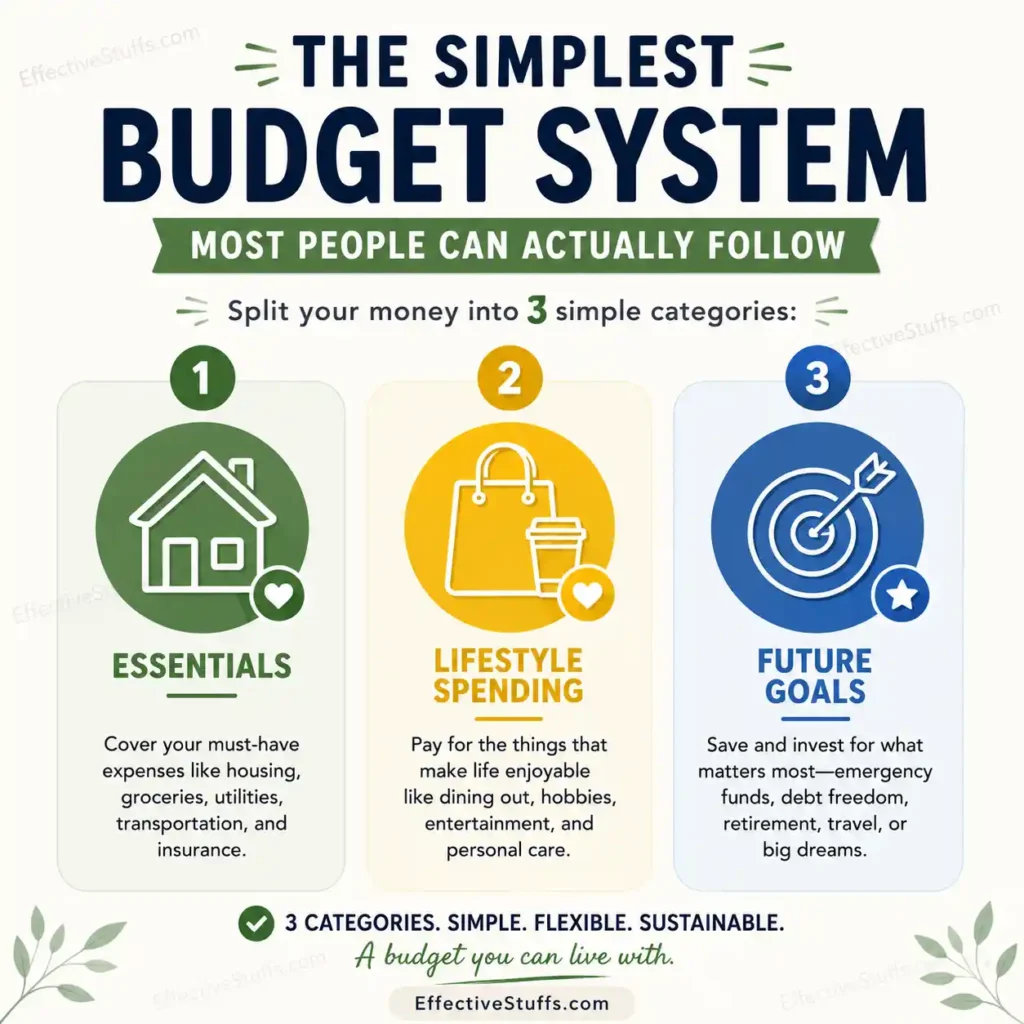
Now that you understand why complicated budgets usually fail, let’s look at a budgeting system that feels practical instead of overwhelming.
This method uses only three core categories:
- Essentials
- Lifestyle Spending
- Future Goals
That is it.
No 27-category spreadsheet.
No obsession over tiny purchases.
No financial perfectionism.
Category 1 — Essentials
Before budgeting anything else, calculate the expenses you absolutely need to survive and function normally.
This includes:
- Rent or mortgage
- Groceries
- Utilities
- Transportation
- Insurance
- Minimum debt payments
- Basic phone bill
These are your non-negotiables.
The goal here is clarity, not guilt.
Many people avoid checking these numbers because they are afraid of what they will see. But avoiding reality only creates more financial stress later.
Category 2 — Lifestyle Spending
After essentials, create one broader category for the things that make life enjoyable.
This includes:
- Restaurants
- Entertainment
- Shopping
- Streaming services
- Coffee
- Small personal treats
Most budgeting systems fail because they try to eliminate enjoyment completely.
That never lasts.
A simple budget system accepts that people need room to enjoy life. The goal is control, not punishment.
Category 3 — Future Goals
The final category is where progress happens.
This includes:
- Emergency savings
- Debt payoff
- Investments
- Travel savings
- House savings
- Financial goals
Even small contributions matter.
Most people think budgeting only matters once they can save huge amounts of money. That mindset keeps people stuck for years.
Small consistent progress changes finances faster than occasional extreme budgeting.
The 70/20/10 Version Of This Budget System
Before making budgeting more complicated, try this extremely simple structure first.
Many people succeed using a version like this:
- 70% for essentials
- 20% for lifestyle spending
- 10% for future goals
The percentages do not need to be perfect.
The structure simply creates awareness.
For example:
If you earn $4,000 monthly:
- $2,800 goes toward essentials
- $800 goes toward lifestyle spending
- $400 goes toward savings or goals
That instantly simplifies decision-making.
Why This Works Better Than Complex Budgets
Most people do not need more financial information.
They need less financial confusion.
The more complicated a budgeting system becomes, the more likely people are to quit when life becomes stressful.
Simple systems survive difficult months better.
And survival matters more than perfection.
How To Make A Simple Budget Actually Stick
Now that you understand the structure, the next step is making the system realistic enough to maintain consistently.
That is where most people struggle.
Stop Trying To Track Every Dollar Perfectly
Perfection destroys consistency.
If your budget requires constant monitoring every hour, it will eventually feel exhausting.
A budget should guide decisions, not consume your life.
Missing a category occasionally is not failure.
Overspending slightly one month is not failure.
Completely abandoning the budget system is the real failure.
Use Weekly Money Check-Ins Instead Of Daily Stress
Instead of obsessing over money constantly, schedule one weekly money check-in.
Sunday evenings work well for many people.
During those 10–15 minutes:
- Review spending
- Check account balances
- Adjust categories if necessary
- Look at upcoming bills
That is enough for most people.
Daily financial panic usually creates worse decisions, not better ones.
Build Your Budget Around Real Life
Many budgets fail because they ignore human behavior completely.
If you love coffee, budget for coffee.
If eating out occasionally keeps you sane, include it.
A realistic budget always beats an unrealistic perfect budget.
The Biggest Budgeting Mistakes Beginners Make
Before improving your finances, you need to avoid the mistakes that quietly destroy most budgeting systems.
Mistake 1 — Starting Too Aggressively
Many people create impossible budgets immediately after feeling motivated.
That rarely lasts.
Extreme budgeting usually leads to burnout, overspending, and frustration later.
Start simple first.
Mistake 2 — Ignoring Small Spending Leaks
Small purchases feel harmless individually.
But repeated spending patterns quietly destroy budgets over time.
Food delivery. Random online shopping. Subscription renewals.
Those habits matter more than most people realize.
If you have never fully tracked your spending before, our guide on the best free budgeting apps that actually change how you handle money can help you identify where your money quietly disappears every month.
Mistake 3 — Treating Budgeting Like Punishment
A budget should improve your life.
Not make you miserable.
If your budget removes every enjoyable part of life, you will eventually rebel against it financially.
Mistake 4 — Giving Up After One Bad Month
One difficult month does not mean your budget failed.
Unexpected expenses happen.
Real budgeting success comes from returning to the system consistently instead of quitting completely.
Simple Budgeting Methods That Also Work Well
Now that you understand the core simple budget system, here are other easy budgeting methods many people use successfully.
The 50/30/20 Budget
This budgeting method divides income into:
- 50% needs
- 30% wants
- 20% savings
It works well for people who prefer broader financial categories.
Cash Stuffing
Cash stuffing uses physical cash envelopes for spending categories.
Many people spend less simply because physically handing over cash creates stronger awareness.
Zero-Based Budgeting
Zero-based budgeting assigns every dollar a specific purpose before the month begins.
Apps like EveryDollar are built around this method.
It works well for people who prefer detailed control.
Budgeting Apps
Some people stay more consistent using apps instead of spreadsheets.
Popular options include:
The best option depends on your personality and financial habits.
Questions People Actually Ask About Simple Budget Systems
Now that you understand how this budgeting system works, let’s answer the questions most people ask before trying to budget seriously.
What Is The Easiest Budgeting Method For Beginners?
The easiest budgeting method is usually one with broad categories instead of detailed tracking. Simpler systems are easier to maintain consistently.
How Do You Start Budgeting When You Feel Overwhelmed?
Start by tracking only essentials, lifestyle spending, and savings goals. Avoid complicated spreadsheets initially.
What Percentage Of Income Should Go Toward Savings?
Many people aim for 10% to 20%, but even small consistent savings matter significantly over time.
Is Budgeting Supposed To Feel Restrictive?
No. A good budget should create awareness and control, not constant stress or guilt.
What Is The Biggest Reason Budgets Fail?
Most budgets fail because they are too complicated or unrealistic for everyday life.
Should Couples Use The Same Budget?
Many couples benefit from shared budgeting systems, especially for household expenses and savings goals.
Are Budgeting Apps Better Than Spreadsheets?
That depends on personality. Some people prefer apps for automation, while others prefer manual budgeting for awareness.
How Often Should You Check Your Budget?
Weekly check-ins usually work better than obsessively monitoring spending every day.
Is It Bad To Overspend Occasionally?
No. Real budgeting includes imperfect months. The goal is consistency over time, not perfection.
What Is The Difference Between Budgeting And Tracking Spending?
Tracking spending shows where your money went. Budgeting helps decide where your money should go.
Should Emergency Savings Come Before Debt Payoff?
Many people build a small emergency fund first so unexpected expenses do not immediately create more debt.
Can You Budget With Irregular Income?
Yes. Simpler budgeting systems often work especially well for inconsistent income because they focus on broad spending awareness.
What Is Lifestyle Inflation?
Lifestyle inflation happens when spending increases automatically every time income increases.
How Long Does It Take For Budgeting To Feel Normal?
Most people begin feeling more comfortable after one or two months of consistent budgeting awareness.
Is Cash Stuffing Better Than Digital Budgeting?
Cash stuffing works well for people who overspend easily using cards because physical cash creates stronger spending awareness.
Should You Budget Fun Money?
Absolutely. Removing all enjoyment usually makes budgets unsustainable.
What Is The Simplest Rule For Budgeting?
Spend less than you earn consistently while gradually building savings and reducing unnecessary spending.
Can Budgeting Reduce Financial Anxiety?
Yes. Financial clarity often reduces stress because uncertainty creates more anxiety than reality itself.
Why Does Budgeting Feel Emotionally Difficult?
Money is emotional for most people. Budgeting forces awareness around habits many people usually avoid thinking about.
What Should You Do After Building A Budget?
Once your spending becomes more controlled, the next step is usually building savings and reducing financial vulnerability.
Final Thoughts
The best budget system is not the most complicated one.
It is the one you can realistically follow during normal life.
A simple budget system works because it reduces financial chaos without requiring perfection. It creates awareness without making money management feel exhausting.
Start small.
Track broad categories first.
Build consistency before complexity.
And remember this:
Financial progress usually happens slower than people want, but much faster than people think once consistent habits finally begin working together.
Once your spending becomes more controlled, the next step is usually creating stronger financial stability. That is why learning how to build a 6-month emergency fund becomes so important because budgeting feels dramatically less stressful once emergencies stop destroying your finances every few months.

