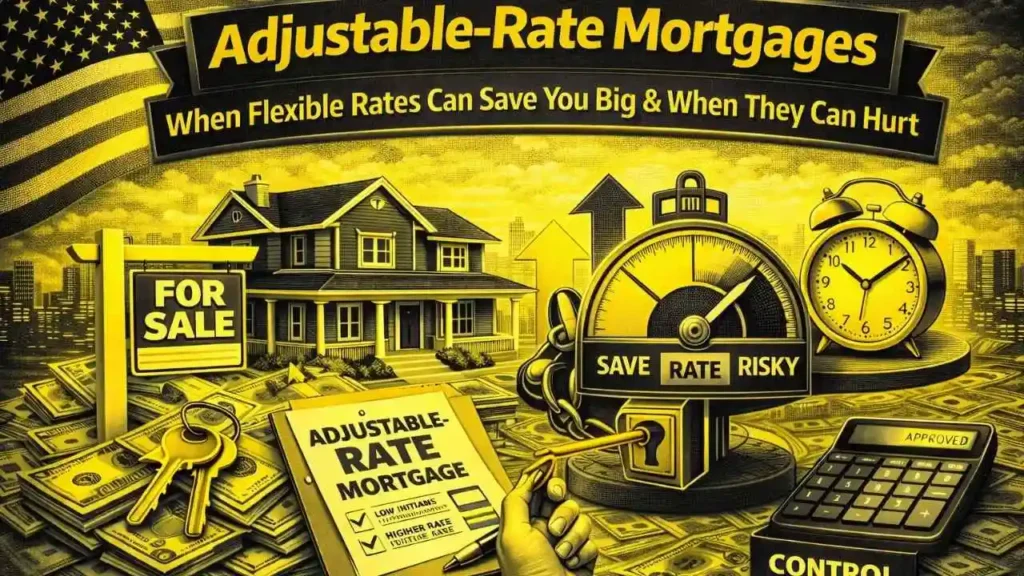
Buying a home means choosing how much risk you’re willing to take, and adjustable-rate mortgages often spark the most debate. Are they cheaper or dangerous? Who actually benefits from them? And what happens when rates change? In this guide, you’ll learn how adjustable-rate mortgages work, how payments adjust over time, who they’re best for, real risks to watch out for, and how smart buyers use them strategically in the United States.
Fixed-Rate Mortgages Explained: Why Locking Your Payment Can Be the Smartest Move You Make
Table of Contents
What Adjustable-Rate Mortgages Really Are And How They Work
Adjustable-rate mortgages, often called ARMs, are home loans where the interest rate is not fixed forever. Instead, the rate starts low for an initial period and then adjusts periodically based on market conditions.
In simple terms:
- You get a lower starting rate
- That rate lasts for a set number of years
- After that, the rate can go up or down
This structure is what makes adjustable-rate mortgages appealing at first glance. To understand the appeal fully, it helps to break down the phases of the loan.
The Two Main Phases Of Adjustable-Rate Mortgages
Adjustable-rate mortgages have two clear phases: the initial fixed period and the adjustment period.
During the initial phase:
- The interest rate stays the same
- Payments are predictable and often lower
During the adjustment phase:
- The rate resets at scheduled intervals
- Payments can increase or decrease
This shift is where many buyers feel uncertain, which is why understanding the adjustment rules is critical before choosing this type of loan.
How Adjustable-Rate Mortgages Set And Change Interest Rates
The interest rate on adjustable-rate mortgages is tied to an underlying benchmark plus a margin set by the lender.
Here’s how changes happen:
- The benchmark reflects broader market trends
- The margin stays constant
- Your rate adjusts based on both
There are also caps that limit how much rates can change at once or over the life of the loan. Knowing these limits helps buyers estimate worst-case scenarios, which leads naturally into why people choose ARMs in the first place.
Why Homebuyers Choose Adjustable-Rate Mortgages
Many buyers choose adjustable-rate mortgages because of the lower starting payments. This can make a big difference in affordability, especially early on.
Buyers often consider ARMs when:
- They plan to sell before the adjustment period
- They expect income to increase
- They want lower payments upfront
When used intentionally, adjustable-rate mortgages can be tools rather than traps. That distinction becomes clearer when you look at who they work best for.
Who Adjustable-Rate Mortgages Are Best For In The USA
Adjustable-rate mortgages tend to suit buyers with specific plans, not everyone.
They’re often a good fit for:
- Buyers planning to move within a few years
- Professionals with rising income
- Investors focused on short-term ownership
If you expect to stay in a home long term, ARMs require more caution. That’s why comparing them with fixed-rate options is so important.
Adjustable-Rate Mortgages Vs Fixed-Rate Mortgages
The main difference between adjustable-rate mortgages and fixed-rate mortgages is predictability.
Adjustable-rate mortgages offer:
- Lower initial payments
- More short-term flexibility
Fixed-rate mortgages offer:
- Long-term payment stability
- Protection from rate increases
Choosing between them depends on how long you’ll keep the loan and how comfortable you are with change. That decision becomes clearer when you look closely at affordability.
Affordability And Budgeting With Adjustable-Rate Mortgages
Lower initial payments can make homes more affordable in the short term, which is a major reason buyers choose ARMs.
However, smart budgeting means:
- Planning for possible payment increases
- Stress-testing your budget
- Avoiding reliance on the lowest possible rate
Affordability isn’t just about today’s payment. It’s about what you can handle later, which brings us to rate caps.
Rate Caps In Adjustable-Rate Mortgages Explained Simply
Rate caps limit how much your interest rate can change. They protect borrowers from sudden, extreme increases.
Common caps include:
- Initial adjustment caps
- Periodic adjustment caps
- Lifetime caps
These caps don’t eliminate risk, but they help define it. Understanding them makes it easier to evaluate whether an ARM fits your risk tolerance.
Risks To Consider With Adjustable-Rate Mortgages
The biggest risk with adjustable-rate mortgages is payment uncertainty. When rates rise, payments rise too.
Key risks include:
- Payment shock after the fixed period ends
- Difficulty budgeting long term
- Increased costs if rates rise sharply
These risks don’t mean ARMs are bad. They mean they require planning, which leads to strategies smart buyers use to manage them.
How Smart Buyers Use Adjustable-Rate Mortgages Without Regret
Buyers who succeed with adjustable-rate mortgages don’t rely on hope. They rely on strategy.
They often:
- Choose longer fixed periods
- Plan to refinance before adjustments
- Keep emergency savings
This strategic approach helps buyers benefit from lower initial costs while limiting downside risk. With that foundation, it’s time to address the questions people ask most.
Frequently Asked Questions About Adjustable-Rate Mortgages
These questions reflect what homebuyers across the United States search for when deciding whether adjustable-rate mortgages are worth the risk.
What Are Adjustable-Rate Mortgages In Simple Terms?
Adjustable-rate mortgages are home loans that start with a lower fixed interest rate for a set period, then adjust periodically based on market conditions. After the initial phase ends, your interest rate and monthly payment can increase or decrease, depending on how rates change.
How Do Adjustable-Rate Mortgages Work Over Time?
An adjustable-rate mortgage begins with a fixed-rate period, often several years. After that, the rate adjusts at regular intervals. Each adjustment recalculates your payment based on current market rates, subject to limits called rate caps that restrict how much it can change.
Why Are Adjustable-Rate Mortgages Cheaper At First?
They usually start with lower interest rates because the lender isn’t locking in a long-term rate. This lower initial rate reduces early monthly payments, which can improve affordability for buyers who don’t plan to keep the loan long term.
Who Should Consider Adjustable-Rate Mortgages?
Buyers who plan to sell or refinance before the adjustment period often consider ARMs. They’re also appealing to buyers expecting higher future income or those comfortable managing interest rate risk.
Are Adjustable-Rate Mortgages Risky?
They carry more risk than fixed-rate mortgages because payments can rise. However, the risk is manageable when borrowers understand rate caps, plan ahead, and avoid overextending their budget.
How Long Is The Fixed Period On Adjustable-Rate Mortgages?
Fixed periods vary but commonly last five, seven, or ten years. During this time, the rate and payment remain unchanged, offering short-term stability.
What Happens When An Adjustable-Rate Mortgage Adjusts?
When the adjustment occurs, your interest rate is recalculated based on market benchmarks plus a margin. Your monthly payment then changes accordingly, within the limits set by the loan’s rate caps.
Do Adjustable-Rate Mortgages Always Go Up?
No. Rates can go up or down depending on market conditions. However, many borrowers focus on the possibility of increases when planning.
What Are Rate Caps On Adjustable-Rate Mortgages?
Rate caps limit how much your interest rate can change at each adjustment and over the life of the loan. They help protect borrowers from extreme payment increases.
Are Adjustable-Rate Mortgages Good In A Falling Rate Market?
They can be. If rates fall, your payment may decrease at adjustment, potentially saving money compared to a fixed-rate loan.
Can First-Time Buyers Get Adjustable-Rate Mortgages?
Yes. First-time buyers can qualify, but they should be especially cautious and ensure they understand future payment risks.
Do Adjustable-Rate Mortgages Affect Credit Scores?
They affect credit like any mortgage. On-time payments help credit, while missed payments hurt it.
Can I Refinance An Adjustable-Rate Mortgage?
Yes. Many borrowers refinance before the adjustable period begins to lock in a fixed rate and avoid uncertainty.
Are Adjustable-Rate Mortgages Harder To Qualify For?
Qualification standards are similar to fixed-rate mortgages, but lenders may evaluate your ability to handle higher future payments.
How Do Lenders Calculate Adjustable Rates?
Rates are based on a benchmark index plus a fixed margin. The index changes over time, while the margin stays the same.
Are Payments Predictable With Adjustable-Rate Mortgages?
Payments are predictable during the fixed period but uncertain afterward. This makes long-term planning more challenging.
Can Adjustable-Rate Mortgages Save Money?
They can save money if you sell, refinance, or benefit from falling rates before adjustments significantly increase payments.
What Is Payment Shock?
Payment shock happens when monthly payments rise sharply after the fixed period ends. It’s one of the biggest risks of ARMs.
Are Adjustable-Rate Mortgages Good For Short-Term Ownership?
Yes. They’re often well-suited for buyers who plan to move within a few years.
Can Adjustable-Rate Mortgages Be Fixed Later?
Yes. Refinancing allows you to switch to a fixed-rate mortgage.
Do Adjustable-Rate Mortgages Have Lifetime Limits?
Yes. Lifetime caps limit how high the interest rate can go over the entire loan term.
Are Adjustable-Rate Mortgages Good For Investors?
They can be, especially for short-term investments, but risk management is essential.
How Often Do Rates Adjust?
Adjustment frequency varies but is often once per year after the initial fixed period.
Can Adjustable-Rate Mortgages Be Used For Refinancing?
Yes. ARMs are available for both purchases and refinances.
Do Adjustable-Rate Mortgages Require Higher Credit Scores?
Not necessarily, but stronger credit improves terms and approval chances.
Are Adjustable-Rate Mortgages Popular In The USA?
They’re less popular than fixed-rate mortgages but still widely used in certain markets and situations.
What Is The Biggest Advantage Of Adjustable-Rate Mortgages?
The biggest advantage is lower initial payments, which can improve affordability early on.
What Is The Biggest Disadvantage Of Adjustable-Rate Mortgages?
The main drawback is payment uncertainty after the fixed period ends.
Can Adjustable-Rate Mortgages Be Paid Off Early?
Most allow early payoff without penalties, but terms should be reviewed carefully.
Are Adjustable-Rate Mortgages Good During Inflation?
They can be risky if inflation leads to rising interest rates and higher payments.
Do Adjustable-Rate Mortgages Have Closing Costs?
Yes, similar to other mortgages.
Can Adjustable-Rate Mortgages Be Used For Second Homes?
Yes, depending on lender guidelines.
How Do Adjustable-Rate Mortgages Affect Budgeting?
They complicate long-term budgeting due to potential payment changes.
Are Adjustable-Rate Mortgages Flexible?
They offer flexibility early on but require planning later.
Can Adjustable-Rate Mortgages Hurt Long-Term Buyers?
They can if rates rise significantly and the buyer stays long term.
Do Adjustable-Rate Mortgages Require Appraisals?
Yes, appraisals are typically required.
Are Adjustable-Rate Mortgages Safer Than They Used To Be?
Modern ARMs include caps and regulations that make them safer than in the past.
Can Adjustable-Rate Mortgages Help Buyers Qualify For More Home?
Lower initial payments may help buyers qualify, but caution is needed.
Should I Choose Adjustable-Rate Mortgages Or Fixed?
The right choice depends on your timeline, risk tolerance, and financial goals.
Are Adjustable-Rate Mortgages Worth It?
They can be worth it when used intentionally and with a clear exit strategy.
How Do I Reduce Risk With Adjustable-Rate Mortgages?
Choose longer fixed periods, understand caps, and plan for refinancing.
Can Adjustable-Rate Mortgages Be Combined With Other Loans?
Yes, depending on lender offerings.
Do Adjustable-Rate Mortgages Change With The Economy?
Yes, they’re influenced by broader market and economic trends.
Are Adjustable-Rate Mortgages Good For High-Income Buyers?
They can be if income growth offsets future payment increases.
What Mistakes Should I Avoid With Adjustable-Rate Mortgages?
Avoid assuming rates won’t rise and borrowing at the edge of affordability.
How Do I Decide If An Adjustable-Rate Mortgage Is Right?
Evaluate how long you’ll stay, how much risk you can handle, and whether you have a clear plan.
Final Thoughts On Adjustable-Rate Mortgages
Adjustable-rate mortgages aren’t inherently good or bad. They’re tools that reward planning and punish guesswork. When used strategically, they can lower early costs and provide flexibility. When used carelessly, they can create stress. The key is clarity. Understand how adjustable-rate mortgages work, plan for adjustments, and choose them only if they truly fit your timeline and comfort level.