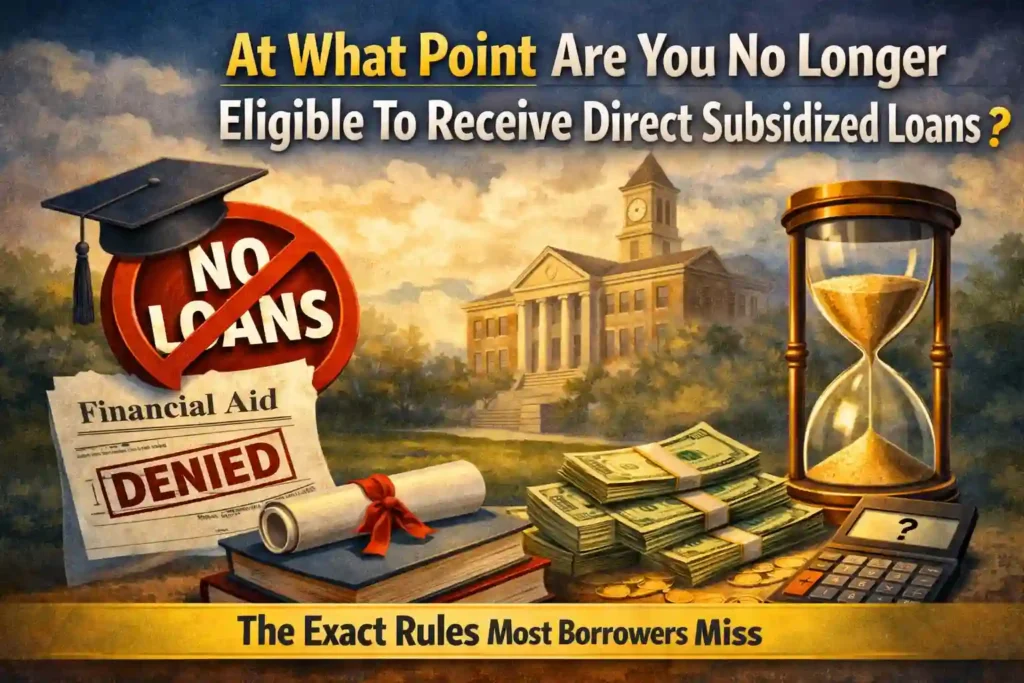
You assume your student aid will always be there—until one day, it isn’t. That moment catches most borrowers off guard. The question at what point are you no longer eligible to receive direct subsidized loans starts to matter only when it’s already too late for many people.
Now that you’re thinking about it early, you’re in a better position than most. Let’s walk through exactly when eligibility ends, why it happens, and what you can do before it affects you.
Table of Contents
What Direct Subsidized Loans Actually Are And Why They Matter
Before diving into eligibility limits, you need to understand why these loans are so valuable.
Direct subsidized loans are designed for students with financial need. The key advantage is simple:
You don’t pay interest while:
- You’re enrolled at least half-time
- You’re in a grace period
- Certain deferment conditions apply
That means your loan balance doesn’t grow during those periods.
This is where things get serious.
Once you lose access to subsidized loans, you’re pushed toward unsubsidized options—where interest starts accumulating immediately.
That brings us to the real question.
At What Point Are You No Longer Eligible To Receive Direct Subsidized Loans
Eligibility doesn’t disappear randomly. There are specific triggers—and if you ignore them, you lose access without warning.
Here are the main cutoff points you need to understand.
You No Longer Demonstrate Financial Need
This is the most common reason.
Subsidized loans are strictly based on financial need. If your financial situation changes—whether due to income, assets, or household changes—you may no longer qualify.
This can happen if:
- Your family income increases
- Your dependency status changes
- Your reported financial situation improves
Once your calculated need drops, subsidized loans disappear first.
You Exceed The Maximum Time Limit (150% Rule)
This is where most people get caught.
There’s a rule that limits how long you can receive subsidized loans. It’s based on 150% of your program length.
Here’s what that means:
- 4-year degree → 6 years maximum eligibility
- 2-year degree → 3 years maximum eligibility
Once you exceed that timeframe, you lose eligibility—even if you haven’t graduated.
And it gets worse.
If you continue beyond that limit, you may also lose the interest subsidy on existing loans.
You Are No Longer Enrolled At Least Half-Time
Enrollment status matters more than you think.
To remain eligible, you must be enrolled at least half-time in an eligible program.
If you drop below that:
- You lose eligibility for new subsidized loans
- Your current loan status may change
This often happens when students:
- Take fewer classes
- Pause their studies
- Shift to part-time without realizing the impact
You Already Reached The Loan Limit
There are strict borrowing limits.
For undergraduate students, subsidized loans have both annual and lifetime caps. Once you hit those limits, you’re done—no exceptions.
Even if you still demonstrate financial need, exceeding the cap blocks further eligibility.
That leads to another overlooked factor.
You Are No Longer An Undergraduate Student
Direct subsidized loans are only available to undergraduate students.
Once you:
- Graduate
- Enroll in graduate school
You immediately lose eligibility for subsidized loans.
Graduate students only have access to unsubsidized loans.
You Lose Eligibility Due To Academic Or Administrative Issues
This is rarely discussed—but it matters.
You can lose eligibility if:
- You fail to maintain satisfactory academic progress
- You default on a previous student loan
- You don’t meet enrollment or documentation requirements
Even administrative issues can cut off access.
Now that you know the triggers, there’s a deeper layer most people ignore.
The Hidden Impact Of Losing Direct Subsidized Loan Eligibility
Losing eligibility isn’t just about switching loan types.
It has long-term financial consequences.
Interest Starts Building Immediately
With unsubsidized loans:
- Interest accrues from day one
- Your balance grows while you’re still in school
This means you graduate with significantly more debt.
Your Repayment Burden Increases
More interest leads to:
- Higher monthly payments
- Longer repayment periods
And if you don’t manage it well, it can affect your financial future for years.
You Lose A Key Financial Advantage
Subsidized loans are designed to protect you from early debt growth.
Once you lose them, that protection is gone.
That’s why timing matters.
How The 150% Rule Quietly Ends Your Eligibility
Now that you understand the basics, let’s go deeper into the most misunderstood rule.
The 150% rule doesn’t just limit how long you can borrow—it can also impact your existing loans.
What Happens When You Cross The Limit
Once you exceed the maximum timeframe:
- You can no longer receive new subsidized loans
- Your existing subsidized loans may lose their interest benefit
That means interest starts accumulating even on loans that were previously protected.
Why This Rule Catches People Off Guard
Most students don’t track their eligibility timeline.
Common situations include:
- Changing majors
- Repeating courses
- Taking breaks from school
All of these extend your timeline—and push you closer to the limit.
If you’re not paying attention, you can cross the threshold without realizing it.
Common Mistakes That Make You Lose Eligibility Faster
Now that you see how strict the rules are, let’s look at what causes people to lose eligibility sooner than expected.
Switching Programs Without A Plan
Changing your major might seem harmless, but it resets your academic path without resetting your loan clock.
You’re still bound by the original timeframe.
Taking Unnecessary Breaks
Every semester you’re not progressing efficiently counts against your eligibility window.
Delays add up quickly.
Dropping Below Half-Time Enrollment
Even one semester at a reduced load can affect your eligibility and timeline.
Ignoring Financial Aid Updates
Your financial situation is reviewed regularly. If you don’t stay updated, changes can affect your eligibility without warning.
Now that you know the risks, the next step is control.
How To Stay Eligible For Direct Subsidized Loans As Long As Possible
If you want to maximize your access, you need a strategy.
Track Your Eligibility Timeline
Know:
- Your program length
- Your maximum eligibility period
Don’t guess—track it.
Maintain Full-Time Or Half-Time Enrollment
Stay within the required enrollment level to keep your eligibility active.
Avoid Unnecessary Delays
Plan your courses carefully to graduate within your timeframe.
Monitor Your Financial Aid Status
Review updates regularly to ensure you still qualify based on financial need.
Stay Academically Eligible
Maintain satisfactory progress to avoid administrative disqualification.
These steps don’t just protect your eligibility—they protect your future finances.
What Happens After You Lose Eligibility
Once you’re no longer eligible for direct subsidized loans, your options change.
You Move To Unsubsidized Loans
These loans:
- Accrue interest immediately
- Increase your total borrowing cost
You May Need Alternative Funding
This can include:
- Private loans
- Scholarships
- Grants
Each option comes with its own trade-offs.
You Need A Stronger Repayment Strategy
Without subsidized protection, managing your loans becomes more important than ever.
That’s why preparation matters.
Frequently Asked Questions About Direct Subsidized Loan Eligibility
When Do You Lose Eligibility For Direct Subsidized Loans?
You lose eligibility when you no longer demonstrate financial need, exceed the maximum timeframe, graduate, or fail to meet academic and enrollment requirements.
Can You Regain Eligibility After Losing It?
In some cases, yes—if your financial need changes. However, time-based limits like the 150% rule cannot be reversed.
Do Subsidized Loans Turn Into Unsubsidized Loans?
Not exactly, but they can lose their subsidy, meaning interest begins to accrue.
Does Changing Majors Affect Eligibility?
Yes. It can extend your timeline and push you closer to the eligibility limit.
Are There Exceptions To The Time Limit?
Generally, no. The rules are strict, and exceptions are rare.
The Bottom Line
Understanding at what point are you no longer eligible to receive direct subsidized loans isn’t optional—it’s essential.
Eligibility doesn’t disappear randomly. It follows clear rules:
- Financial need
- Time limits
- Enrollment status
- Academic standing
If you ignore these, you lose access.
If you understand them, you stay in control.
And in a system where small mistakes can cost you thousands, that control makes all the difference.