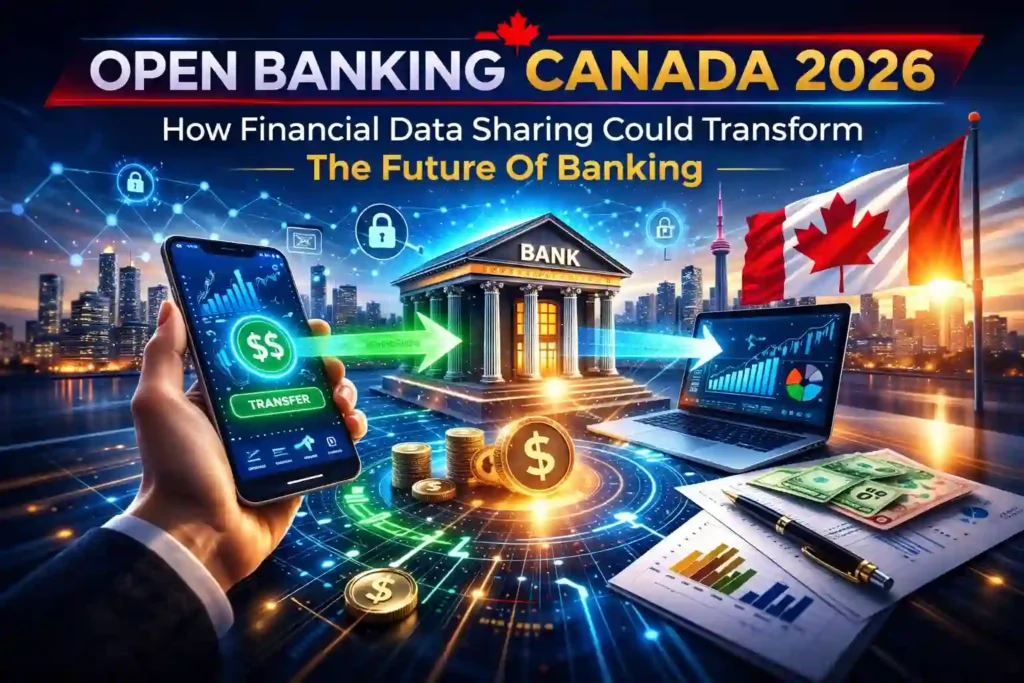
For decades, banks controlled nearly every aspect of how financial data moved between institutions and customers. If you wanted to switch banks, analyze spending habits, or connect financial services together, the process was often slow and complicated. That is beginning to change. The rise of open banking Canada 2026 is set to introduce a new financial system where customers can securely share their banking data with approved financial services.
Open banking is widely considered one of the most important developments in modern financial technology. It allows consumers to give permission for their financial data to be shared between banks and trusted fintech companies through secure digital interfaces. This data-sharing capability can lead to new financial tools, smarter budgeting platforms, faster payments, and improved financial services.
Canada is now moving toward implementing an open banking framework designed to improve competition, strengthen innovation, and provide consumers with more control over their financial information.
In this detailed guide, you will learn what open banking in Canada means, how financial data sharing works, and why this transformation could reshape the future of banking.
Table of Contents
What Open Banking Canada 2026 Means
Open banking refers to a financial system where banks allow customers to securely share their financial data with authorized third-party providers.
Instead of banks keeping all financial data within their own systems, open banking allows customers to decide how their financial information can be used.
This is typically done through secure digital connections known as application programming interfaces, often called APIs.
With open banking, consumers may be able to:
• connect multiple bank accounts in one financial app
• access advanced budgeting tools
• receive personalized financial advice
• compare financial products more easily
• automate financial management tasks
This system gives consumers greater control over their financial information while allowing fintech companies to develop innovative financial services.
Why Canada Is Introducing Open Banking
Canada’s financial system has traditionally been dominated by large banks. While these institutions offer reliable services, innovation can sometimes move slowly in highly centralized systems.
Open banking aims to encourage competition and innovation by allowing new financial technology companies to build services on top of traditional banking infrastructure.
Several factors are driving Canada’s decision to adopt open banking.
Consumer Demand For Better Financial Tools
Consumers increasingly want smarter financial apps that can analyze spending habits, track subscriptions, and provide personalized recommendations.
Competition In Financial Services
Open banking allows fintech companies to compete with traditional banks by offering new digital services.
Improved Financial Transparency
Consumers can gain a clearer picture of their financial health when multiple accounts are connected in one platform.
These benefits could help create a more dynamic financial ecosystem where innovation happens more rapidly.
How Open Banking Works
Open banking relies on secure digital technology that allows financial institutions to share customer data safely.
The process typically works as follows:
- A customer chooses to connect their bank account to a financial service.
- The customer gives permission for specific financial data to be shared.
- The bank securely transfers the approved data to the service provider.
- The service provider uses the data to deliver financial insights or tools.
Importantly, the customer remains in control of what information is shared and can revoke access at any time.
Security and privacy protections are critical components of open banking frameworks.
How Consumers Could Benefit From Open Banking
Open banking may introduce several advantages for everyday banking customers.
One of the most significant benefits is the ability to manage multiple financial accounts in one place.
Instead of logging into different banking apps, users may be able to see all their financial information through a single platform.
Other potential benefits include:
automated savings tools
smarter budgeting apps
personalized financial advice
real-time spending analysis
These tools can help individuals make more informed financial decisions.
For example, a budgeting app connected through open banking could automatically categorize expenses and provide recommendations for saving money.
How Fintech Companies Could Use Open Banking
Open banking creates new opportunities for fintech companies to develop innovative financial services.
Because fintech platforms can access financial data with customer permission, they can build advanced tools designed to improve financial management.
Examples of potential fintech innovations include:
AI-powered financial planning platforms
automated investment advisors
real-time credit risk analysis tools
subscription management systems
These services could make financial planning easier and more accessible for consumers.
As fintech companies compete to develop the best tools, the overall quality of financial services may improve.
How Banks Are Responding To Open Banking
Traditional banks are aware that open banking may increase competition in the financial sector.
However, many banks also recognize that open banking creates new opportunities.
Instead of losing customers to fintech companies, banks may partner with fintech firms to integrate new digital services into their platforms.
Some banks are already investing in their own digital innovation initiatives.
These initiatives include:
mobile banking improvements
AI-powered financial tools
integrated budgeting features
advanced payment technologies
By embracing open banking, banks may remain competitive while benefiting from the innovation occurring in the fintech ecosystem.
Security And Privacy In Open Banking
Because open banking involves sharing financial data, security and privacy protections are essential.
Modern open banking frameworks rely on strong cybersecurity standards designed to protect sensitive financial information.
Security measures typically include:
encrypted data transfers
secure authentication systems
strict regulatory oversight
customer-controlled data permissions
Financial institutions and fintech companies must comply with strict security guidelines to participate in open banking ecosystems.
Consumers will always retain control over which services can access their financial data.
How Open Banking Could Influence Credit And Lending
One area where open banking could have a major impact is credit evaluation.
Traditional credit systems rely heavily on credit scores and limited financial data.
With open banking, lenders may gain access to a broader range of financial information that provides a more accurate picture of an individual’s financial behavior.
This could potentially allow lenders to:
assess credit risk more accurately
offer personalized loan products
approve credit applications faster
As a result, some consumers who previously struggled to access credit may find it easier to qualify for financial services.
Canada And The Global Open Banking Movement
Canada is not the first country to adopt open banking.
Several regions have already implemented similar frameworks designed to improve financial innovation.
These systems have helped introduce new financial services that make banking more convenient and competitive.
The Canadian open banking framework aims to learn from these international experiences while adapting the system to the needs of Canada’s financial market.
As adoption grows, open banking could become a key driver of financial innovation worldwide.
What The Future Of Banking Could Look Like
The implementation of open banking may represent one of the most significant transformations in the financial industry in decades.
Instead of relying solely on traditional banking services, consumers may soon have access to a wide range of personalized financial tools built on top of open banking infrastructure.
Future developments could include:
AI-powered financial assistants
automated savings platforms
real-time financial insights
fully integrated financial ecosystems
These technologies could make managing money easier, smarter, and more efficient.
As open banking continues expanding, the financial services industry may become more innovative and customer-focused.
Frequently Asked Questions About Open Banking Canada 2026
What Is Open Banking Canada 2026?
Open banking Canada 2026 refers to the country’s upcoming financial framework that allows customers to securely share banking data with approved fintech services.
Why Is Canada Introducing Open Banking?
The goal is to encourage financial innovation, increase competition, and provide consumers with more control over their financial information.
How Does Open Banking Work?
Open banking uses secure digital connections that allow financial data to be shared between banks and fintech services with customer permission.
Is Open Banking Safe?
Yes. Open banking frameworks include strict security standards designed to protect financial data and ensure safe data transfers.
Can Customers Control Their Data?
Yes. Consumers must give explicit permission before their financial data can be shared with third-party services.
What Are The Benefits Of Open Banking?
Benefits may include smarter budgeting tools, personalized financial advice, and easier management of multiple bank accounts.
Will Open Banking Replace Traditional Banks?
No. Banks will continue operating but may integrate new services developed by fintech companies.
Can Open Banking Improve Credit Access?
Yes. Lenders may be able to evaluate credit applications more accurately using broader financial data.
Will Fintech Companies Benefit From Open Banking?
Fintech companies can develop innovative financial tools that use customer-approved banking data.
Are Other Countries Using Open Banking?
Yes. Several countries have already implemented open banking frameworks to encourage financial innovation.
Could Open Banking Reduce Banking Fees?
Increased competition between financial service providers may lead to lower fees and better financial products.
What Technologies Enable Open Banking?
Secure APIs, encryption systems, and digital authentication tools allow financial data to be shared safely.
Will Open Banking Encourage Innovation?
Yes. By allowing fintech companies to build services using financial data, open banking encourages new technological developments.
Can Open Banking Help With Financial Planning?
Financial apps connected through open banking may provide detailed insights into spending habits and saving opportunities.
What Is The Future Of Open Banking In Canada?
Open banking is expected to expand as financial institutions and fintech companies develop new services built on shared financial data.
Conclusion
The introduction of open banking Canada 2026 marks a significant shift in how financial data is managed and shared. By allowing consumers to control how their financial information is used, open banking could encourage innovation, improve financial transparency, and expand access to smarter financial tools.
As banks and fintech companies adapt to this new ecosystem, the financial industry may become more competitive and customer-focused. With the right balance of security, regulation, and innovation, open banking could redefine how Canadians manage their finances in the digital age.