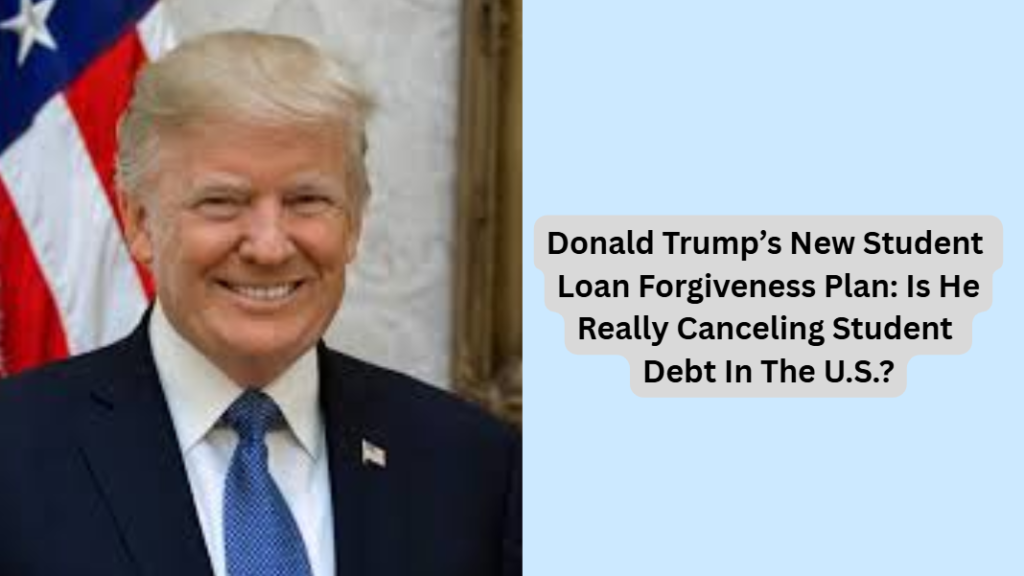
Donald Trump’s New Student Loan Forgiveness Plan has taken many by surprise, marking a major shift as his administration moves to resume student loan forgiveness under federal income-driven repayment programs. This announcement has reignited hope among millions of Americans struggling with student debt—but the big question remains: is Trump truly canceling student loans, or is this just partial relief with limits?
Below is a full breakdown of the latest student loan forgiveness update, what it means for borrowers, who qualifies, and how this could reshape the conversation around higher education debt in the United States.
Table of Contents
What’s New With Trump’s Student Loan Forgiveness Plan
Under the new policy, the Department of Education has agreed to restart debt relief for borrowers who have qualified for forgiveness through income-driven repayment plans such as Income-Based Repayment (IBR), Pay As You Earn (PAYE), and Income-Contingent Repayment (ICR).
Borrowers who have reached their forgiveness milestone under these programs will now see the remaining balances of their student loans wiped out. Additionally, those who qualify in 2025 will not face any tax liability for their forgiven balances, ensuring that debt relief doesn’t turn into a surprise tax bill.
The Department also plans to review and retroactively credit eligible borrowers for payments made after reaching the forgiveness threshold. This means millions of Americans could receive refunds or account adjustments. In total, the new forgiveness wave is expected to impact over two million additional borrowers.
Why This Change Is Happening Now
Legal Pressure and Student Loan Lawsuits
For months, legal challenges and growing public pressure have forced the government to act. Borrowers and unions had criticized the system for delays and poor communication. These lawsuits created momentum for action, pushing the Department of Education to commit to processing previously stalled applications.
The new agreement represents a major step toward accountability and transparency — two things borrowers had been demanding for years.
Avoiding Tax Trouble for Borrowers
One of the biggest concerns around student loan forgiveness has always been taxation. Normally, canceled debt is considered taxable income. However, under the current federal rule, student loan debt forgiven through 2025 will not be taxed.
To protect borrowers, the new student debt forgiveness plan ensures that qualifying cancellations are counted as taking effect before the 2025 deadline. This prevents borrowers from facing unexpected federal tax bills and keeps relief truly beneficial.
Is Trump Really Canceling Student Loans?
There’s been a lot of debate around whether Trump is “canceling” student loans entirely. The answer is — not exactly. This move provides meaningful relief, but it’s targeted toward specific groups, not across-the-board cancellation.
What the Plan Covers
- Borrowers in IBR, PAYE, or ICR repayment plans who have met forgiveness milestones.
- Borrowers eligible for Public Service Loan Forgiveness (PSLF) who can now count certain periods of deferment or forbearance.
- Borrowers entitled to retroactive adjustments or refunds for payments made beyond their required term.
What the Plan Doesn’t Cover
- Borrowers with private student loans.
- Borrowers enrolled in newer repayment plans like SAVE, which remains paused pending legal review.
- Borrowers whose forgiveness eligibility falls after 2025 may face tax liabilities unless further action is taken.
In short, Trump’s student loan forgiveness plan delivers substantial relief to millions but does not eliminate all student debt nationwide.
What Borrowers Should Do Now
Check Your Repayment Plan
Borrowers should log into their Federal Student Aid account to confirm their repayment plan and see if they qualify for student loan forgiveness under IBR, PAYE, or ICR. If you’re currently under the SAVE plan, you may consider switching to an eligible income-driven plan to take advantage of the renewed forgiveness policy.
Review Notifications from the Education Department
Borrowers should watch their email and loan servicer portals for new notifications. The Department of Education will send updates on eligibility, progress, and any documents needed to complete the forgiveness process.
Keep Records Updated
Update your income information, family size, and repayment history to ensure smooth processing. Missing or outdated information could delay forgiveness approval.
Stay Informed About Tax Rules
Since the tax-free period for forgiven student loans expires after 2025, keep an eye on congressional updates. If the exemption is extended, more borrowers will benefit without extra tax costs.
Potential Challenges and Concerns
While many borrowers celebrate the move, critics question its long-term sustainability. Some argue that large-scale forgiveness could encourage future borrowing without accountability. Others say the plan doesn’t go far enough to address the root causes of college affordability.
There’s also concern about how quickly the Department of Education can process millions of forgiveness applications, given its past delays. In addition, the tax exemption deadline of 2025 adds uncertainty for borrowers still waiting for approval.
What is student loan forgiveness under Trump’s new plan?
It’s a renewed federal initiative that clears remaining student debt for borrowers in income-driven repayment programs. Those who have completed the required years of repayment now qualify for cancellation, offering financial relief after years of delay and administrative backlog.
Is Trump forgiving all student loans?
No. The forgiveness only applies to federal loans under specific income-driven plans like IBR, PAYE, and ICR. It doesn’t extend to private loans or all borrowers, but it still provides life-changing relief for millions who’ve met the repayment criteria.
Are private student loans included?
Private loans aren’t covered because they’re managed by banks and private lenders, not the federal government. Only federal student loans under Department of Education repayment plans qualify for forgiveness. Borrowers with private debt must explore refinancing or other repayment assistance options.
Who qualifies for forgiveness now?
Borrowers who have been making payments under income-driven repayment plans for the required number of years qualify. This includes those enrolled in IBR, PAYE, or ICR who’ve reached their forgiveness milestone, as well as some public service workers through PSLF adjustments.
Does this apply to the SAVE plan?
Currently, the SAVE plan remains paused pending further review and legal adjustments. Borrowers in SAVE may need to switch temporarily to IBR or PAYE to benefit from the ongoing forgiveness program until SAVE is fully reinstated or updated by the Education Department.
How do I check if I qualify?
You can log in to your Federal Student Aid (FSA) account at studentaid.gov. From there, review your repayment plan type, total payments made, and eligibility status. If you’re under an eligible plan and meet the timeline, you may qualify automatically without reapplying.
Will forgiven debt be taxed?
For now, no. The federal government has extended tax-free treatment of forgiven student debt through 2025. This means borrowers who receive forgiveness during that window won’t owe federal income taxes on their canceled balances, helping ensure true financial relief.
What happens after 2025?
If Congress doesn’t extend the current tax exemption, forgiven student loans processed after 2025 could be subject to federal income tax. Borrowers whose forgiveness falls beyond that date may face tax bills unless additional legislative action is taken to renew the exemption.
How many people benefit from this?
Approximately two million additional borrowers are expected to gain forgiveness under this update. These include individuals whose applications were delayed or wrongly denied and those who’ve reached repayment milestones under income-driven repayment plans after years of waiting.
Do I need to apply again?
Most borrowers don’t need to reapply. The Education Department will automatically process forgiveness for eligible borrowers. However, keeping your records, contact details, and income verification updated can help ensure your application isn’t delayed or flagged for review during processing.
What if I made extra payments?
If you made payments beyond your qualifying period, you may receive credit or refunds for the overpayments. The Department of Education plans to automatically review accounts for such adjustments, ensuring borrowers are compensated for extra payments made in error or delay.
Can I still get Public Service Loan Forgiveness (PSLF)?
Yes. Public Service Loan Forgiveness continues to operate alongside this new plan. Borrowers working in government or nonprofit roles can combine PSLF with IDR adjustments to maximize benefits and shorten their remaining time toward complete loan forgiveness.
What if my forgiveness is delayed?
Delays may occur due to the large volume of borrowers being processed. Even if it takes time, your eligibility remains protected once you’ve met the program criteria. Keep checking your loan servicer’s portal and watch for confirmation notices regarding progress or updates.
Are defaulted loans eligible?
Defaulted federal loans can become eligible if they’re rehabilitated or consolidated into a qualifying repayment plan. Once your loans are back in good standing and enrolled in IBR, PAYE, or ICR, you can start accruing credit toward future forgiveness.
Can this policy be changed?
Yes, future administrations or court rulings could modify or replace parts of the plan. However, the current forgiveness actions are legally binding, meaning approved borrowers won’t lose their cancellation once processed, even if new policies are introduced later.
Does interest stop accruing during processing?
Interest typically continues to accrue until the forgiveness is finalized. Once your debt is officially canceled, interest no longer applies. Borrowers should monitor their loan accounts for updates and confirm that balances reflect the forgiveness once it’s approved.
What if I already finished my repayment term?
If you’ve already completed your required years under an eligible repayment plan, you should receive forgiveness automatically. Borrowers in this situation might also get refunds for any extra payments made after they met their forgiveness eligibility threshold.
How does this affect new borrowers?
New borrowers entering repayment after 2028 will likely fall under restructured repayment systems. The current student loan forgiveness initiative mainly benefits existing borrowers. However, policy changes may continue to evolve to address future student debt concerns and affordability.
Are graduate PLUS loans eligible?
Graduate PLUS loans can qualify if they’re consolidated into a Direct Consolidation Loan under an income-driven repayment plan. Once consolidated, they become eligible for forgiveness after meeting the required number of qualifying payments through IBR, PAYE, or ICR.
What’s the most important deadline?
The 2025 tax-free forgiveness deadline is the most critical. Borrowers who receive forgiveness by that date avoid federal tax liability. Staying proactive ensures your debt is processed before the exemption expires, protecting you from unexpected taxes on forgiven balances.
Can I transfer my loan to qualify?
You can consolidate federal loans to make them eligible for forgiveness. Consolidation combines multiple loans into one Direct Consolidation Loan under the Department of Education, allowing you to choose a qualifying income-driven repayment plan for forgiveness eligibility.
Does this affect my credit score?
Yes, in a positive way. Once your student loans are forgiven, your overall debt balance decreases, which can improve your credit utilization ratio and boost your credit score. Removing heavy student debt can also make it easier to qualify for future loans.
How long until forgiveness shows up on my account?
Forgiveness processing may take several months depending on backlog and verification requirements. Borrowers should regularly check their loan servicer accounts and email for status updates. Once approved, balances typically reflect forgiveness within one to three billing cycles.
Can Congress reverse this relief?
Congress cannot retroactively reverse forgiveness already granted. However, it could change future rules or tax treatment. Borrowers whose loans have already been canceled are legally protected from having their forgiven balances reinstated, ensuring that relief remains permanent.
What should I do next?
Check your repayment plan, confirm your eligibility, and make sure your account details are current. Stay alert to updates from your loan servicer and act quickly if any documents or certifications are requested. Preparation ensures you don’t miss out on forgiveness benefits.
Conclusion
Donald Trump’s new student loan forgiveness initiative marks a major shift in U.S. education policy. While it doesn’t erase all student debt, it restores hope and relief for millions of Americans who’ve waited years for fairness in repayment. If you’re a federal borrower, now’s the time to verify your status and secure your opportunity for debt freedom before 2025.