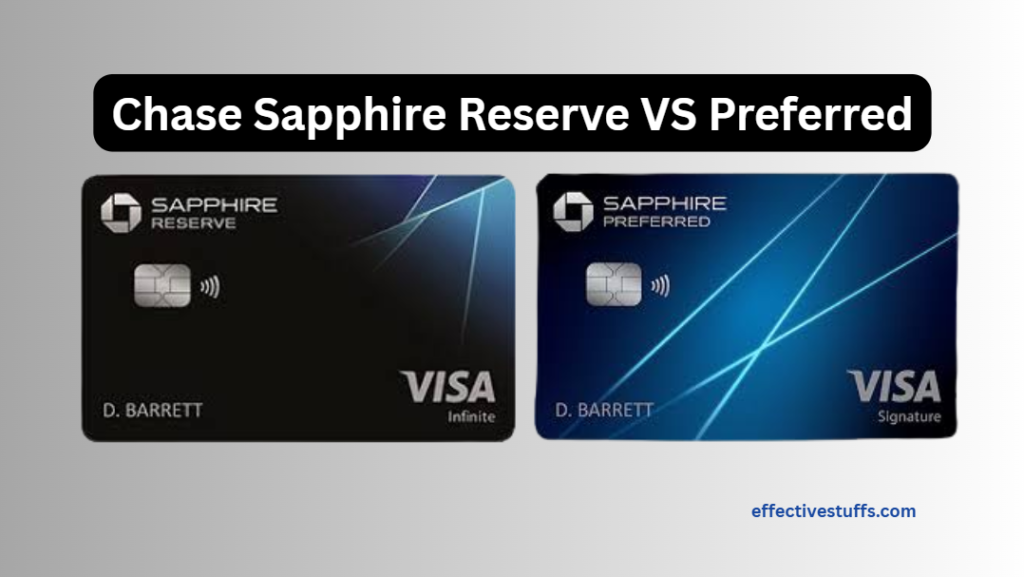
If you’re torn between Chase Sapphire Reserve vs Preferred, you’re not alone. Both cards promise powerful travel rewards, premium perks, and protection that make every dollar work smarter. But which one actually gives you the best value in 2025? In this guide, we’ll break down the real differences in benefits, fees, travel credits, redemption options, and user experience—so you’ll know exactly which card deserves a place in your wallet.
So, let’s find out,
Table of Contents
The Difference Between Chase Sapphire Reserve And Preferred
Before diving into which card offers better value, let’s quickly clarify what sets them apart. Both belong to Chase’s Sapphire lineup, meaning they share the same core DNA—travel rewards, strong redemption options, and protection benefits. But the Sapphire Reserve is built for frequent travelers seeking luxury and premium access, while the Sapphire Preferred targets smart spenders who want flexibility without paying a hefty annual fee.
Annual Fees And Value Comparison
The first big difference? The annual fee. The Chase Sapphire Preferred costs $95 annually, while the Reserve comes in at $550. That’s a big gap—but so is the value each offers. If you’re traveling a few times a year, the Reserve’s $300 annual travel credit, Priority Pass lounge access, and 50% higher point redemption value could easily offset the fee. But if your travel is occasional, the Preferred’s lower cost may make more sense.
Travel Rewards And Redemption Value
Here’s where things get interesting. Both cards earn Chase Ultimate Rewards® points, but how you redeem them changes everything. With Chase Sapphire Preferred, your points are worth 1.25¢ each when used through Chase Travel. The Reserve bumps that up to 1.5¢ per point—meaning your rewards stretch further. For example, 60,000 points could cover $900 in travel with Reserve versus $750 with Preferred.
Example:
If you book flights and hotels regularly, the 50% boost from the Reserve could easily justify the higher fee in a year.
Chase Sapphire Reserve vs Preferred: Travel Benefits Compared
When it comes to travel perks, the Reserve dominates with luxury-focused advantages. You’ll get Priority Pass Select lounge access, Global Entry/TSA PreCheck credit, and trip delay reimbursement up to $500 per ticket. The Preferred doesn’t include lounge access or TSA credits but still offers impressive travel protections, like primary rental car insurance and trip cancellation coverage—excellent for its price point.
Quick Comparison:
- Chase Sapphire Reserve: Lounge access, $300 travel credit, 3X points on travel immediately after credit, luxury insurance perks.
- Chase Sapphire Preferred: 5X points on travel booked through Chase, 2X on other travel, no travel credit but lower fee.
Dining, Groceries, And Everyday Spending Rewards
If food and dining are where you spend big, both cards shine. The Chase Sapphire Reserve offers 3X points on dining, including delivery and takeout. The Preferred gives 3X points on dining as well—but Reserve holders enjoy added luxury experiences like Chase Dining access and exclusive restaurant events.
For groceries or everyday expenses, neither Sapphire card leads the market, but you can pair them with cards like Chase Freedom Flex® or Chase Freedom Unlimited® to maximize your rewards.
Chase Sapphire Reserve vs Preferred: Insurance And Protection Benefits
Both cards come with elite-level protection perks, but the Reserve goes above and beyond. It offers trip delay reimbursement, baggage insurance, travel accident coverage, and rental car collision damage waiver as primary coverage—even on international rentals. The Preferred still offers similar protection, but coverage amounts are smaller, and certain benefits, like emergency evacuation, are exclusive to the Reserve.
Example:
If your flight from New York to L.A. gets delayed overnight, the Reserve covers up to $500 for hotels and meals—Preferred covers less, but still provides decent trip protection.
Airport Lounge Access And VIP Experiences
This is where the Reserve truly flexes. With Priority Pass Select membership, you get access to over 1,300 airport lounges worldwide. That’s not available on the Preferred at all. Plus, Reserve holders also gain access to Chase Sapphire Lounges and exclusive Reserve dining events. For frequent travelers, that experience is worth more than you might realize—comfort, quiet, and free meals before every flight add up.
Chase Sapphire Reserve vs Preferred: Earning Points Fast
Both cards reward your spending generously, but the earning rates differ slightly.
- Sapphire Reserve: 10X on hotels and car rentals through Chase Travel, 5X on flights, 3X on dining and other travel, 1X everywhere else.
- Sapphire Preferred: 5X on Chase Travel, 3X on dining, 2X on other travel, 1X elsewhere.
If you frequently book through Chase, both cards deliver—but Reserve’s bonus categories add faster growth for avid travelers.
Transfer Partners And Redemption Flexibility
Both cards give access to Chase’s 14 airline and hotel transfer partners like United, Southwest, JetBlue, Hyatt, and Marriott. However, Reserve users enjoy better redemption value through Chase’s travel portal and added protections. If you love flexibility, you can combine your points from other Chase cards into one pool—maximizing your travel potential.
Which Card Wins For Luxury Travelers?
For high-frequency travelers who prioritize comfort, Chase Sapphire Reserve is unmatched. It offers lounge access, premium protection, and exclusive hotel benefits through The Luxury Hotel & Resort Collection. Think room upgrades, complimentary breakfasts, and late checkouts—perks that quickly make the annual fee worth it.
Which Card Wins For Everyday Spenders?
If you don’t travel often and prefer a more budget-friendly rewards structure, Chase Sapphire Preferred delivers exceptional value. Its low annual fee, generous bonus categories, and access to the same Ultimate Rewards® ecosystem make it perfect for everyday users. You’ll still enjoy strong protections and the ability to grow your points for future trips.
Which Card Offers The Best Welcome Bonus?
Both cards feature competitive welcome offers:
- Chase Sapphire Preferred: 60,000 bonus points after spending $4,000 in the first 3 months (worth $750 toward travel).
- Chase Sapphire Reserve: 60,000 bonus points after the same spend, but worth $900 when redeemed through Chase Travel.
If maximizing point value matters most, Reserve wins by a mile.
Customer Experience And Mobile App Features
Chase’s app provides excellent tools for both cardholders, letting you track rewards, access travel insurance claims, and redeem points seamlessly. The Reserve adds exclusive travel concierge features—ideal if you enjoy a white-glove experience when booking flights or hotels.
Which Card Is Easier To Qualify For?
Both require good to excellent credit (usually 700+). However, Chase Sapphire Reserve’s higher annual fee and premium positioning make it slightly harder to qualify for. Preferred is the better entry point for those new to premium travel cards or building credit strength.
When To Upgrade From Preferred To Reserve
If you started with Chase Sapphire Preferred and your travel habits have increased, upgrading to Reserve can be a smart move. You’ll retain your Ultimate Rewards points and unlock better redemption rates. For example, 100,000 points become worth $1,500 instead of $1,250 through Chase Travel.
Which Card Should You Choose?
Here’s the truth: both cards are excellent—but your lifestyle determines the winner.
- If you travel frequently and want luxury perks, go with Chase Sapphire Reserve.
- If you prefer value, lower fees, and steady rewards, stick with Chase Sapphire Preferred.
Chase Sapphire Reserve vs Preferred: Which Card Truly Delivers
When it comes down to Chase Sapphire Reserve vs Preferred, the winner depends heavily on your travel frequency, spending habits, and how much value you’ll extract from premium perks.
If you fly often, dine out regularly, and want top-tier benefits like airport lounge access, bumping your point value by 50%, and premium travel protections, Sapphire Reserve delivers unmatched luxury and flexibility.
But if your travel is modest and you prefer a lower-cost, still powerful rewards card, Sapphire Preferred often gives better net return. You’ll get excellent points, solid protections, and access to the same redemption system—just without the premium price tag.
So, Reserve delivers more if you’ll use all its perks. Preferred delivers excellent value if you won’t fully exploit Reserve’s extras.
FAQs — Chase Sapphire Reserve vs Preferred (55 Questions)
What Is The Main Difference Between Chase Sapphire Reserve And Preferred?
The Reserve focuses on luxury travel benefits like airport lounge access and travel credits, while the Preferred offers lower fees with solid rewards for everyday spending.
Which Card Gives Better Travel Rewards?
The Reserve gives you 3X points on travel and dining and a 50% redemption boost, while the Preferred gives 5X points on Chase Travel bookings and 3X on dining.
Is Chase Sapphire Reserve Worth The Annual Fee?
If you use its $300 travel credit, Priority Pass lounges, and insurance coverage, yes—it easily offsets the $550 annual fee.
Can I Upgrade From Chase Sapphire Preferred To Reserve?
Yes, you can upgrade anytime if your account is in good standing and you meet Chase’s credit requirements.
Do Both Cards Have Foreign Transaction Fees?
No, both Chase Sapphire Reserve and Preferred cards waive foreign transaction fees, making them ideal for international travel.
Can I Upgrade My Chase Sapphire Preferred To Reserve?
Yes, you can upgrade from the Chase Sapphire Preferred to the Reserve if your account is in good standing and you meet Chase’s credit requirements. Simply call customer service or message Chase through your online account. For example, if you’re traveling frequently and want better perks like airport lounge access, upgrading makes total sense.
Is The Chase Sapphire Reserve Worth Its Annual Fee?
The $550 annual fee may sound steep, but if you travel often, it can easily pay for itself. Think about it — $300 in annual travel credits, airport lounges, and 3x points on dining and travel. Many cardholders who travel monthly find it’s worth every penny compared to the Preferred card.
Which Is Better For Beginners — Chase Sapphire Preferred Or Reserve?
For beginners, the Chase Sapphire Preferred is usually the smarter choice. It has a $95 annual fee and still earns great rewards on dining and travel. You can always upgrade later once you’ve built your credit and travel more frequently. Think of it as the training wheels before the luxury ride.
Does Chase Sapphire Reserve Have Lounge Access?
Yes, Chase Sapphire Reserve gives you complimentary Priority Pass Select membership. That means access to over 1,300 airport lounges worldwide — free drinks, snacks, Wi-Fi, and peace before your flight. Imagine waiting for your next flight in comfort instead of crowded terminals — that’s the kind of perk frequent flyers love.
Do Chase Sapphire Points Expire?
No, Chase Sapphire points never expire as long as your account remains open and in good standing. So, if you’re planning a dream trip to Italy next year, your points will still be there waiting. Just remember — if you close your card or transfer them incorrectly, you could lose them.
What Credit Score Do I Need For Chase Sapphire Reserve?
Generally, you’ll need a credit score of 740 or higher for the Chase Sapphire Reserve. Chase looks for strong credit history, steady income, and responsible card use. If you’ve paid off your cards on time for years and keep low balances, you’ve got a solid shot at approval.
Can I Hold Both Chase Sapphire Reserve And Preferred?
No, Chase doesn’t allow you to hold both Sapphire cards at the same time. You must choose one — or downgrade or upgrade between them. So, if you already have the Preferred and want the Reserve, you’ll need to switch. Chase wants customers to focus rewards on one premium Sapphire account.
How Much Is The Chase Sapphire Reserve Annual Fee?
The Chase Sapphire Reserve comes with a $550 annual fee. While that sounds high, it includes a $300 travel credit, Priority Pass lounge access, and TSA PreCheck or Global Entry reimbursement. If you travel even a few times a year, the perks can easily outweigh the cost.
How Do Chase Sapphire Travel Credits Work?
Every year, Chase Sapphire Reserve automatically reimburses you up to $300 for eligible travel purchases — flights, hotels, tolls, parking, and even Uber rides. You don’t have to activate anything. For example, if you book a $250 flight, that amount is credited back to your account automatically.
Does Chase Sapphire Preferred Offer Lounge Access?
No, the Chase Sapphire Preferred doesn’t offer airport lounge access. If that’s important to you, the Reserve is the better choice. However, Preferred still offers great travel rewards and insurance perks without the higher annual fee, making it perfect for casual travelers who don’t need luxury extras.
Can I Downgrade From Chase Sapphire Reserve To Preferred?
Yes, you can downgrade to the Chase Sapphire Preferred if the Reserve’s annual fee no longer fits your budget. Just call Chase customer service. You’ll keep your points, but you’ll lose certain premium perks like lounge access and the $300 travel credit. It’s a smooth, penalty-free process.
Do Chase Sapphire Reserve Points Transfer To Airlines?
Absolutely. Chase Sapphire Reserve points transfer 1:1 to major airline partners like United, Southwest, JetBlue, and British Airways. So, if you’ve got 50,000 points, that’s 50,000 airline miles. Travelers love this flexibility — especially when snagging free or discounted international flights.
How Much Are Chase Sapphire Points Worth?
With the Chase Sapphire Preferred, points are worth 1.25¢ each when redeemed for travel through Chase Ultimate Rewards. With the Reserve, they’re worth 1.5¢ each. So, 60,000 points can mean $900 in travel value with the Reserve — that’s a big difference for frequent travelers.
Can I Redeem Chase Sapphire Points For Cash Back?
Yes, you can redeem your Chase Sapphire points for cash back at 1¢ per point. However, you’ll usually get better value when using points for travel — especially with the Reserve’s 50% bonus. For example, 50,000 points equal $500 cash or $750 toward travel.
Which Is Better For Dining Rewards — Reserve Or Preferred?
The Chase Sapphire Reserve wins here, earning 3x points on dining versus 2x for the Preferred. So, if you’re often out for dinner or grabbing takeout, Reserve helps you rack up points faster. For example, spend $200 monthly on dining — you’ll earn 600 points instead of 400.
Does Chase Sapphire Reserve Cover Rental Car Insurance?
Yes, it provides primary rental car coverage up to $75,000 for theft or collision damage. You can decline the rental company’s insurance confidently. Frequent travelers love this because it saves money and hassle — especially when renting cars in the U.S. or abroad for work or vacations.
Does Chase Sapphire Preferred Have Travel Insurance?
Yes, it includes solid travel protections — like trip cancellation/interruption insurance up to $10,000 per trip, baggage delay coverage, and rental car insurance. It’s one reason so many travelers start with the Preferred. It covers real-life travel issues without needing a luxury card.
Can I Pay Chase Sapphire Annual Fee With Points?
Unfortunately, no — you can’t use points to pay your annual fee. But you can use points for nearly everything else, including travel, dining, and cash back. The annual fee must be paid directly through your account balance. It’s a standard rule across most Chase credit cards.
Does Chase Sapphire Reserve Include TSA PreCheck?
Yes, Chase Sapphire Reserve reimburses up to $100 for Global Entry or TSA PreCheck application fees every four years. Just use your card to pay for the program and the statement credit will appear automatically. That’s another travel headache solved before your next airport line.
Which Is Better For International Travel — Reserve Or Preferred?
The Chase Sapphire Reserve is better for frequent international travelers. You’ll enjoy lounge access, higher point value on travel, and excellent protections. Both cards have no foreign transaction fees, but the Reserve’s perks — like 3x travel points and trip delay insurance — make it ideal for overseas trips.
Does Chase Sapphire Reserve Have Foreign Transaction Fees?
No, Chase Sapphire Reserve doesn’t charge any foreign transaction fees — a huge perk for travelers. You can use it anywhere abroad without paying the typical 3% charge most cards add. So, whether you’re buying espresso in Rome or sushi in Tokyo, the price you see is exactly what you pay.
Does Chase Sapphire Preferred Have Foreign Transaction Fees?
No, the Chase Sapphire Preferred also has no foreign transaction fees. That makes it a great pick for casual travelers who don’t need luxury perks. Whether you’re booking Airbnb stays in Mexico or dining in Paris, you’ll save money with every swipe abroad.
Can I Transfer Points Between Chase Sapphire Preferred And Reserve?
Yes, if you or someone in your household owns both cards, you can freely transfer points between them. Many users earn on the Preferred and redeem on the Reserve to maximize value — for example, moving 50,000 points to the Reserve turns them into $750 of travel.
Which Chase Sapphire Card Has A Better Welcome Bonus?
The Chase Sapphire Preferred usually offers a higher welcome bonus value-to-fee ratio. For instance, 60,000 points after spending $4,000 in 3 months equals $750 in travel value. The Reserve sometimes matches the same points but with a higher annual fee, so beginners often start with Preferred.
Is It Easy To Redeem Chase Sapphire Points For Travel?
Yes, redeeming points is simple through the Chase Ultimate Rewards portal. You can book flights, hotels, rental cars, and more directly — no blackout dates. With the Reserve, points are worth 50% more, so that $1,000 trip might only “cost” 66,667 points. It’s one of the smoothest redemption systems available.
Can I Combine Chase Points From Other Cards With Sapphire?
Absolutely. If you have cards like the Chase Freedom Unlimited or Chase Ink Business, you can pool those points into your Sapphire account for higher value. For example, 20,000 points from Freedom become more valuable when moved to your Sapphire Reserve for 50% more redemption power.
What Travel Insurance Does Chase Sapphire Reserve Offer?
The Reserve offers top-tier protections — trip cancellation, interruption, and delay insurance, lost luggage coverage, and emergency evacuation benefits. If your $1,200 flight gets canceled due to weather, Chase may reimburse you. It’s why frequent travelers trust this card as their go-to companion.
How Does Chase Sapphire Preferred Compare To Reserve For Rewards?
The Preferred earns 2x points on travel and dining, while the Reserve earns 3x. You’ll also get higher redemption value with the Reserve. However, if you travel occasionally and want to avoid a $550 annual fee, the Preferred’s 2x categories and $95 fee make it a strong contender.
Does Chase Sapphire Reserve Include Travel Delay Coverage?
Yes, if your trip is delayed by six hours or more or requires an overnight stay, Chase Sapphire Reserve can reimburse meals and lodging up to $500 per ticket. For example, if your flight from Chicago to L.A. gets canceled overnight, you can claim your hotel and dinner costs.
Does Chase Sapphire Preferred Offer Cell Phone Protection?
Currently, no. The Preferred doesn’t include cell phone protection, but the Reserve does. If you pay your phone bill with the Reserve, you’re covered for up to $800 per claim for damage or theft, with a $50 deductible. That’s a real plus if your iPhone takes a tumble.
How Long Does It Take To Get Approved For Chase Sapphire Reserve?
Usually, applicants get a response instantly, but sometimes Chase takes a few days for review. If they need to verify income or existing accounts, it may take up to two weeks. You can always call Chase’s reconsideration line to check status or provide extra details if delayed.
Which Chase Sapphire Card Is Better For Families?
The Chase Sapphire Preferred is often better for families. It has a lower annual fee, strong travel protections, and great point earnings without the luxury extras you may not need. Families who travel once or twice a year usually find the Preferred the most cost-effective.
Can I Get Authorized Users On Chase Sapphire Reserve?
Yes, you can add authorized users for a $75 annual fee per person. Each user gets their own Priority Pass lounge access and can earn points for your account. So, if your partner or adult child travels often, it’s a smart way to share premium perks.
Does Chase Sapphire Reserve Cover Lost Luggage?
Yes, it covers up to $3,000 per passenger for lost or damaged luggage. So, if your suitcase disappears between New York and Miami, Chase has your back. They’ll reimburse for essentials like clothes and toiletries, making travel mishaps much less stressful.
Can You Get Preapproved For Chase Sapphire Cards?
Yes, Chase sometimes offers preapproval through its website or local branches. Preapproval doesn’t guarantee final approval but helps you see if you’re likely to qualify before applying. It’s a good option if you’re building credit and want to avoid unnecessary hard pulls.
Which Chase Sapphire Card Is Best For Students Or New Grads?
The Chase Sapphire Preferred is ideal for new graduates or early-career professionals. Its low annual fee and easy-to-use reward structure make it beginner-friendly. Once you start traveling more or earning higher income, you can always upgrade to the Reserve later for added luxury perks.
What Are The Redemption Options For Chase Sapphire Reserve Points?
You can redeem points for travel, cash back, gift cards, and Apple purchases through Chase Ultimate Rewards. But travel gives the best bang for your buck — especially with the 50% value boost. For example, 60,000 points = $900 in travel instead of $600 in cash.
Is Chase Sapphire Reserve Metal?
Yes, it’s made of durable metal, giving it a premium feel. It’s heavier than most plastic cards and adds a bit of luxury to your wallet. Many users say it feels like a status symbol — though the real value lies in its unbeatable travel perks.
Does Chase Sapphire Reserve Have A Foreign Exchange Limit?
No, there’s no foreign exchange limit. You can spend abroad freely without restrictions — whether you’re booking hotels in France or buying train tickets in Japan. Just remember to alert Chase before international trips to avoid any fraud alerts temporarily blocking transactions.
Can I Product Change Between Chase Sapphire Cards?
Yes, Chase allows product changes between Sapphire cards after 12 months of account opening. If your spending habits change, you can upgrade or downgrade without closing your account. It’s perfect for adjusting your rewards strategy without losing credit history or points.
How Do Chase Sapphire Points Compare To Amex Membership Rewards?
Chase Sapphire Reserve points are often easier to redeem, especially through Chase Ultimate Rewards. While Amex has more partners, Chase offers more flexible travel redemptions and simpler transfers. If you’re new to travel rewards, Sapphire points are often more beginner-friendly for maximizing trips.
Which Chase Sapphire Card Is Better For Domestic Travel?
For U.S.-based travelers who take occasional flights or road trips, the Preferred is more practical. It still earns solid points and has a much smaller annual fee. If you’re flying coast-to-coast every few weeks, though, the Reserve will deliver more comfort and travel protections.
Does Chase Sapphire Reserve Offer Concierge Service?
Yes, it comes with 24/7 Visa Infinite Concierge — a personal assistant who can help book restaurants, tickets, and travel arrangements. For instance, you can call to reserve a last-minute dinner in Miami or find tickets for a sold-out Broadway show. It’s travel luxury simplified.
What’s The Chase Sapphire Reserve Credit Limit?
Credit limits typically start around $10,000 for approved applicants and can go much higher based on income and credit profile. Chase tends to assign generous limits to match the Reserve’s premium status. You can also request increases after showing consistent on-time payments.
Can You Use Chase Sapphire Points For Airbnb?
Yes, you can use points for Airbnb through the Chase Ultimate Rewards travel portal, though you can’t transfer them directly. Just book your Airbnb as a travel expense, and points will cover it. It’s a simple way to redeem rewards for unique stays and cozy getaways.
Is There A 5/24 Rule For Chase Sapphire Cards?
Yes — Chase’s 5/24 rule applies. If you’ve opened five or more credit cards (from any issuer) in the past 24 months, you’ll likely be denied. So, apply strategically. Many people plan their Chase applications early to secure Sapphire cards before reaching that limit.
Does Chase Sapphire Reserve Cover Trip Cancellation?
Yes, it covers trip cancellation and interruption up to $10,000 per person and $20,000 per trip for prepaid expenses. If your cruise gets canceled due to illness or weather, you can be reimbursed for nonrefundable costs like hotels and tickets. It’s top-tier protection.
Does Chase Sapphire Preferred Offer Purchase Protection?
Yes, Chase Sapphire Preferred provides purchase protection for new items against damage or theft for 120 days, up to $500 per claim. So, if your new iPad is stolen or your camera gets damaged, you’re covered. It’s a handy safeguard for everyday purchases.
Does Chase Sapphire Reserve Offer Extended Warranty?
Yes, the Reserve extends eligible manufacturer warranties by one additional year on items with warranties of three years or less. So, if your laptop breaks after its 12-month warranty, Chase can cover repairs or replacement. It’s a quiet but valuable perk for high-ticket purchases.
How Often Does Chase Sapphire Reserve Update Credit Reports?
Chase usually reports your credit activity to all three major bureaus — Experian, Equifax, and TransUnion — once a month. Paying on time and keeping your balance low helps boost your score steadily. It’s another reason the Sapphire line can strengthen long-term credit health.
Which Chase Sapphire Card Is Best For Dining And Travel Lovers?
Without question, the Chase Sapphire Reserve. You’ll earn 3x on dining and travel, access airport lounges, and enjoy premium travel credits. If you’re a foodie or frequent flyer, it’s a lifestyle investment. But if you just enjoy dining out occasionally, the Preferred still gives solid 2x rewards.
Conclusion: The Real Winner Depends On You
So, which card truly delivers the best value in 2025? The Chase Sapphire Reserve edges ahead for frequent travelers who love premium benefits, while the Chase Sapphire Preferred remains unbeatable for everyday spenders wanting flexibility without high costs. Think of it like this: Reserve is your luxury passport, and Preferred is your reliable travel buddy—either way, your spending is rewarded smarter than ever.

